Wikimedia Commons • Public Domain
October
Artwork Details
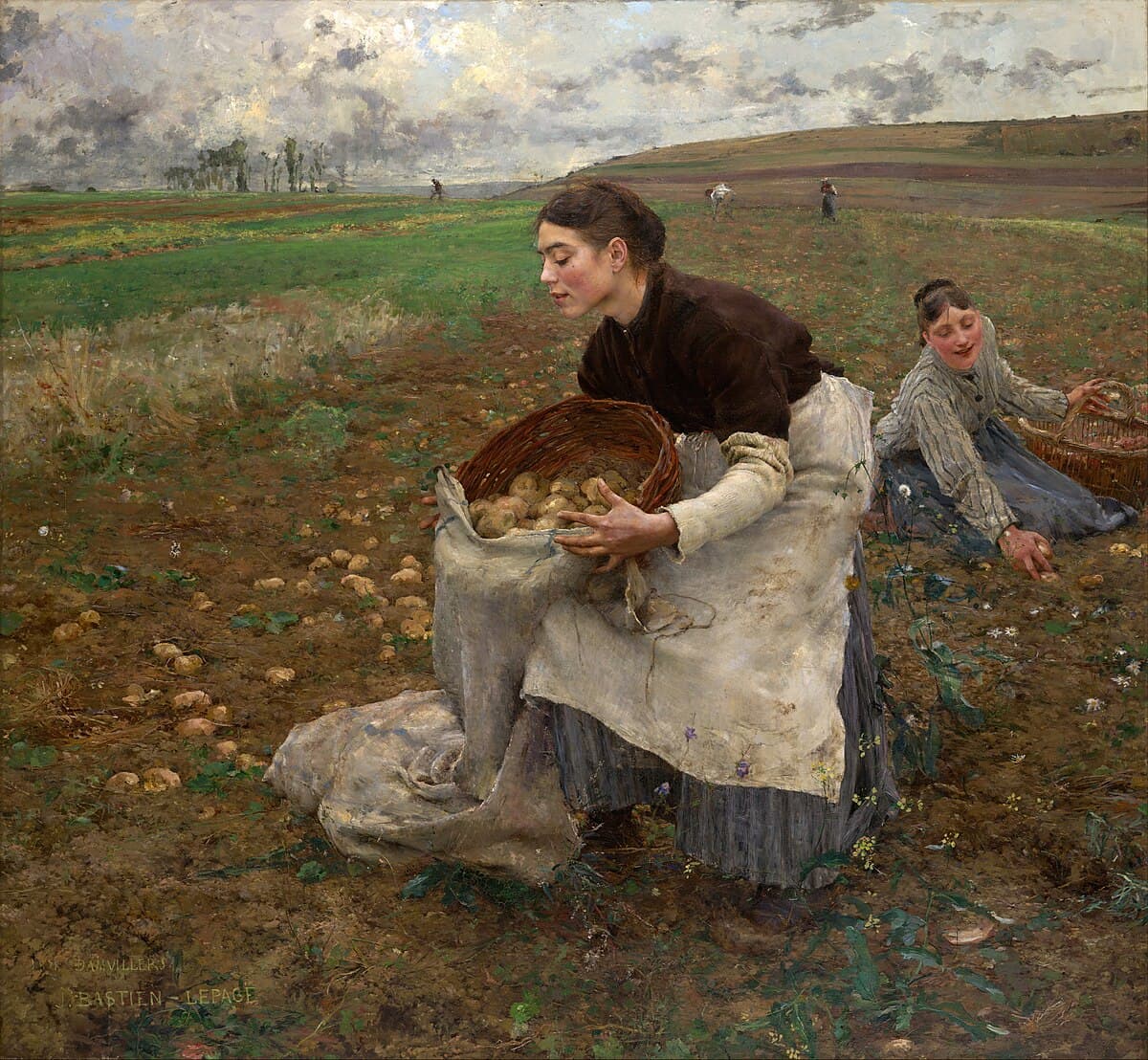
Jules Bastien-Lepage completed this October between 1877 and 1878, a monumental oil on canvas measuring 180.7 x 196 cm. The work depicts the potato harvest in his native village of Damvillers, showing a peasant woman crouched in a barren field under gray autumn skies. His cousin Marie-Adèle Robert served as the model.
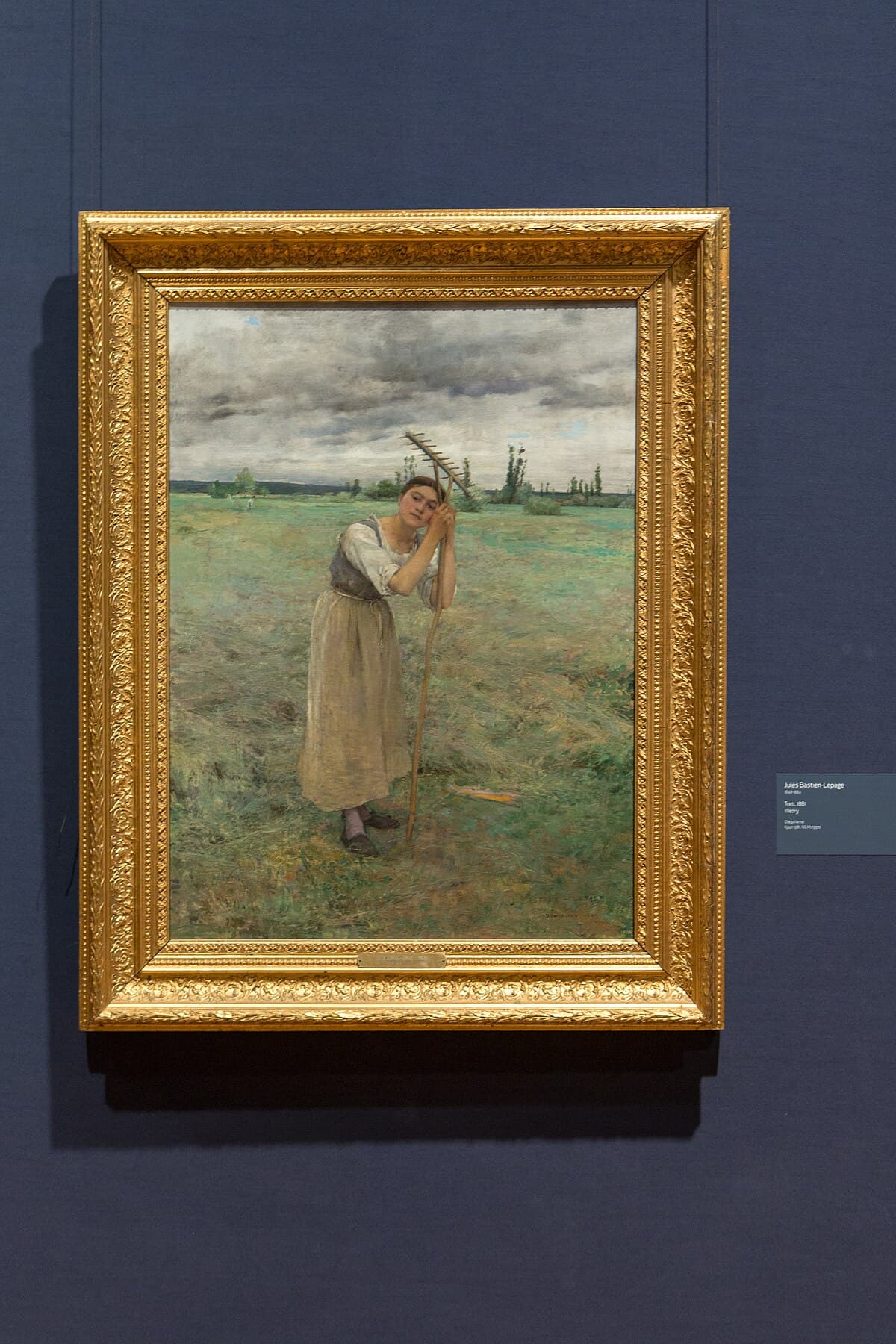
Exhibited at the Paris Salon of 1879 under the title "Saison d'Octobre: Récolte des Pommes de Terre," the painting established Bastien-Lepage as a leader of the Naturalist school. The previous year, his Haymakers had drawn praise from Émile Zola, who called it a landmark work. Unlike the light-filled Impressionists, Bastien-Lepage emphasized the earthiness of rural labor.
Inspired by Millet and Courbet, he sought to document peasant life with dignity and accuracy. The earth tones and muted palette reflect both the season and the backbreaking work of harvest. Followers emerged throughout Europe, including Van Gogh and George Clausen. The painting hangs at the National Gallery of Victoria in Melbourne.