N
© Copyrighted Artwork
This artwork is protected by copyright. We cannot display images of works by artists who passed away after 1954.
See the original at National Gallery of Art in Washington, D.C.
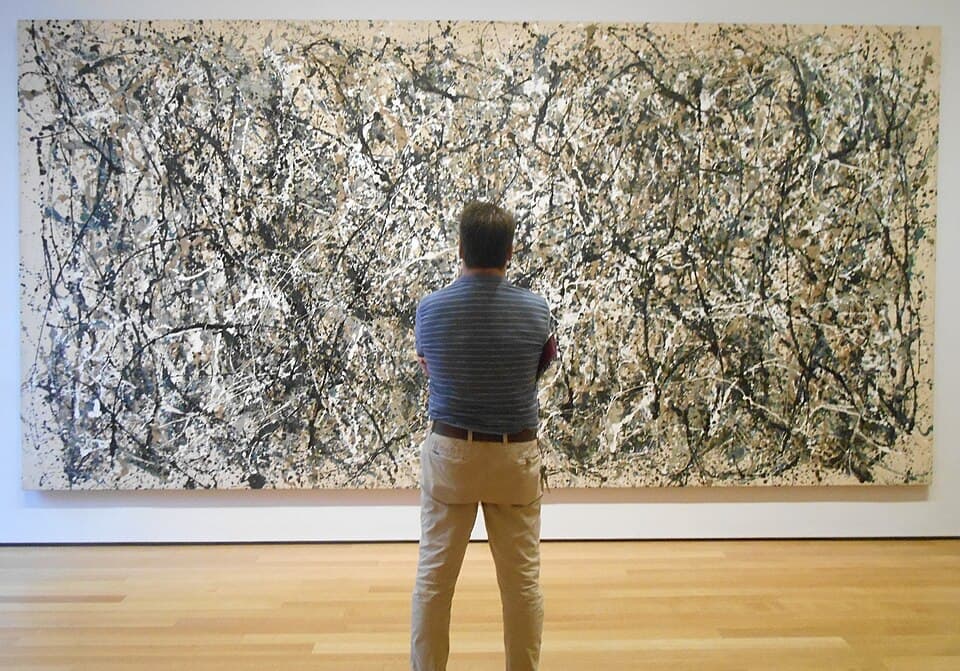
Number 1, 1950 (Lavender Mist)
by Jackson Pollock, 1950
Artwork Details
Details
- Year
- 1950
- Medium
- Oil, enamel, and aluminum on canvas
- Size
- 221 × 300 cm (87 × 118 in)
Finished in 1950 by Jackson Pollock, monumental painting in the summer of 1950, during the peak of his "drip" period. Despite its name, the painting contains no lavender pigment. The title came from art critic Clement Greenberg, who saw lavender tones in the complex web of white, blue, yellow, gray, and rose paint.
Pollock worked on an unstretched canvas laid flat on his studio floor, dripping and pouring household enamel and aluminum paint in rhythmic, dance-like movements. The result is a shimmering surface that seems to pulse with energy. Lavender Mist is considered one of his three greatest works, alongside Autumn Rhythm and One: Number 31.
The painting entered the National Gallery of Art collection in 1976 and remains one of the most important examples of Abstract Expressionism in any museum.
![Gian Federico Madruzzo Oil Canvas Giovanni Battista[1] by Giovanni Battista Moroni](/apps/masterpieces/_next/image?url=https%3A%2F%2Fyfndmpigludzuzjjdfce.supabase.co%2Fstorage%2Fv1%2Fobject%2Fpublic%2Fartwork-images%2Fartwork-wiki%2Fgiovanni-battista-moroni-gian-federico-madruzzo-oil-canvas-giovanni-battist.jpg&w=3840&q=75)