Wikimedia Commons • Public Domain
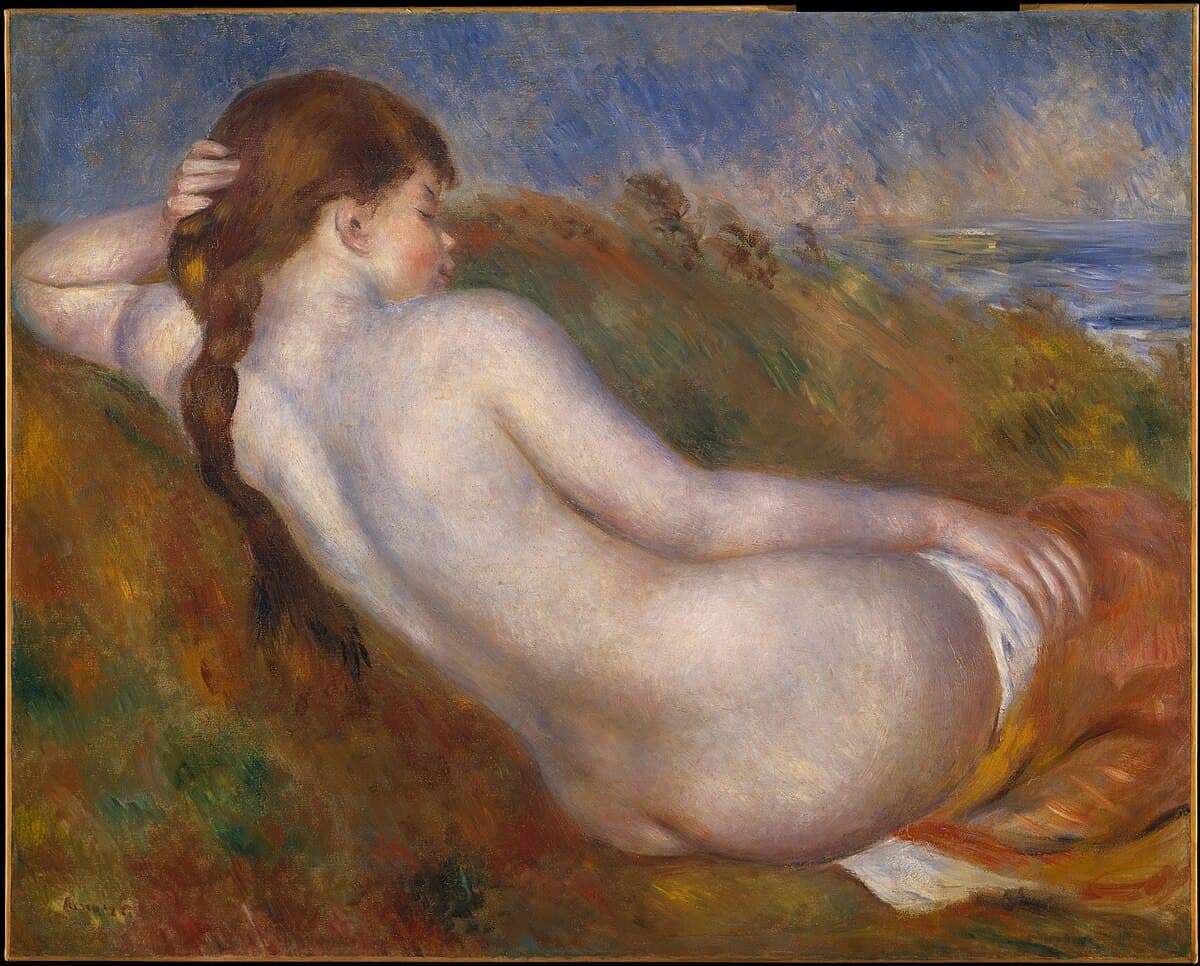
Reclining Nude
StyleImpressionism
GenreNude
Artwork Details
Cite or Embed This Work
APA · MLA · Chicago1-click academic citation and embeddable “On View” museum badge for articles, syllabi, and research.
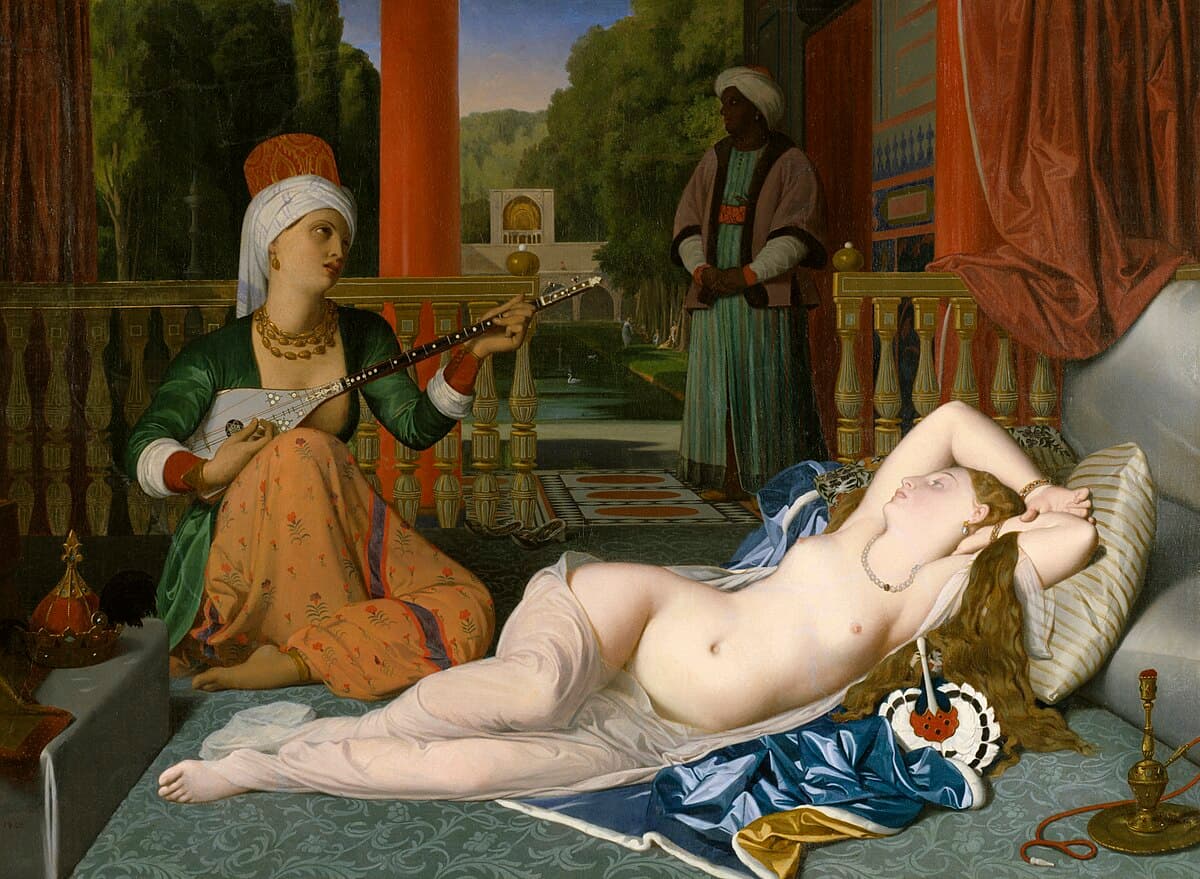
Pierre-Auguste Renoir executed this reclining nude around 1883, during a transitional period when he was moving away from pure Impressionism toward a more classical approach. The figure stretches across the canvas in a traditional pose that echoes Old Master paintings, her flesh rendered in the warm pink and peach tones that became Renoir's trademark treatment of the female body.
This work belongs to what critics call Renoir's "Ingres period" or "dry period," named after the nineteenth-century master whose precise draftsmanship Renoir suddenly admired. After traveling to Italy and seeing Raphael's frescoes, he grew dissatisfied with Impressionism's dissolved forms and sought more defined contours. The reclining nude shows this shift: softly brushed backgrounds but clearer outlines around the figure.
Renoir would eventually synthesize these approaches, combining classical form with Impressionist color in his final decades. This painting now belongs to a private collection, less accessible than his major museum works but significant for understanding his artistic development. The nude subject remained central to his art, a celebration of sensuous beauty that he pursued until his death despite crippling arthritis.