Wikimedia Commons • Public Domain
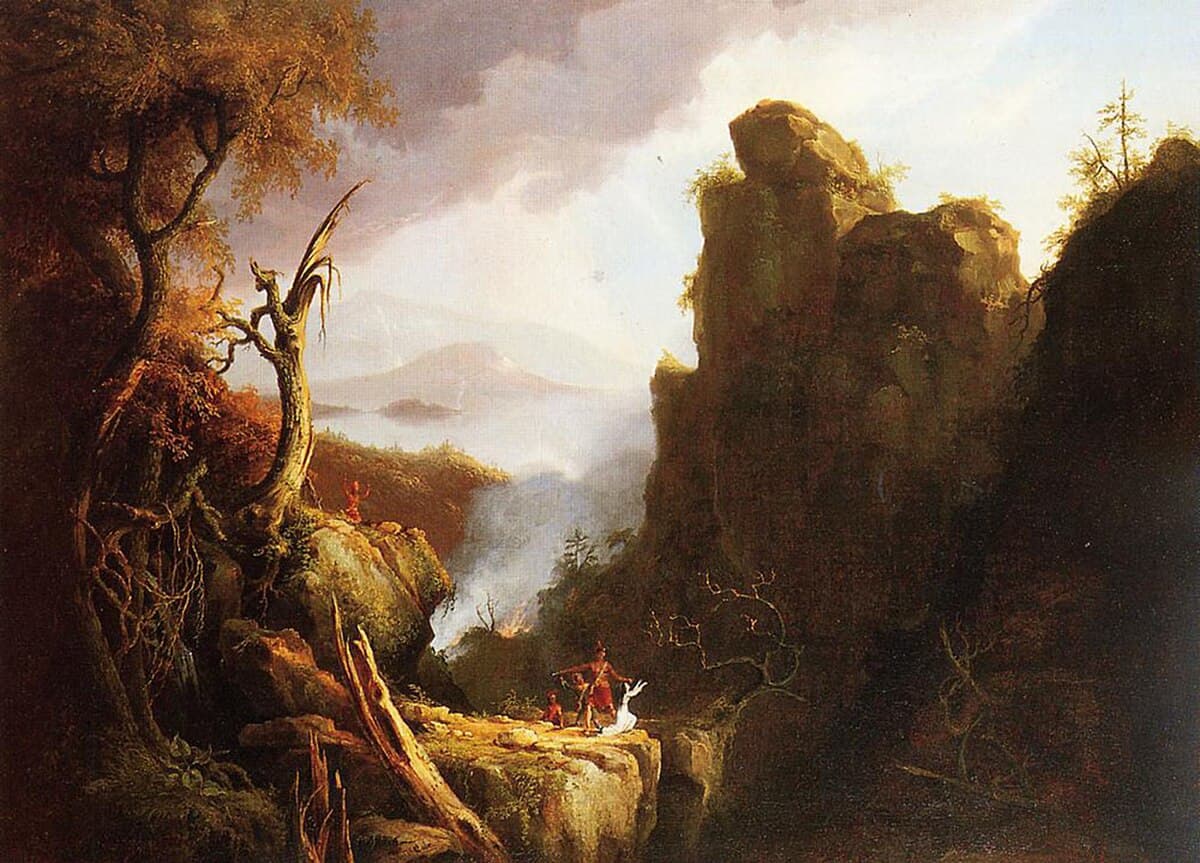
Indian Sacrifice
by Thomas Cole
Artwork Details
Where to See It
University of Pennsylvania (UPenn), Philadelphia, PAPhiladelphia, US
Permanently housed
Cite or Embed This Work
APA · MLA · Chicago1-click academic citation and embeddable “On View” museum badge for articles, syllabi, and research.
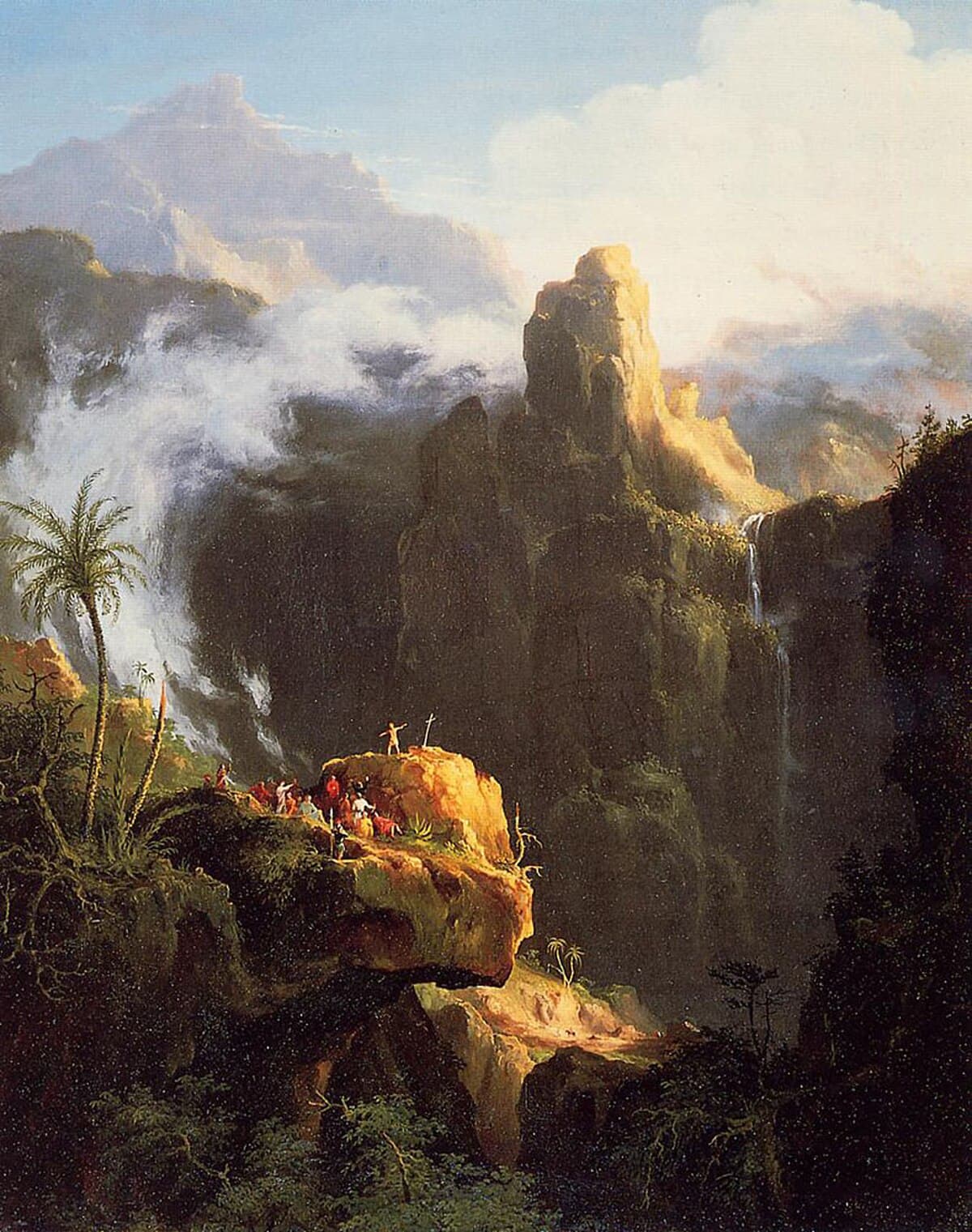
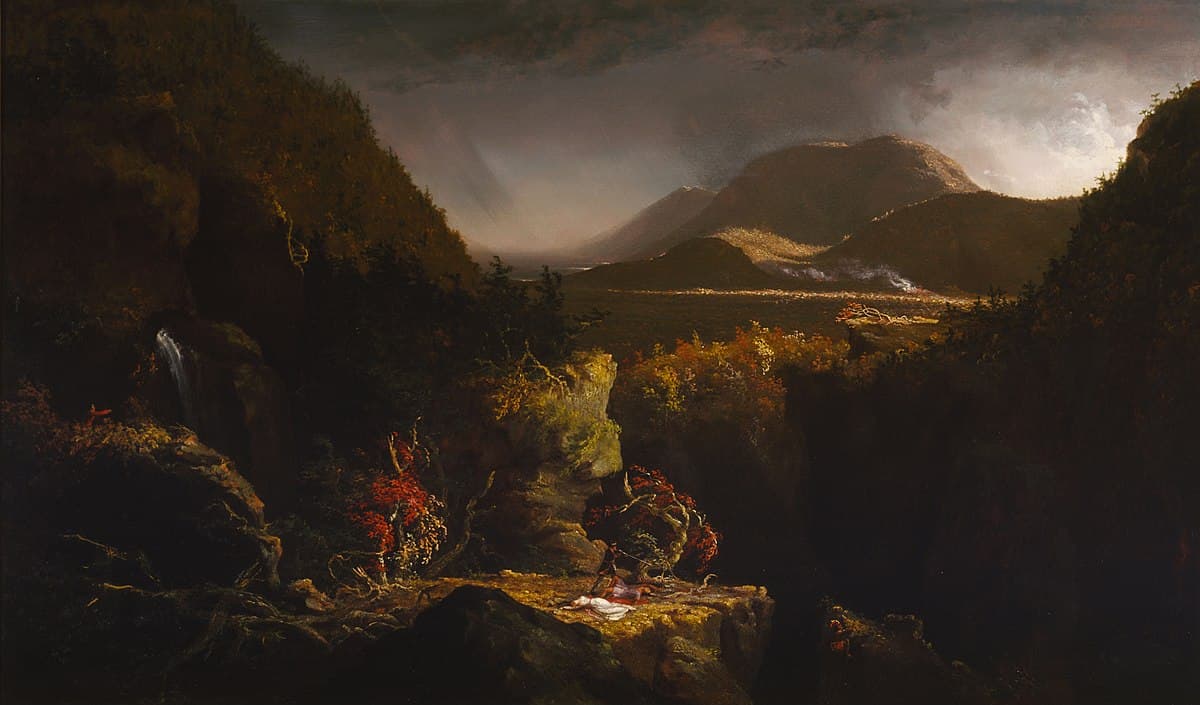
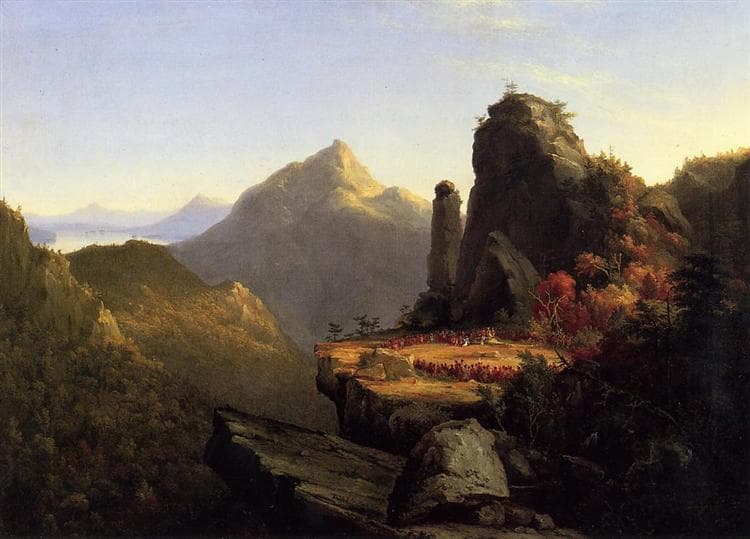
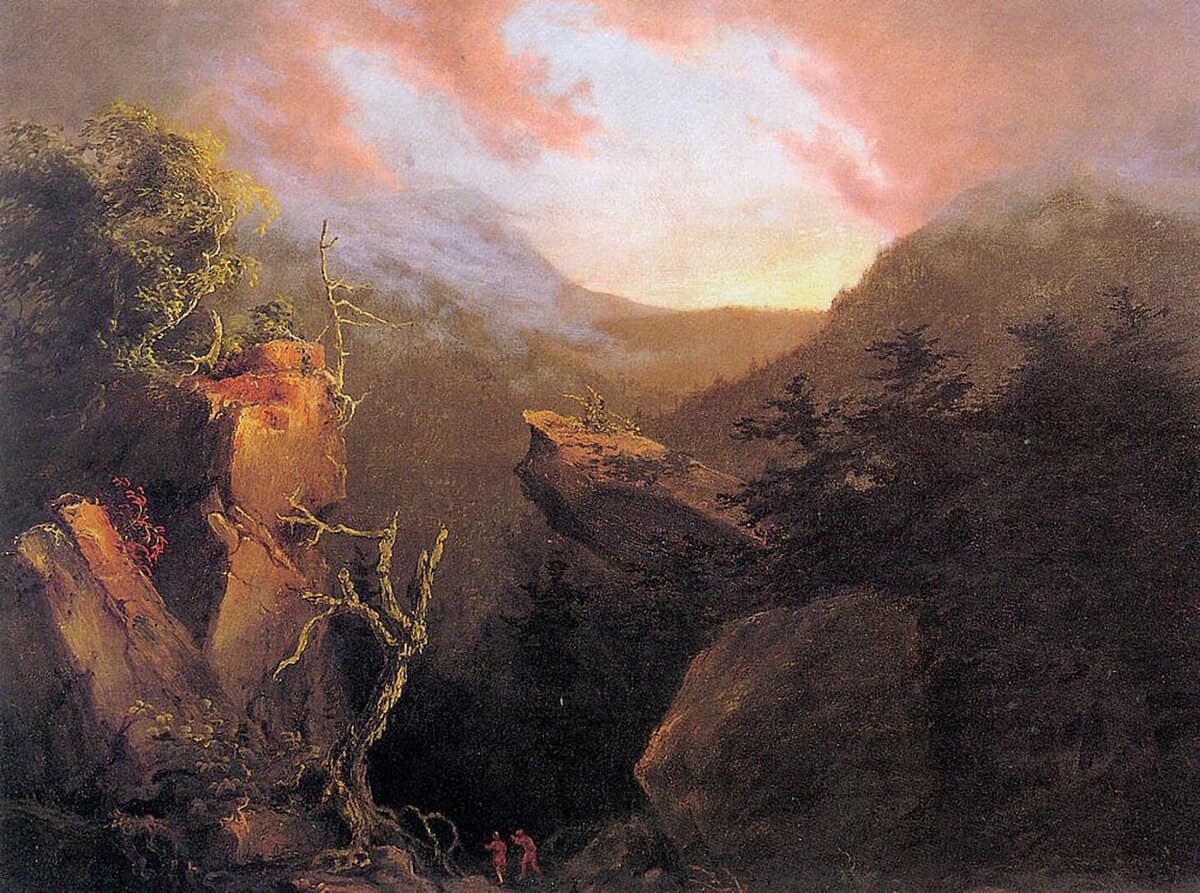
Thomas Cole completed this Indian Sacrifice in 1827, during the early years of his career as the founding figure of American landscape painting. The work shows a dramatic mountain scene with jagged rocks and twisted trees framing a ritual taking place on a distant precipice. A small group of figures stands illuminated against the shadowy wilderness, their presence accentuated by soft light breaking through dark surroundings.
Cole was deeply influenced by the novels of James Fenimore Cooper, and this painting likely draws from scenes in The Last of the Mohicans, published just a year earlier. The same year, Cole painted a related work depicting Cora kneeling before the Delaware chief Tamenund. Both paintings reflect his interest in American history and the tension between civilization and wilderness that would define his later masterwork, The Course of Empire.
Born in England in 1801, Cole emigrated to Ohio as a teenager and taught himself to paint by studying books and other artists' work. He eventually settled in the Hudson River Valley, where he became the leading voice of the landscape tradition in America. Today, this painting resides at the University of Pennsylvania in Philadelphia.