The Three Graces
by Peter Paul Rubens, 1639
Artwork Details
Details
- Year
- 1639
- Medium
- Oil on oak panel
- Size
- 221 cm × 181 cm (87 × 71.3 in)
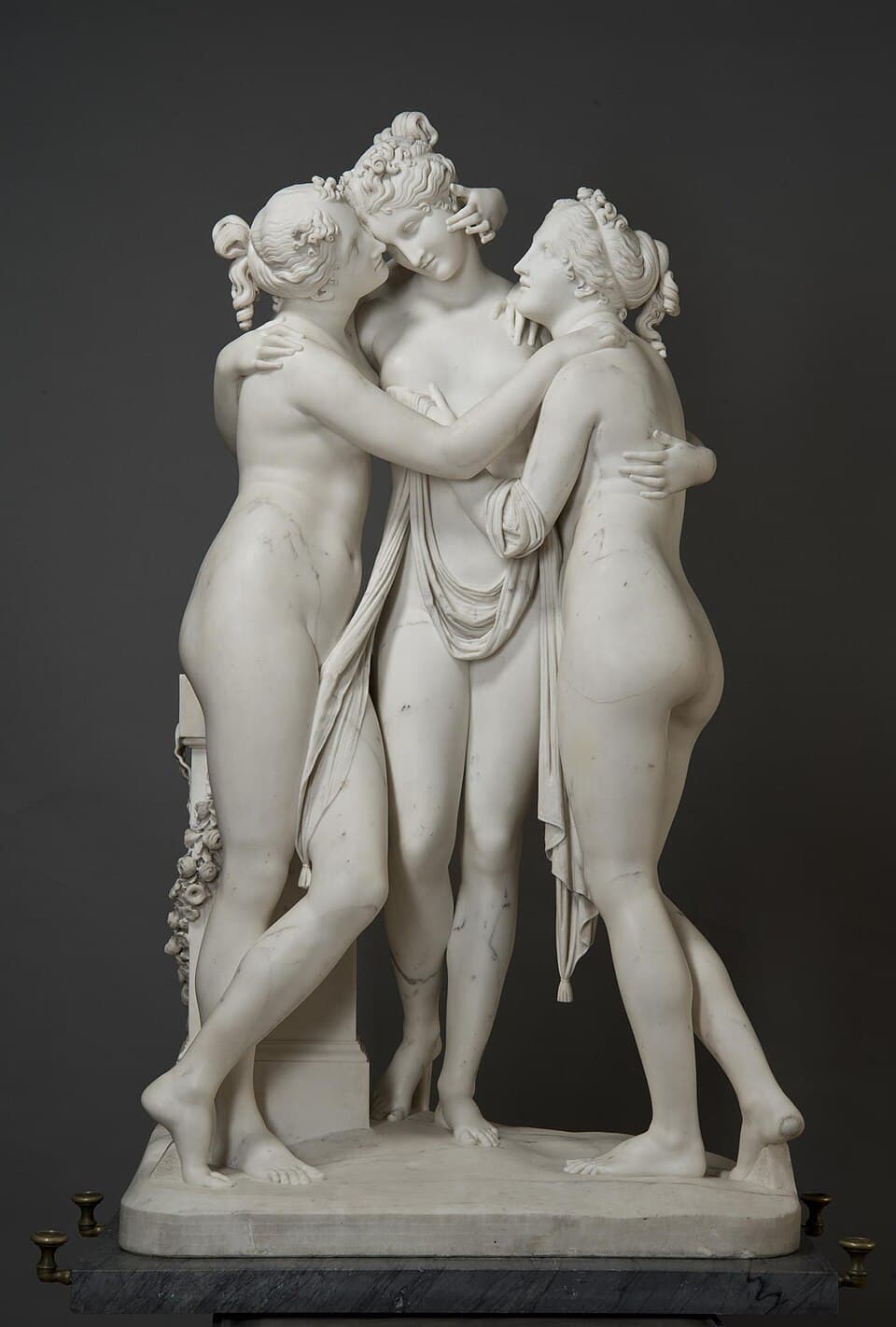
Peter Paul Rubens painted The Three Graces around 1639, near the end of his life. The three goddesses, daughters of Zeus, represent beauty, charm, and joy. They embrace in an eternal dance, their voluptuous bodies glowing against a garden landscape. Rubens modeled the central figure on his young wife, Hélène Fourment.
The fleshy, celebrated bodies epitomize what became known as "Rubenesque." These are not idealized classical nudes but warm, real women with dimpled flesh and soft bellies. A fountain streams into a basin, a cornucopia spills fruit, and garlands suggest eternal spring and abundance.
The Prado displays this painting as the culmination of Rubens's lifelong celebration of female beauty.