1909 – 1944
Futurism
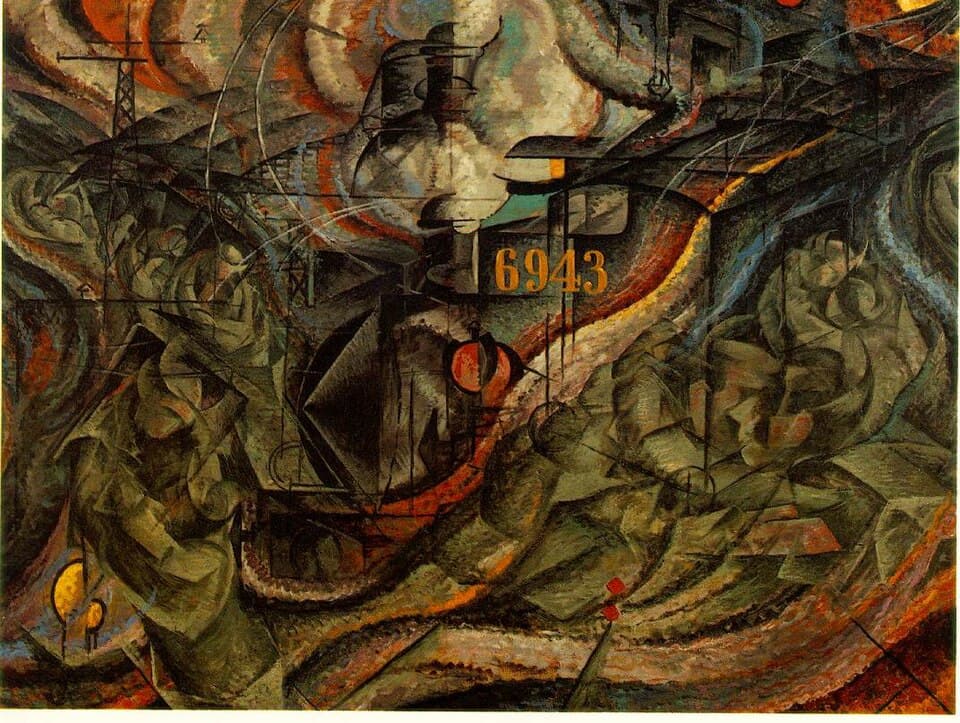
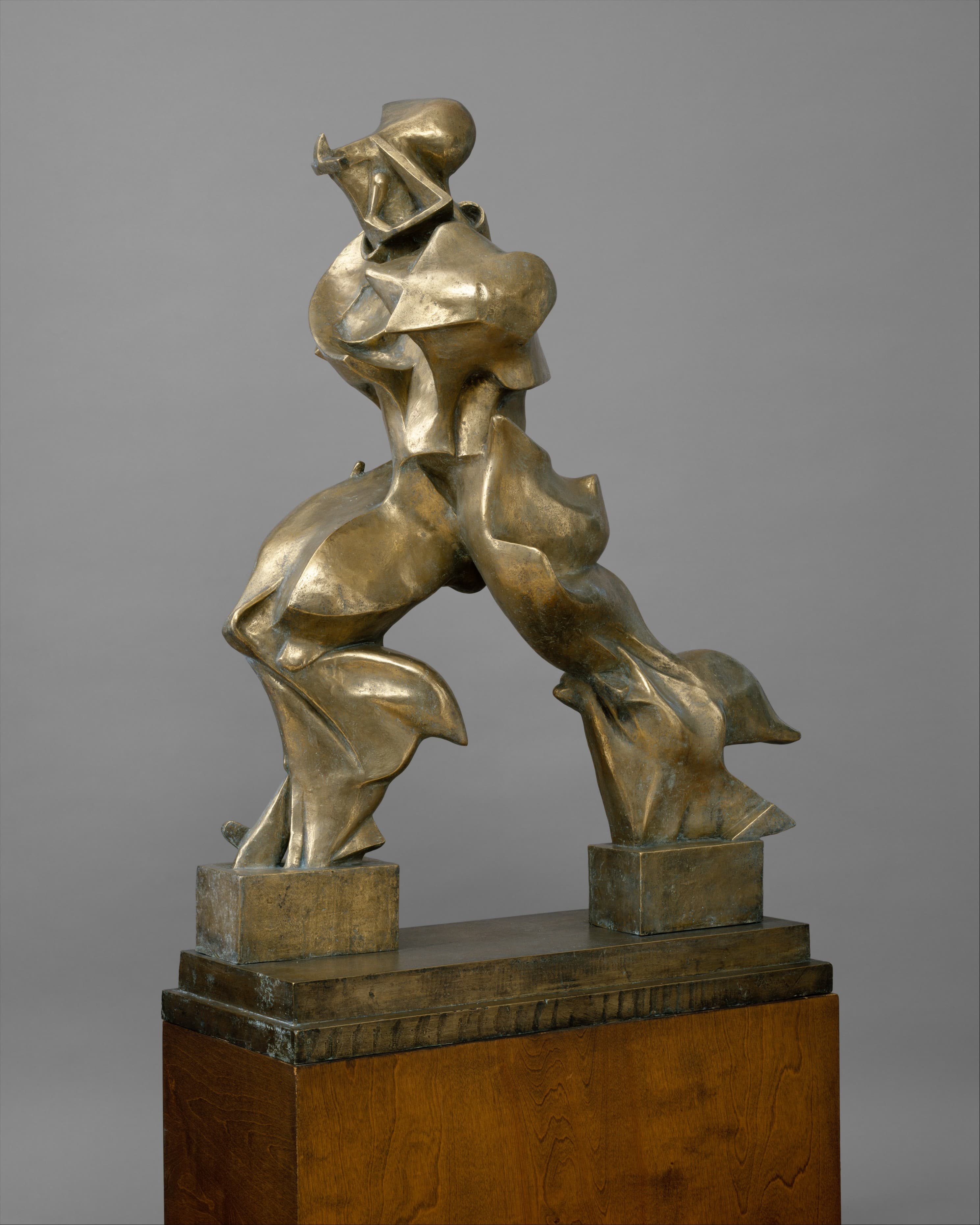
<p>Futurism launched in Italy in 1909, when poet Filippo Tommaso Marinetti published a manifesto in a Paris newspaper celebrating speed, machines, and a total break from the past. Painters and sculptors who joined the movement wanted to capture the sensation of modern life itself: cars, trains, factories, and crowds in motion, at a moment when Italy was rapidly industrializing.</p> <p><a href="/apps/masterpieces/artist/umberto-boccioni"><strong>Umberto Boccioni</strong></a> became the movement's leading artist, developing techniques to show multiple moments of movement layered into a single image, closer to a blurred photograph than a still scene. His bronze sculpture <a href="/apps/masterpieces/art/unique-forms-of-continuity-in-space-umberto-boccioni"><strong>Unique Forms of Continuity in Space</strong></a> shows a striding figure whose body seems to be sliced apart by the wind moving through it, an attempt to sculpt motion rather than a fixed pose. His painting <a href="/apps/masterpieces/art/city-rises"><strong>The City Rises</strong></a> turns construction workers and straining horses into a swirl of color and energy, while <a href="/apps/masterpieces/art/states-mind-farewells"><strong>States of Mind: The Farewells</strong></a> uses fractured, Cubist-influenced forms to capture the emotional chaos of a train station.</p> <p>Futurism's embrace of speed and machinery carried an aggressive, sometimes militaristic edge, and the movement's early enthusiasm for war and its later association with Italian Fascism have complicated its legacy. Boccioni died in 1916 after falling from a horse during military training, cutting short the movement's most talented voice.</p>
At a Glance
- Period
- 1909 – 1944
- Artists
- 1
- Artworks
- 10
Defining Features
Speed and motionMachines and technologyFractured, dynamic formsMultiple moments in one imageUrban and industrial subjects
Futurism Artists
1 artists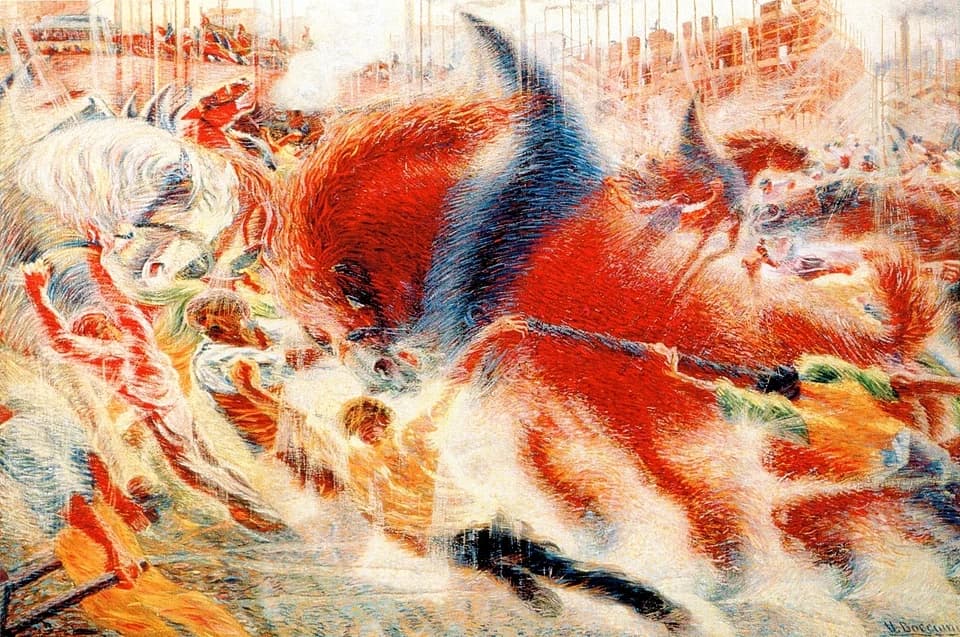
Futurism Masterpieces
10 works
About Futurism
1909 to 1944.
Speed and motion, Machines and technology, Fractured, dynamic forms, Multiple moments in one image, Urban and industrial subjects.
Umberto Boccioni.
Bring Futurism Home
Luxury decor featuring museum-quality canvas prints inspired by these iconic masterpieces.
Shop Futurism Art