
Zen Art: Symbolism, History, and Meaning
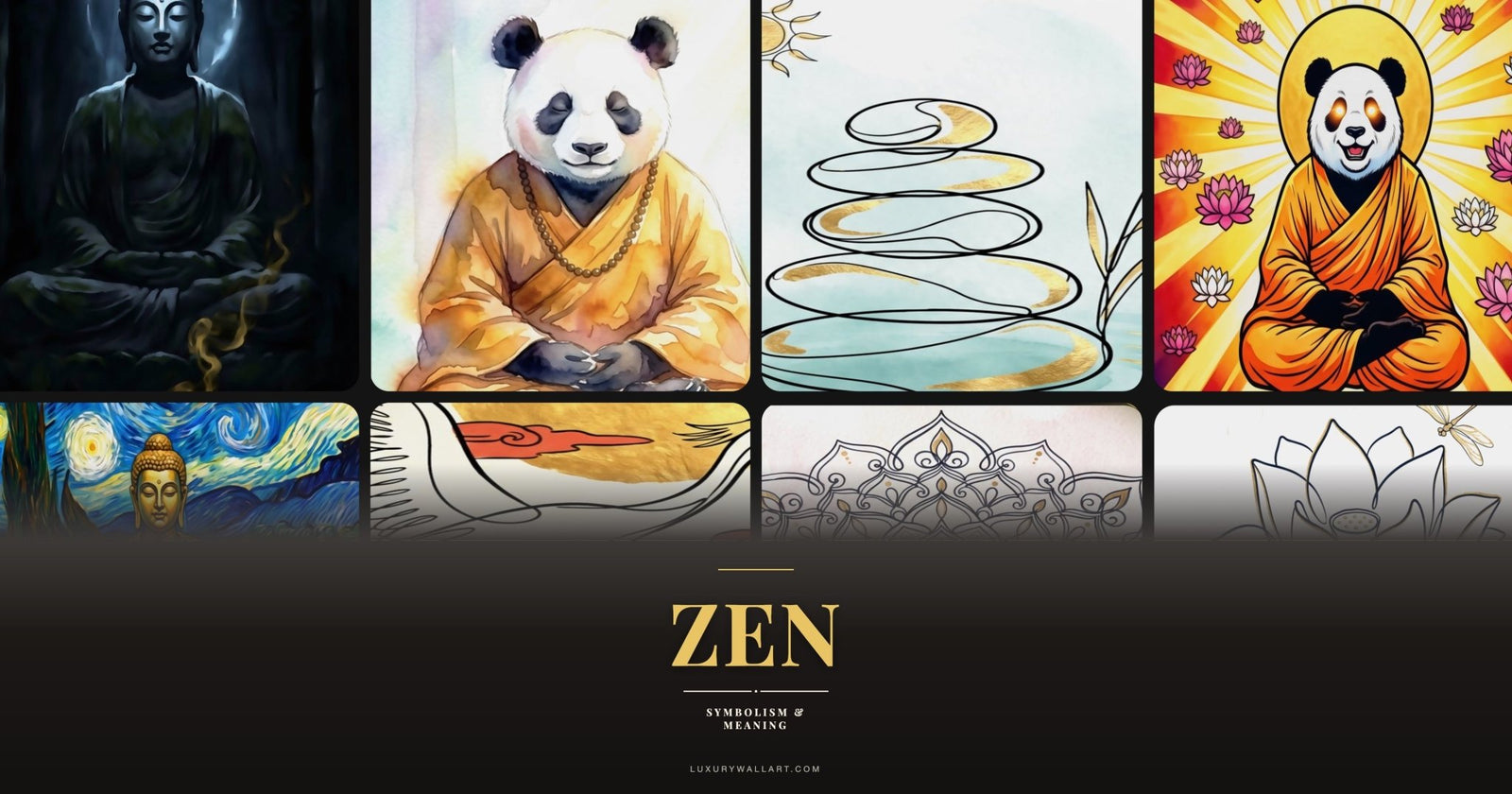

Zen art is defined as much by what it leaves out as by what it shows. Rooted in Zen Buddhism, it uses ink, empty space, and a few deliberate strokes to point at calm, impermanence, and presence. This guide covers where zen art comes from, its core ideas, and how to bring that quiet onto your wall.
Calm and presenceZen Buddhist rootsInk, space, restraint
At a glance
| Rooted in | Zen Buddhism |
| Core idea | Less is more |
| Signature mark | The ensō circle |
| Best rooms | Bedroom, study, spa |
What Zen Art Actually Is
The tradition grew out of Zen Buddhism, which reached Japan from China around the twelfth century. Zen values direct experience over explanation, and its art followed suit: instead of crowded, detailed scenes, zen painters used ink wash painting to capture a subject in as few strokes as possible. A mountain, a branch, a single figure in meditation.
The most famous zen mark is the ensō, a circle drawn in one confident breath. Left open or closed, perfect or rough, it stands for the whole of zen: presence, imperfection, and the moment it was made. That spirit, more than any single subject, is what makes a piece read as zen.
The Ideas Behind Zen Painting
Four ideas run through almost all zen wall art. Here is each one paired with a piece that carries it.
 Emptiness and stillnessA figure in meditation, the core of the practice: clarity found by sitting quietly with the moment.
 Wabi-sabi: imperfect beautyA raked sand garden, patterns made to be swept away. The taste for the impermanent over the polished.
 Ma: the power of spaceA calm figure held in open, uncrowded space, where the emptiness carries as much weight as the subject.
 Nature as teacherA single gilded tree. The tradition looks to nature for its lessons in patience, balance, and letting go.
The Elements of a Zen Piece
If you are trying to spot genuine zen work rather than generic calm decor, look for these elements. Most true zen pieces carry two or three.
| Element | What to look for |
|---|---|
| Ink wash (sumi-e) | Tone built from black ink alone, from deep black to the palest grey. |
| The ensō circle | A single hand-drawn circle standing for presence and the whole of things. |
| Empty space (ma) | Large areas left blank on purpose, giving the eye room to rest. |
| A single natural subject | One branch, mountain, lotus, or figure, rather than a busy scene. |
The visual vocabulary of zen art.
Modern zen canvas art often adds soft gold or indigo to the traditional black ink.
The Masters Who Shaped Zen Art
The look of zen painting was set by a handful of monk-artists. Sesshū Tōyō, in the fifteenth century, showed how a whole landscape could live in a few splashed strokes of ink. A century later, Hasegawa Tōhaku painted his famous Pine Trees screen almost entirely in mist and empty space, trusting the viewer to fill the gaps.

Later monks like Hakuin and Sengai made the ensō their signature, drawing the circle thousands of times as both art and meditation. What ties all of them together is restraint: every one believed that leaving something out said more than filling it in. Contemporary pieces still work from that same rule, which is why a genuine zen canvas can feel calm even in a loud room.
Living With Zen Pieces
Zen wall art belongs in the rooms where you slow down: the bedroom, a reading nook, a study, a home spa or yoga corner.


Placement tip: hang a zen piece slightly lower and with more surrounding blank wall than you would a busy print. The calm needs the breathing room.
Bring the calm home
Every piece is printed to order on gallery-depth canvas, in original designs you will not find reprinted across a thousand other stores.
Frequently Asked Questions
What is zen art?
It is art shaped by Zen Buddhism, built on restraint. Instead of detailed, crowded scenes it uses ink, empty space, and a few sure strokes to capture calm and presence. The most recognizable form is sumi-e ink painting, and the most famous mark is the ensō, a circle drawn in one breath. The goal is to point at a feeling, not to describe every detail.
What does the ensō circle mean?
The ensō is a hand-drawn circle that stands for the whole of zen: presence, enlightenment, and the exact moment it was made. Left open, it suggests that things are still in motion and beauty lives in imperfection.
What is wabi-sabi?
Wabi-sabi is the zen appreciation of beauty that is imperfect, impermanent, and incomplete, a weathered surface or a fading season. It is why so much of the work favors soft, unfinished, quiet imagery over polished perfection. In practical terms it means a zen piece does not need to be crisp or symmetrical to be beautiful, and a loose, misty, slightly rough image often reads as more genuine than a sharp, flawless one.
Where should I hang zen art?
The rooms where you unwind: bedrooms, studies, reading nooks, and yoga or meditation corners. Give it plenty of surrounding blank wall so its empty space can breathe. A single piece on an otherwise bare wall almost always beats a cluster, because crowding a calm image with other frames cancels out the stillness that makes it work. Eye level, or even a touch lower, keeps it restful rather than commanding.
What colors is zen art?
Traditionally just black ink in every shade of grey. Modern zen canvas art often adds soft gold, indigo, or muted earth tones for warmth while keeping the calm.
Why is there so much empty space in zen paintings?
The empty space, called ma, is deliberate. Zen treats the blank area as active, not missing, giving the eye room to rest and the subject room to breathe. The emptiness is part of the meaning.
Is zen art good for a modern home?
Very. Its restraint and neutral palette suit minimal, contemporary interiors, and a single zen piece can bring calm to an otherwise busy room. It also plays well with natural materials, wood, stone, linen, and with the muted greens and indigos common in modern decor. If your home already leans clean and uncluttered, a zen piece feels less like a decoration and more like a finishing note.