Wikimedia Commons • Public Domain
Ship in the Arctic Ocean
Artwork Details
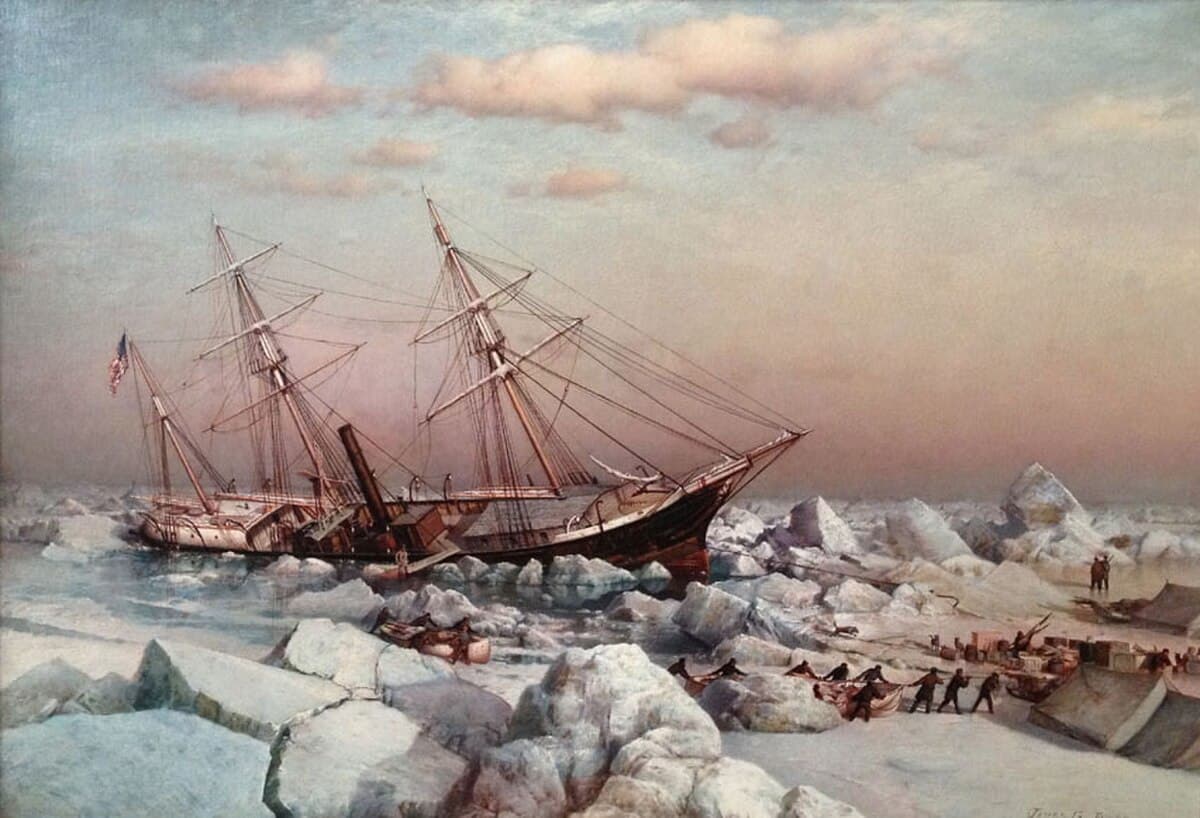
Caspar David Friedrich painted The Sea of Ice between 1823 and 1824, depicting a ship crushed and swallowed by massive slabs of polar ice. The HMS Griper, or a vessel like it, lies nearly invisible beneath jagged ice sheets that thrust upward like a frozen cathedral. The scene captures the aftermath of disaster rather than the moment of destruction, leaving viewers to contemplate nature's overwhelming power.
Friedrich drew inspiration from William Edward Parry's Arctic expeditions, which captivated European audiences in the 1820s. But the painting also carries deeply personal significance. When Friedrich was thirteen, his younger brother Johann drowned after falling through ice while trying to save Caspar from the same fate. This childhood trauma resurfaces in the frozen desolation of the image, transforming a topical subject into a meditation on guilt, loss, and nature's indifference to human ambition.
Contemporary audiences found the painting too radical and disturbing. It went unsold during Friedrich's lifetime, a commercial failure that contributed to his declining reputation in later years. Today it hangs at the Hamburger Kunsthalle in Hamburg, recognized as one of the most powerful statements of Romantic sublime in nineteenth-century art.