Public Domain
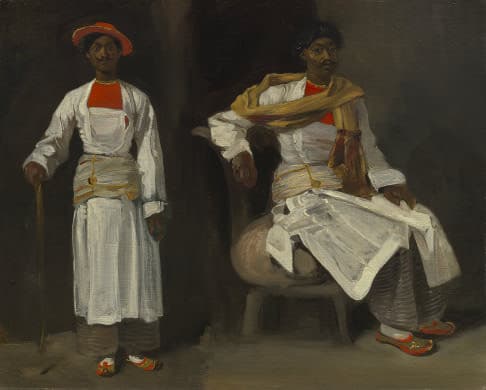
Two Views of an Indian from Calcutta, Seated and Standing
StyleRomanticism
Artwork Details
Cite or Embed This Work
APA · MLA · Chicago1-click academic citation and embeddable “On View” museum badge for articles, syllabi, and research.
French painter Eugène Delacroix created this study of an Indian man from Calcutta around 1823, showing the figure in both seated and standing poses on the same sheet. The rich colors of the subject's costume and the careful attention to exotic dress details reflect the Orientalist fascination that would influence Delacroix's work throughout his career.
Paris in the early nineteenth century offered artists opportunities to study foreign visitors and performers who embodied the romantic fascination with the East. Delacroix seized these chances to observe unfamiliar costumes, physiognomy, and postures that differed from classical European models. Such studies fed his imagination and prepared him for later journeys to North Africa.
The dual poses on a single sheet show Delacroix working out the figure's appearance from different angles, a practical method that would inform finished paintings. The vibrancy of color and boldness of brushwork already distinguish his approach from more academic contemporaries. This study remains in a private collection, less accessible than his major museum works but significant for understanding how Delacroix built his Romantic vision through direct observation.