Wikimedia Commons • Public Domain
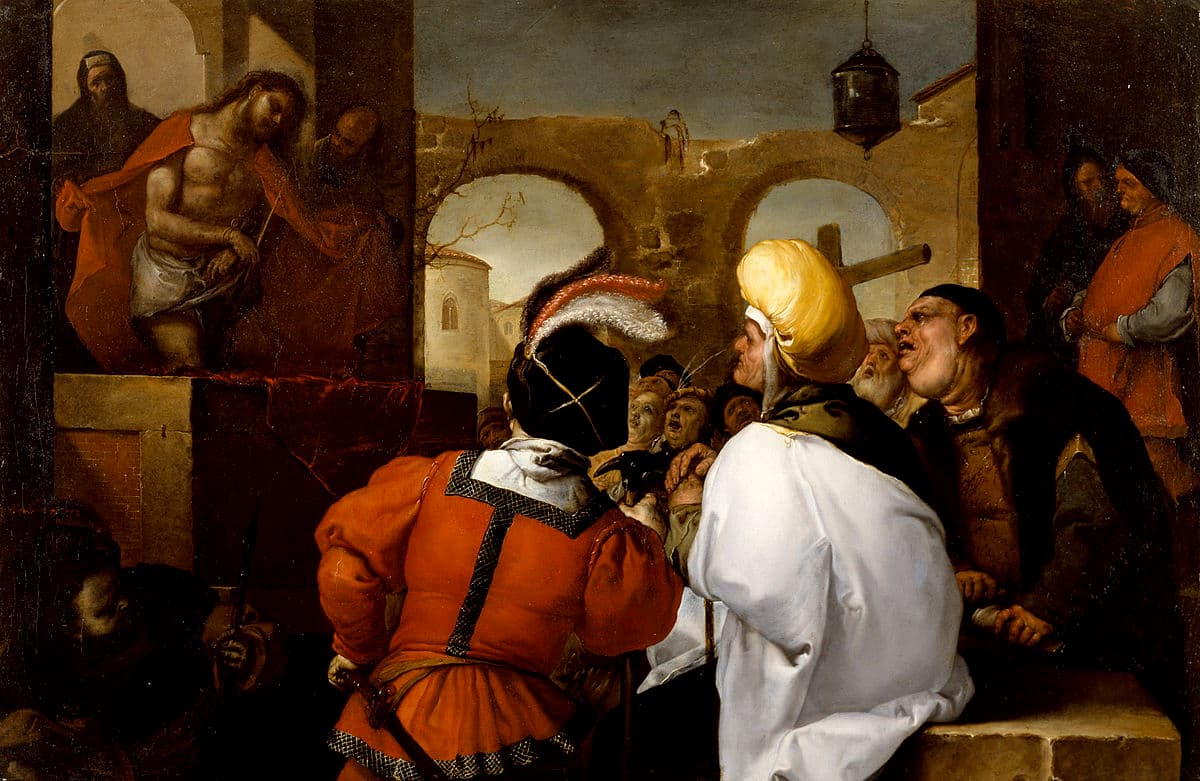
Here is a Man (Ecce Homo)
StyleNorthern Renaissance
Artwork Details
Cite or Embed This Work
APA · MLA · Chicago1-click academic citation and embeddable “On View” museum badge for articles, syllabi, and research.
This painting by Hieronymus Bosch Ecce Homo scene between 1475 and 1485, depicting the moment Pontius Pilate presents the scourged Christ to the hostile crowd. The oil-on-oak panel measures 71.4 by 61 centimeters and contains Gothic inscriptions functioning like speech balloons in a comic strip. Pilate's cry of "Ecce Homo" (Behold the Man) is answered by the mob's demand: "Crucifige Eum" (Crucify Him).
Typical of Bosch, the scene is filled with symbolic imagery. An owl perches above Pilate, and a giant toad rests on a soldier's shield. Both animals were considered emblems of evil in Christian iconography. The upper right shows a Gothic cityscape representing Jerusalem, rendered in the style of a Late Gothic Netherlandish town.
The painting underwent significant conservation work. Christ had been painted over with a floor-length garment, and X-ray examination in 1983 revealed a donor family once occupied the foreground before being covered up. The Städel Museum in Frankfurt purchased the work at a 1917 auction and restored it to reveal Bosch's original vision, including Christ's simple loincloth.