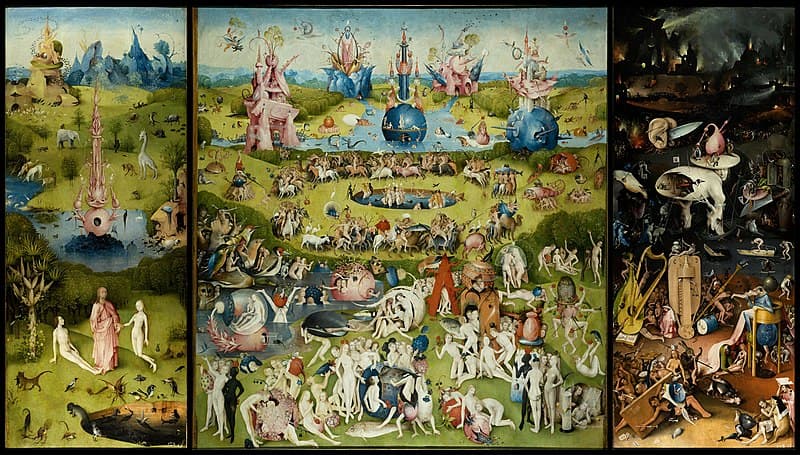
The Garden of Earthly Delights
by Hieronymus Bosch, 1510
StyleNorthern Renaissance
Artwork Details
Details
- Year
- 1510
- Medium
- Oil on oak panels
- Size
- 220 cm × 389 cm
Estimated Value
$300M
Expert estimate
That's 3 Boeing 737s
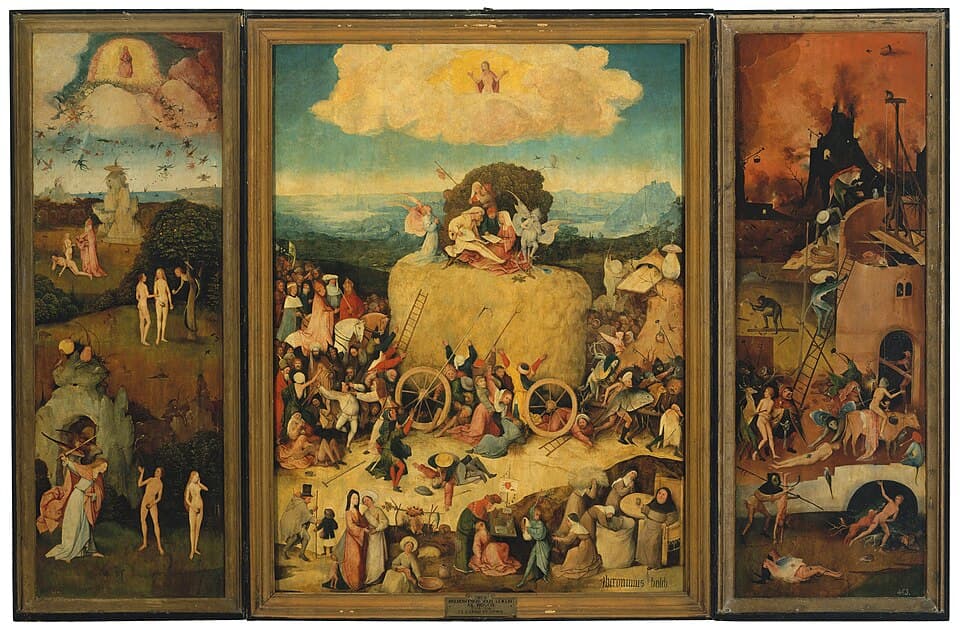
Hieronymus Bosch painted The Garden of Earthly Delights around 1490-1510, creating a triptych that has puzzled viewers for five centuries. When closed, it shows Earth during creation in grisaille. Open, the three panels depict the Garden of Eden (left), a surreal earthly paradise (center), and a nightmarish Hell (right).
The central panel teems with hundreds of nude figures engaging in bizarre pleasures amid giant fruits, birds, and fantastic structures. Scholars have interpreted it as a warning against sin, an alchemical allegory, or a vision of humanity before the Fall. Bosch's intentions remain mysterious, with no contemporary documents explaining the imagery.
The right panel depicts Hell with burning cities, musical instruments as torture devices, and a tree-man often interpreted as Bosch's self-portrait. Philip II of Spain acquired the triptych in 1591. It now dominates a room at the Museo del Prado in Madrid, where its strange imagery continues to fascinate visitors.