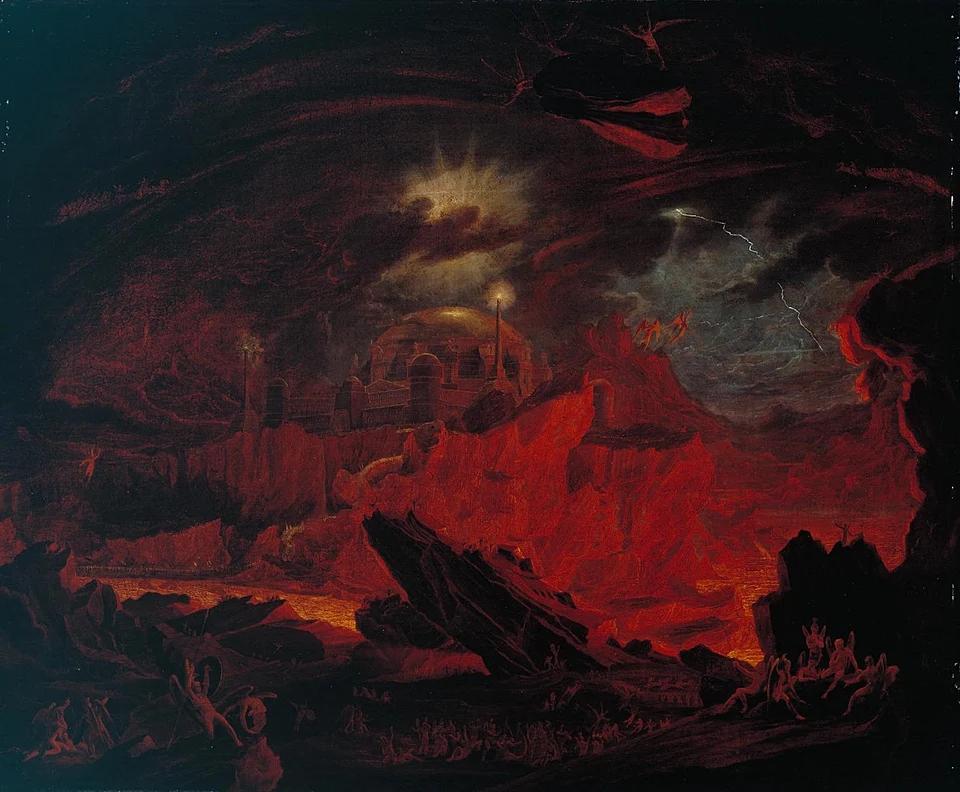
Pandemonium
by John Martin, 1841
StyleRomanticism
Artwork Details
Details
- Year
- 1841
- Medium
- Oil on canvas
- Size
- 123.8 cm × 184.2 cm
Cite or Embed This Work
APA · MLA · Chicago1-click academic citation and embeddable “On View” museum badge for articles, syllabi, and research.
John Martin executed this vision of Hell's capital city in 1841, inspired by Milton's Paradise Lost. Towering temple-like structures with Babylonian and classical elements stretch along a waterfront, wreathed in flames and smoke. Fallen angels gather in this infernal parliament.
Martin used sweeping diagonal perspective to convey the city's immense scale. He even designed the frame himself, decorating it with serpents and dragons. A companion piece, "The Celestial City," was exhibited alongside it at the Royal Academy. Martin had previously made two engravings of this scene in 1824 and 1831. Now at the Louvre Museum in Paris.
More by John Martin
View all →H
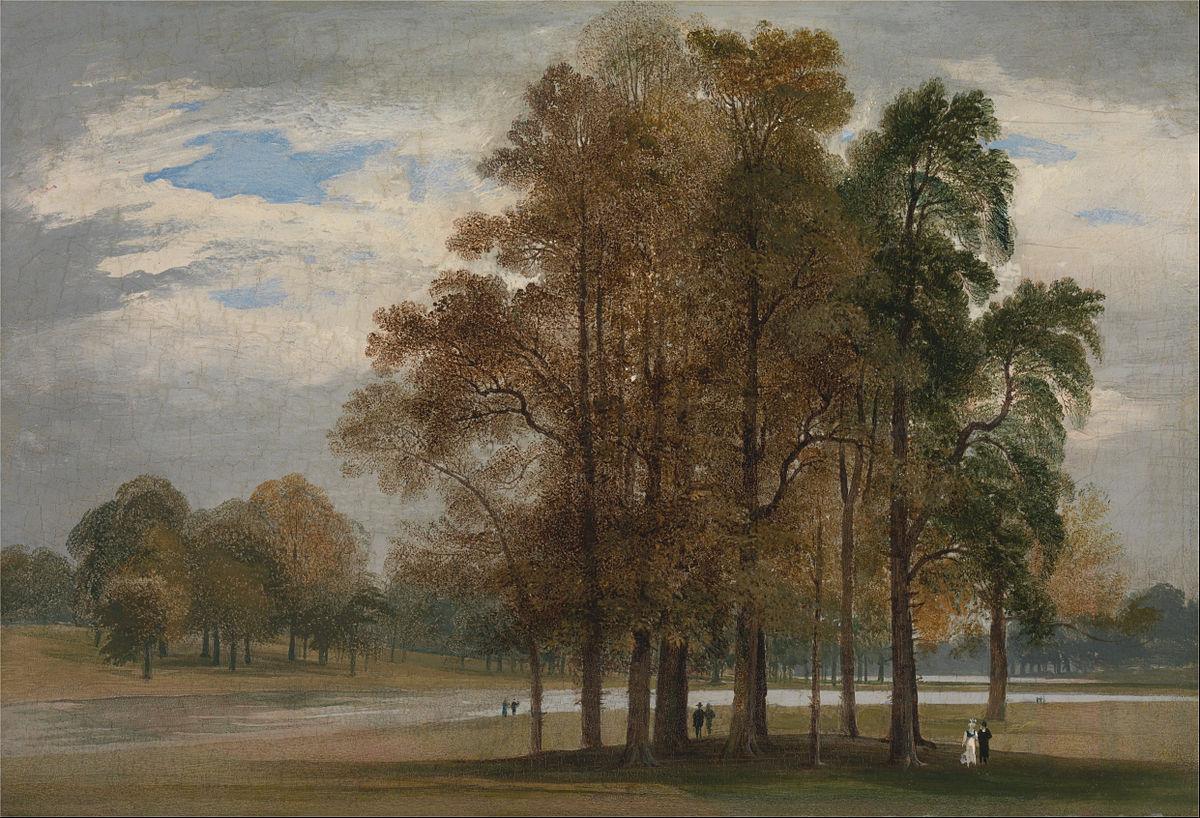
Hyde Park
John Martin
Yale Centre For British Art (Yale University), New Haven, CT, New Haven
B
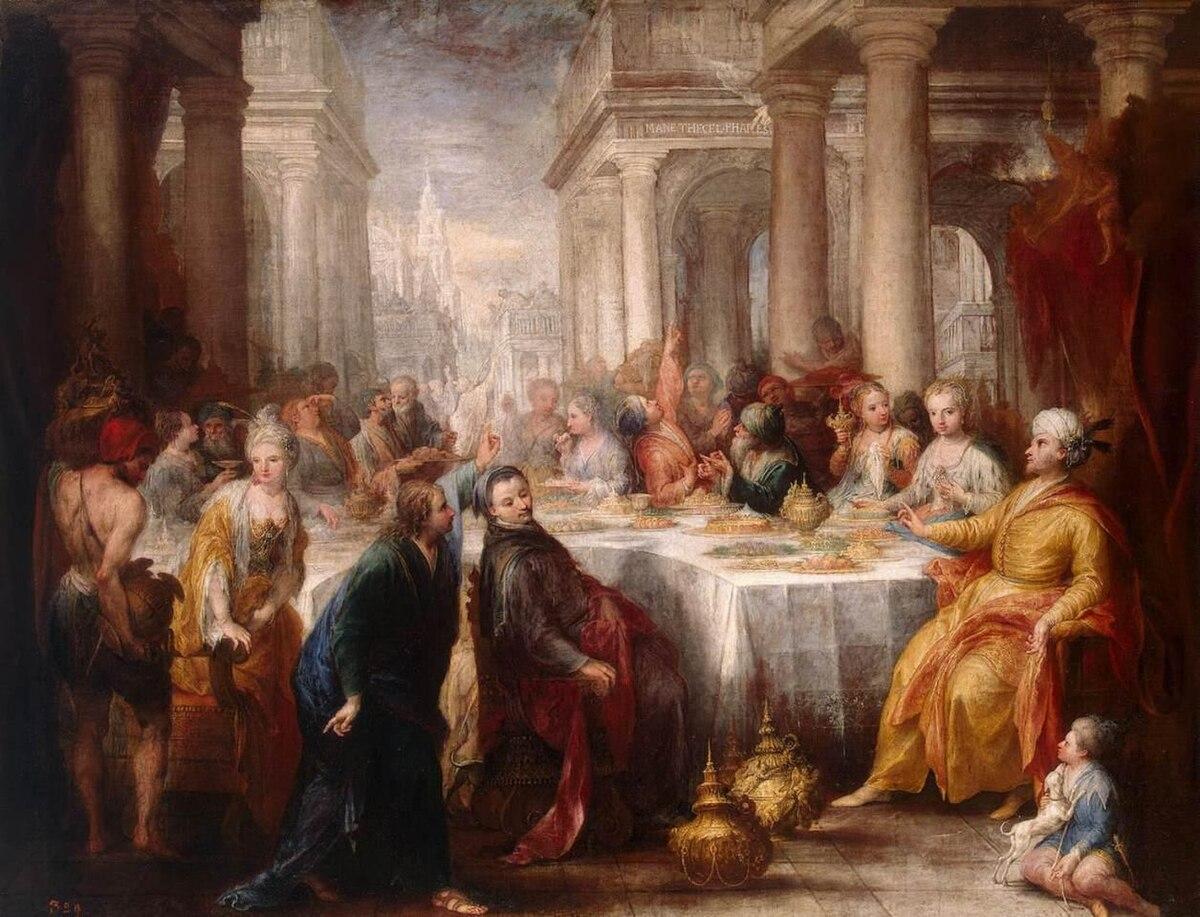
Belshazzar's Feast
John Martin
Yale Centre For British Art (Yale University), New Haven, CT, New Haven
S
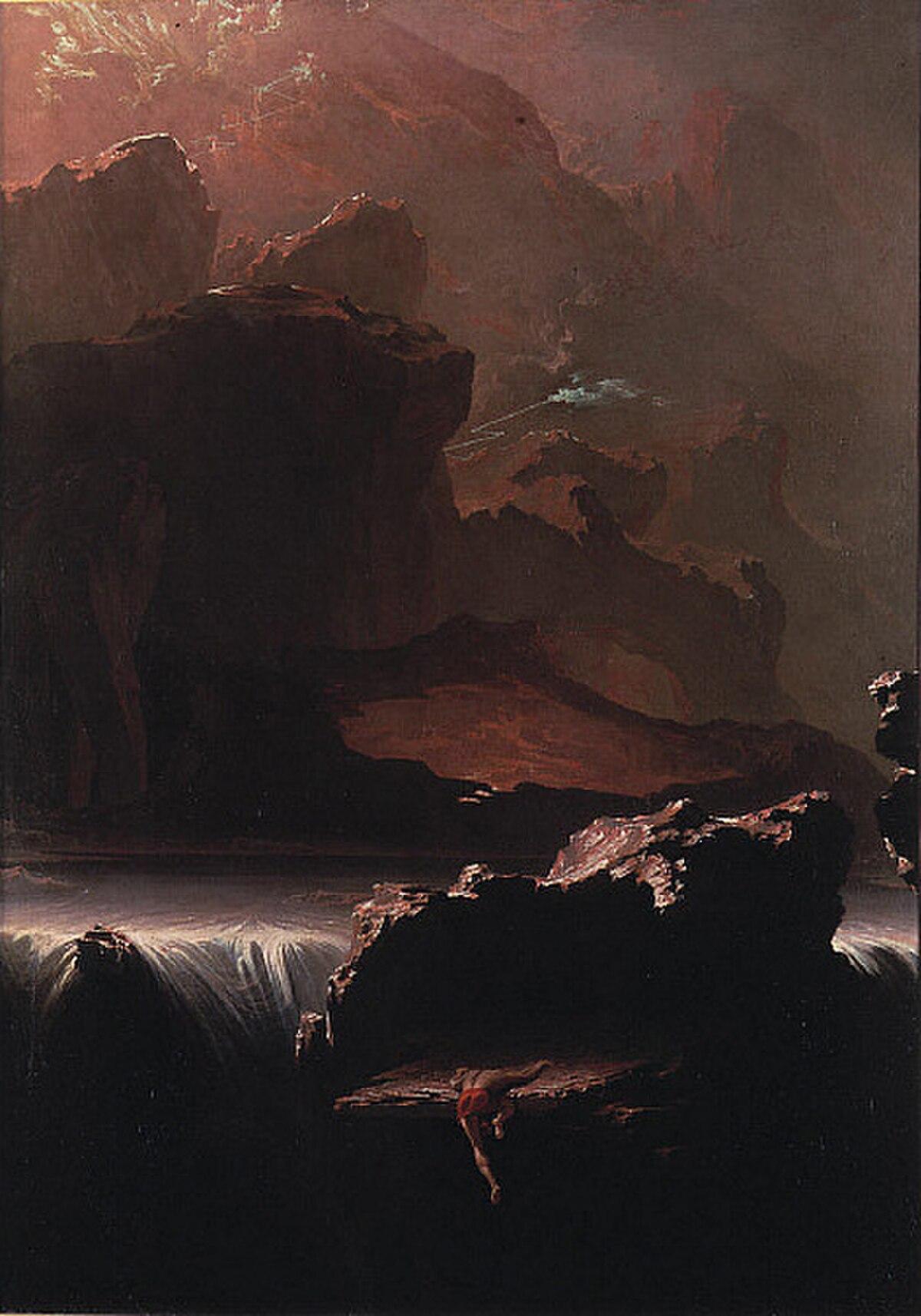
Sadak in Search of the Waters of Oblivion
John Martin
Saint Louis Art Museum, St. Louis, MO, St. Louis
L
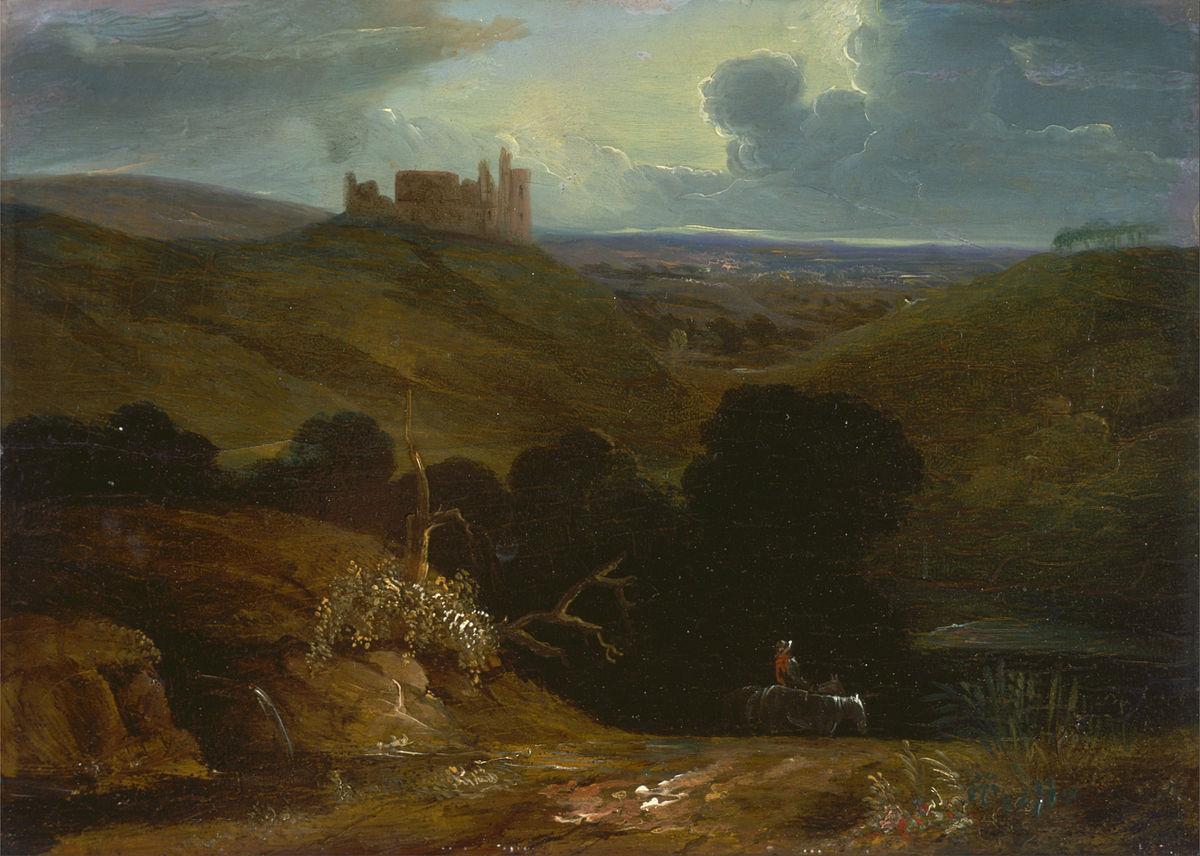
Landscape with a Castle
John Martin
Yale Centre For British Art (Yale University), New Haven, CT, New Haven
Also at Louvre, Paris
View all →Sculpture
A
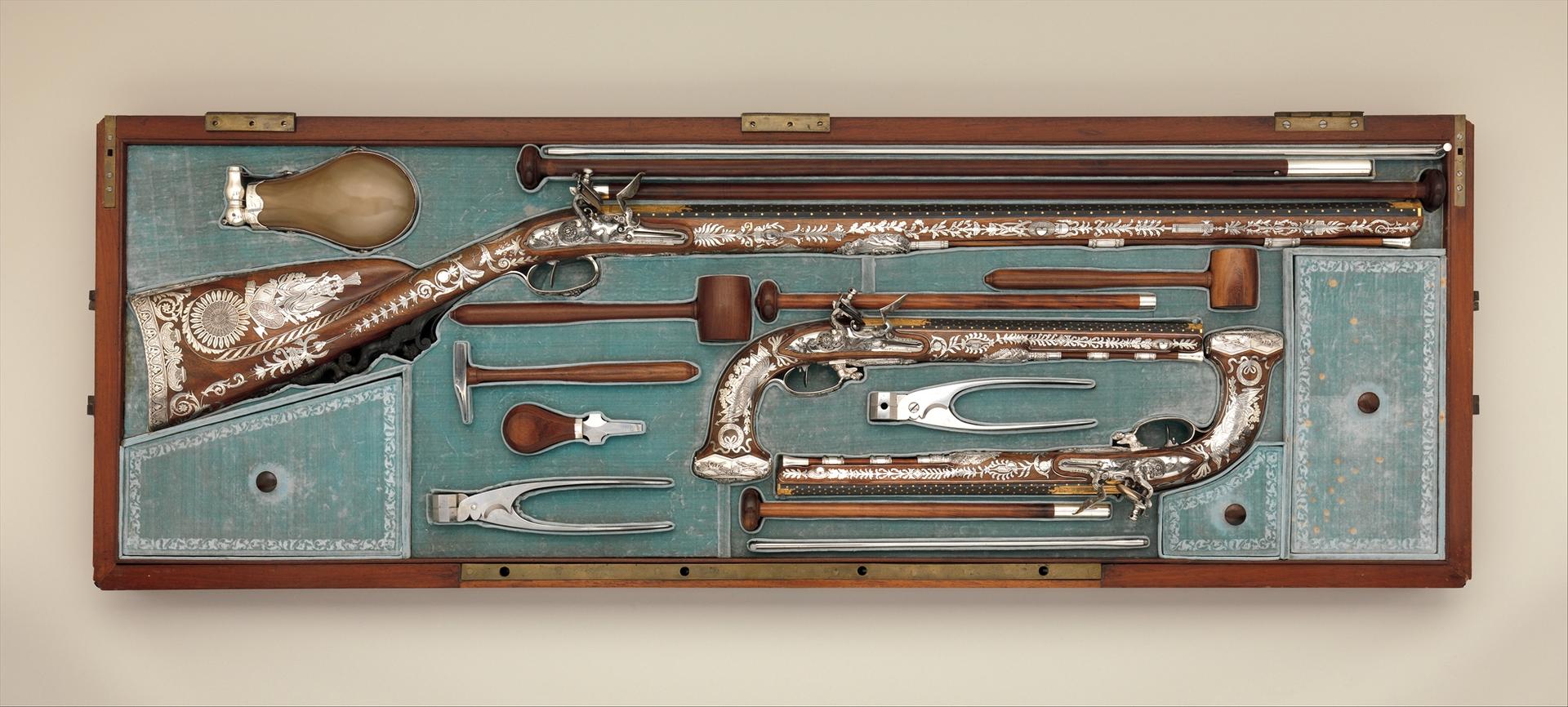
Artemis of Versailles
Ancient Roman (Unknown), -100
Louvre, Paris, Paris
T
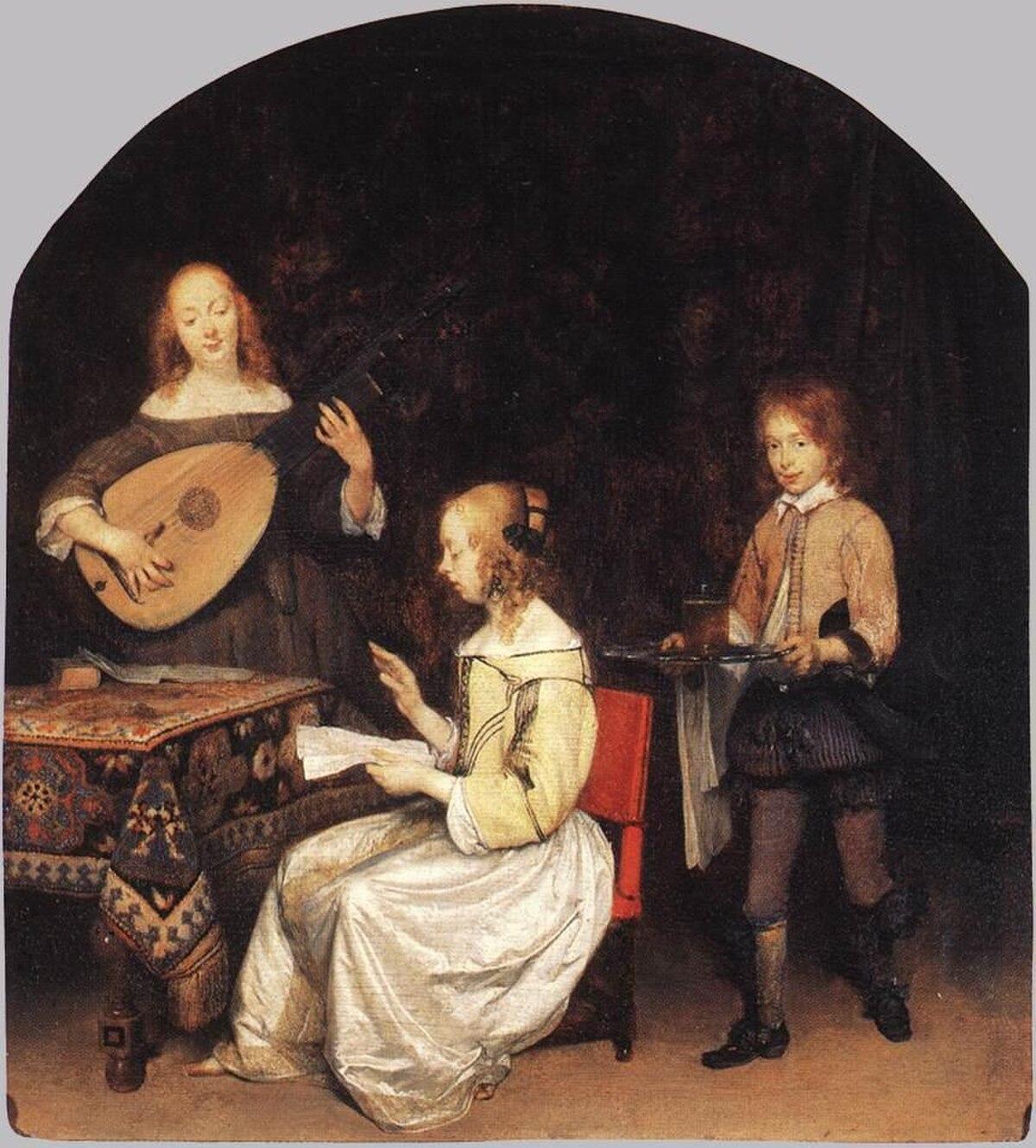
The Concert: Singer and Theorbo Player
Gerard ter Borch
Louvre, Paris, Paris
T
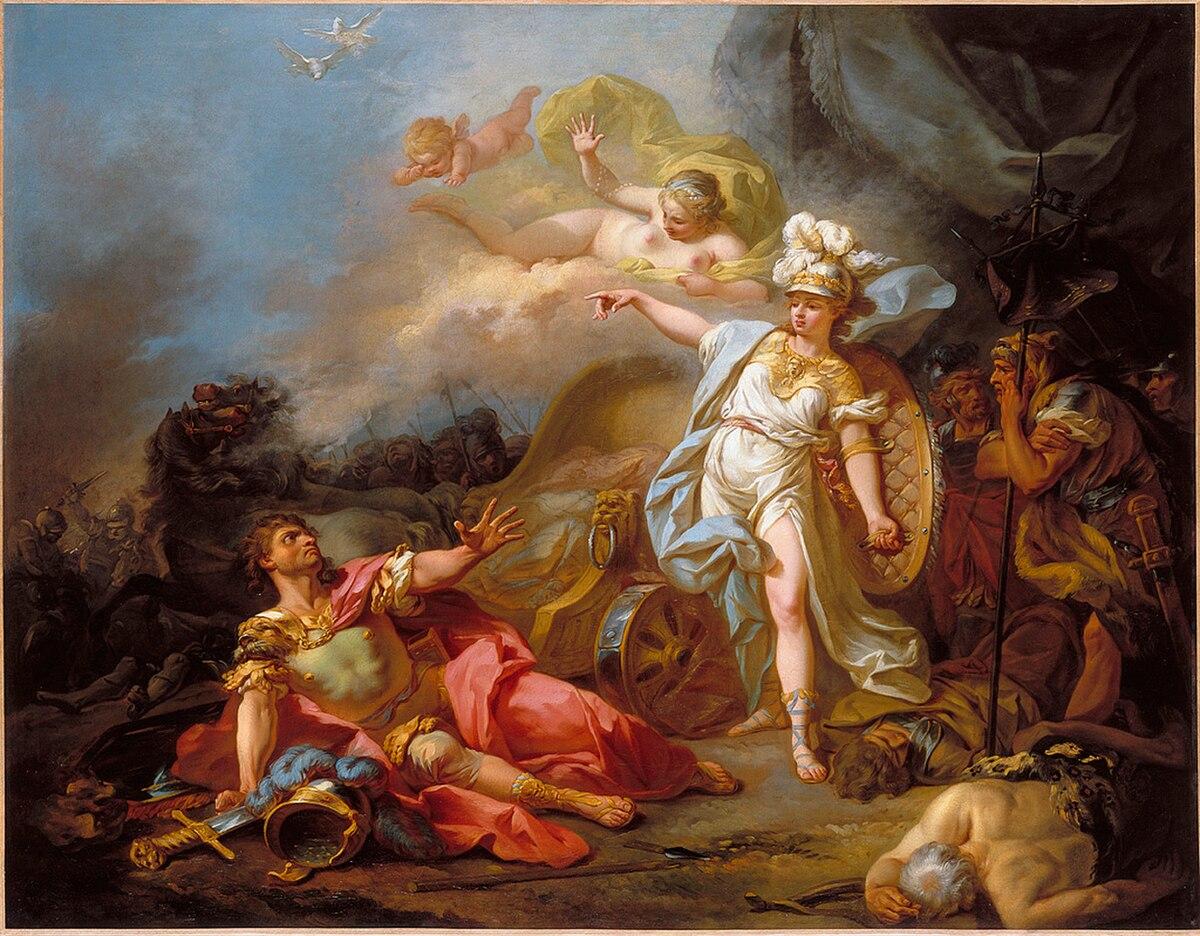
The Combat of Mars and Minerva
Jacques-Louis David
Louvre, Paris, Paris
M
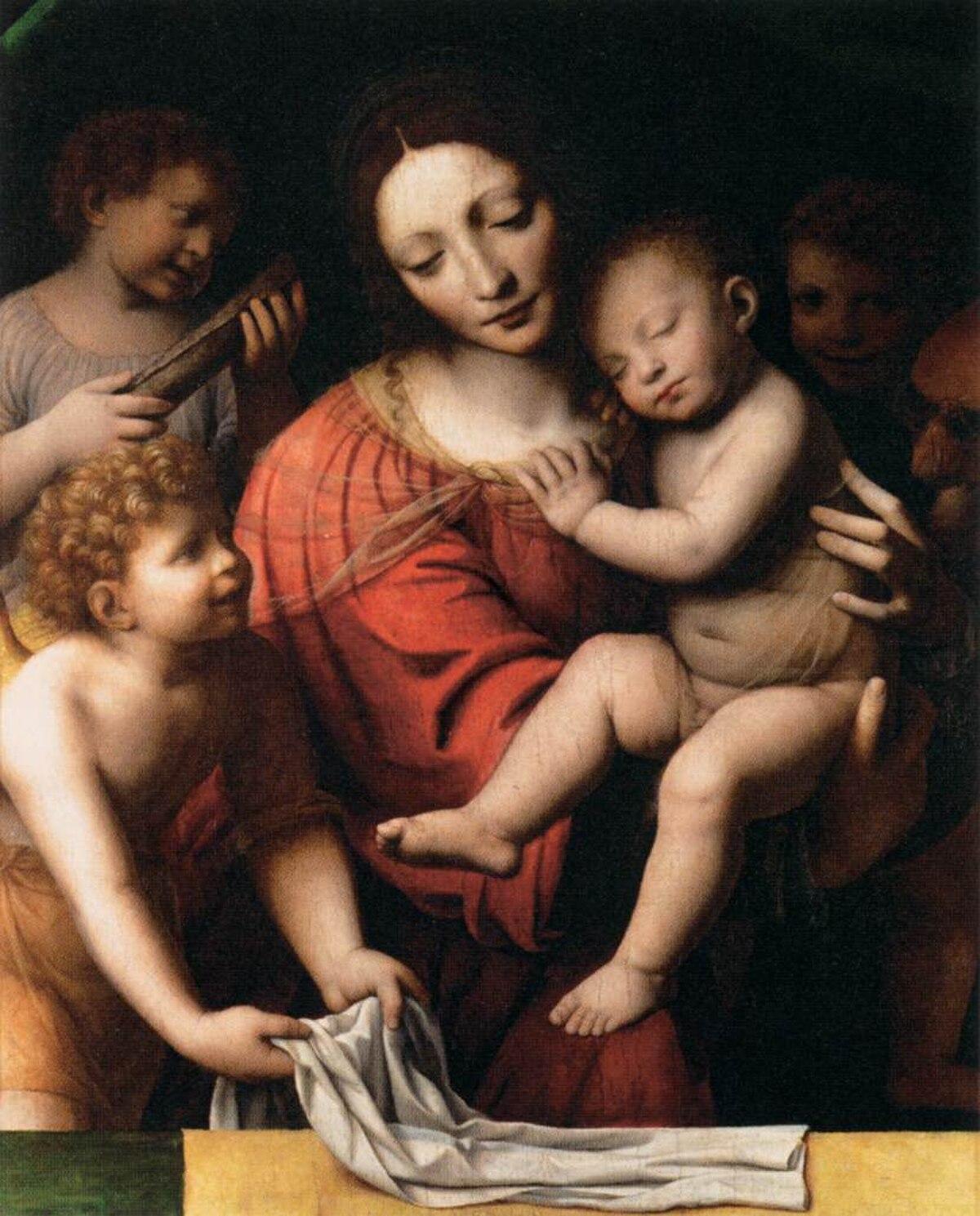
Madonna and Sleeping Child with Three Angels
Bernardino Luini
Louvre, Paris, Paris
Related Works
Works that share an artist, movement, museum, genre, palette or theme with Pandemonium.
- Same artist
- Same movement
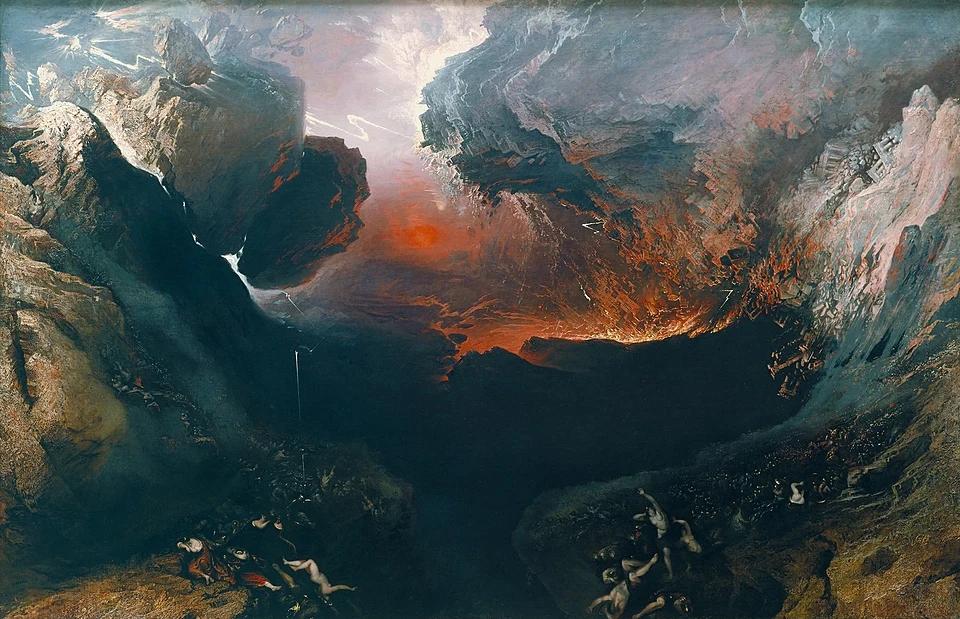
The Great Day of His Wrath
John Martin, 1853
- Same artist
- Same movement
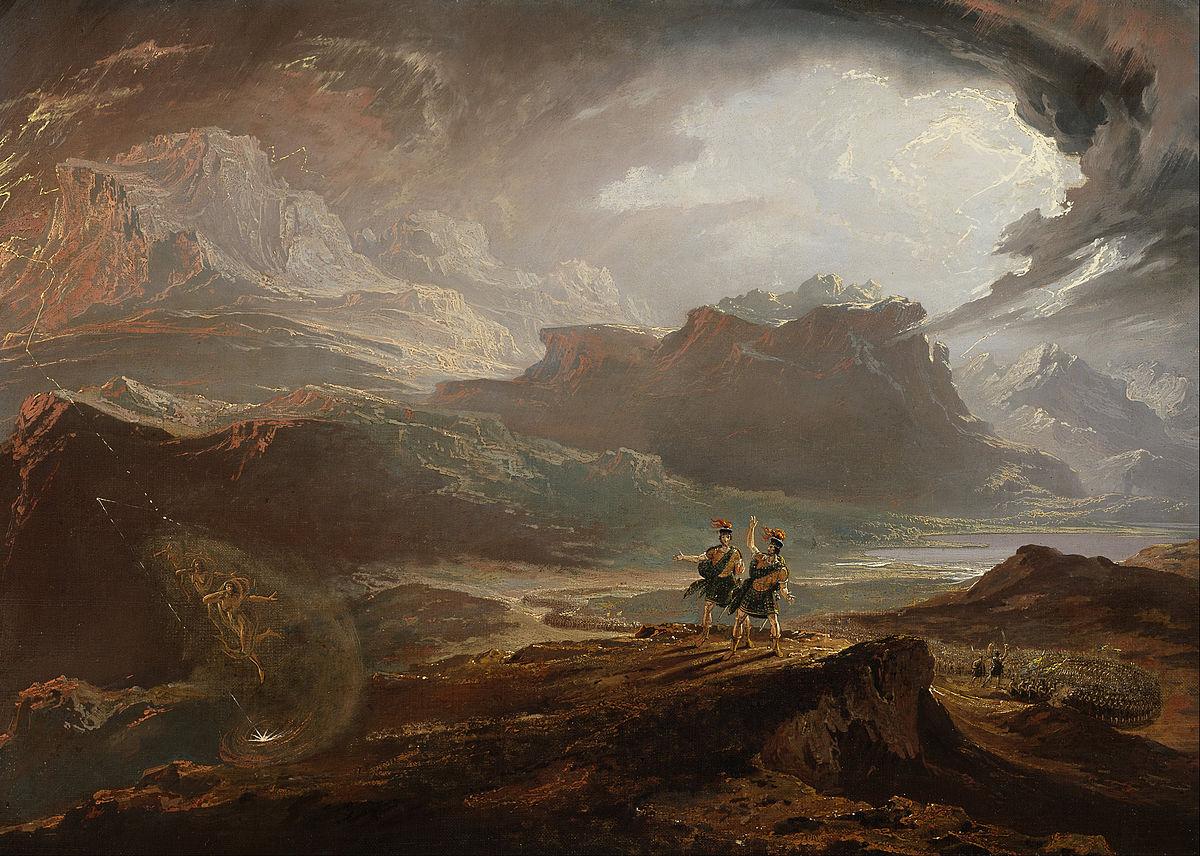
Macbeth
John Martin
- Same artist
- Same movement
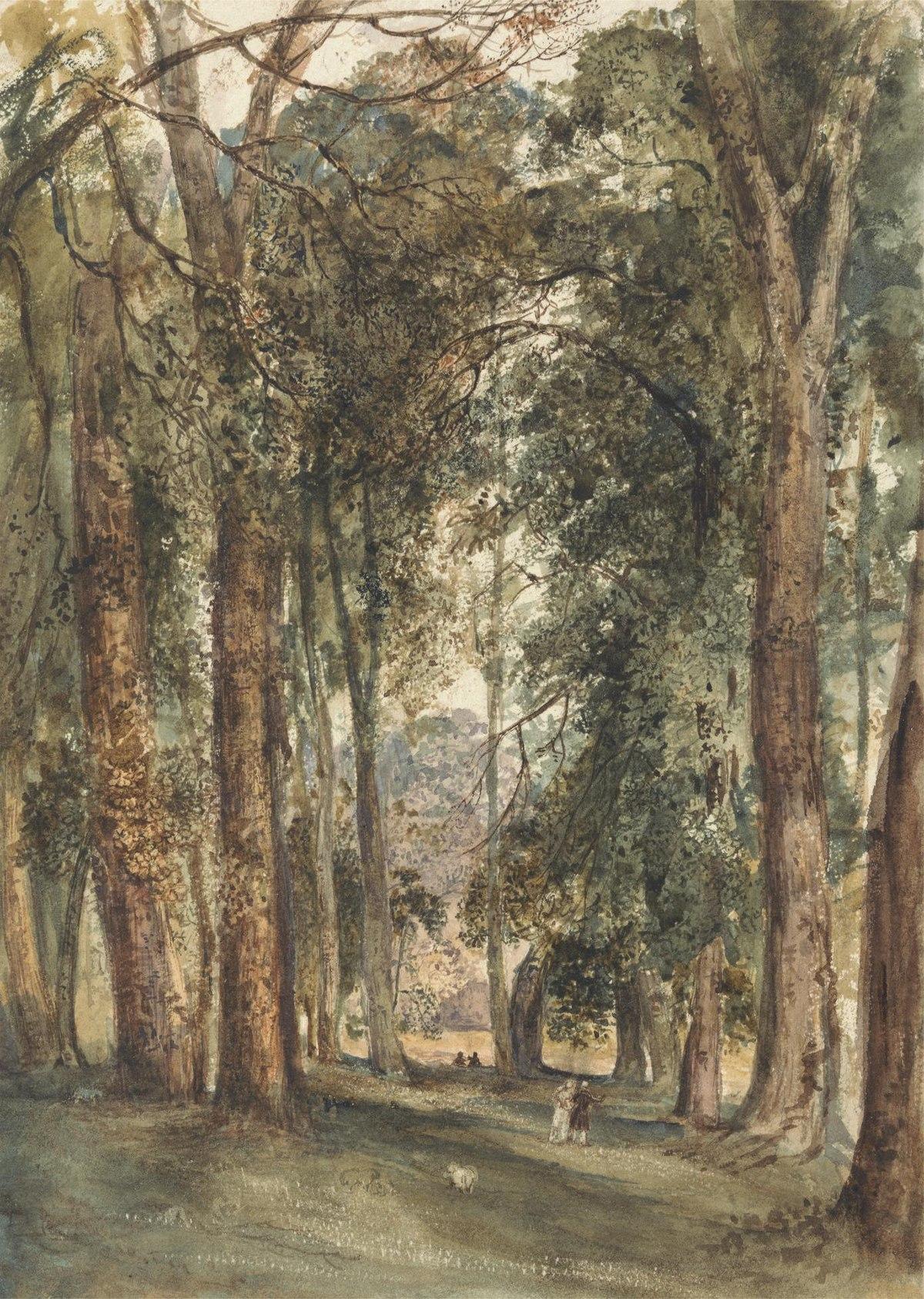
Kensington Gardens
John Martin
- Same movement
- Same museum
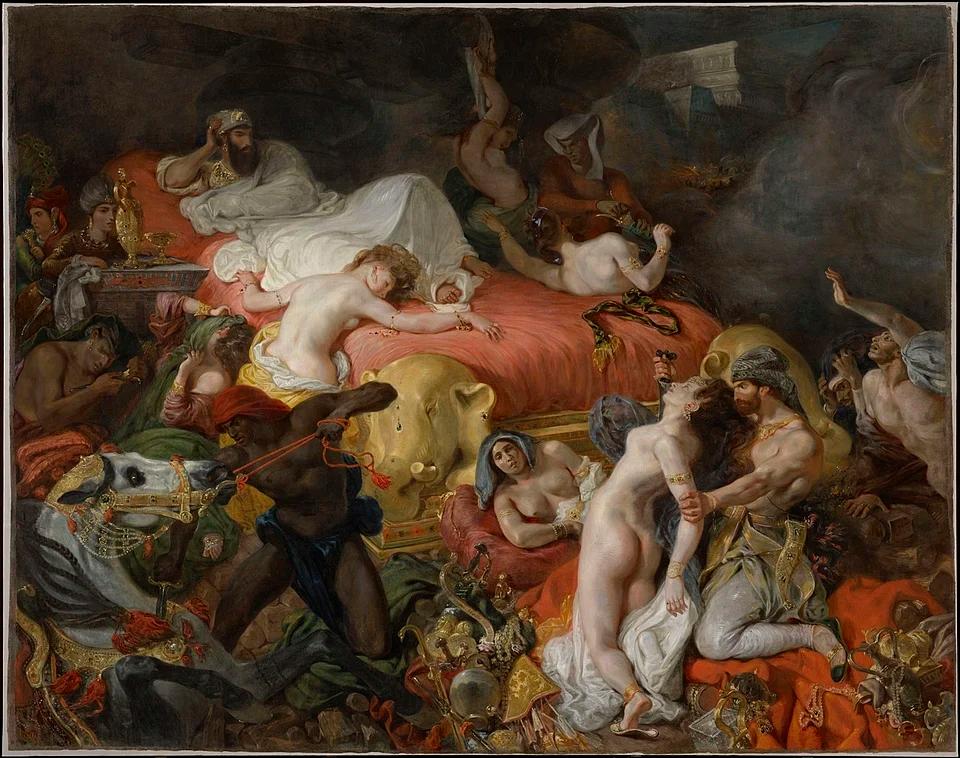
The Death of Sardanapalus
Eugène Delacroix, 1827
- Same movement
- Same museum
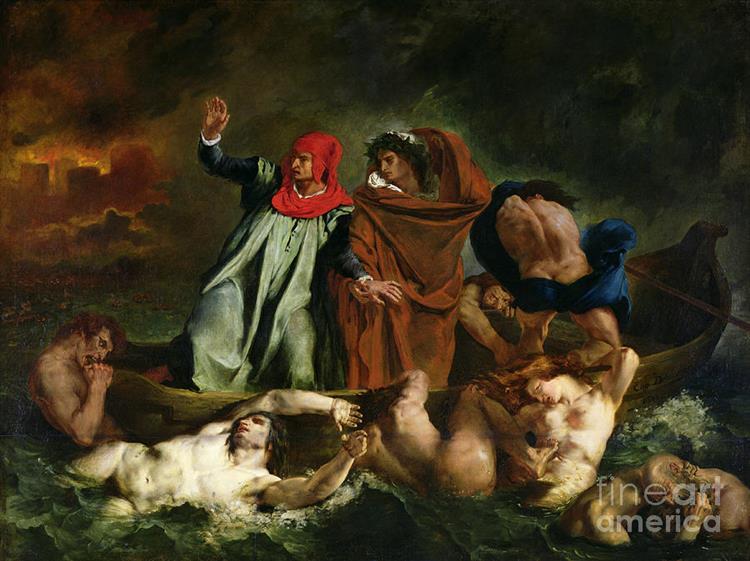
The Barque of Dante (Dante and Virgil in the Underworld)
Eugène Delacroix
- Same movement
- Same museum
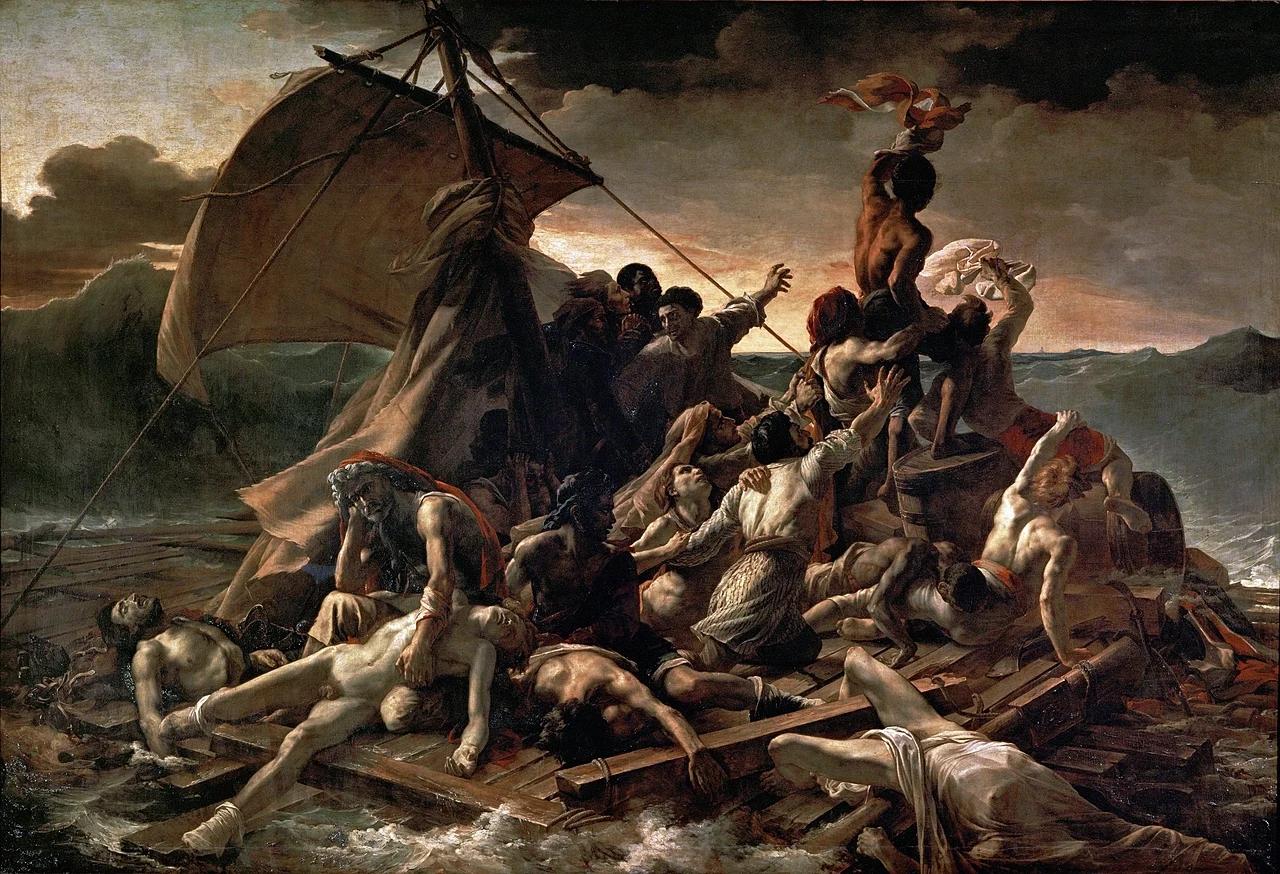
The Raft of the Medusa
Théodore Géricault, 1819
- Same movement
- Same museum
Women of Algiers
Eugène Delacroix, 1834
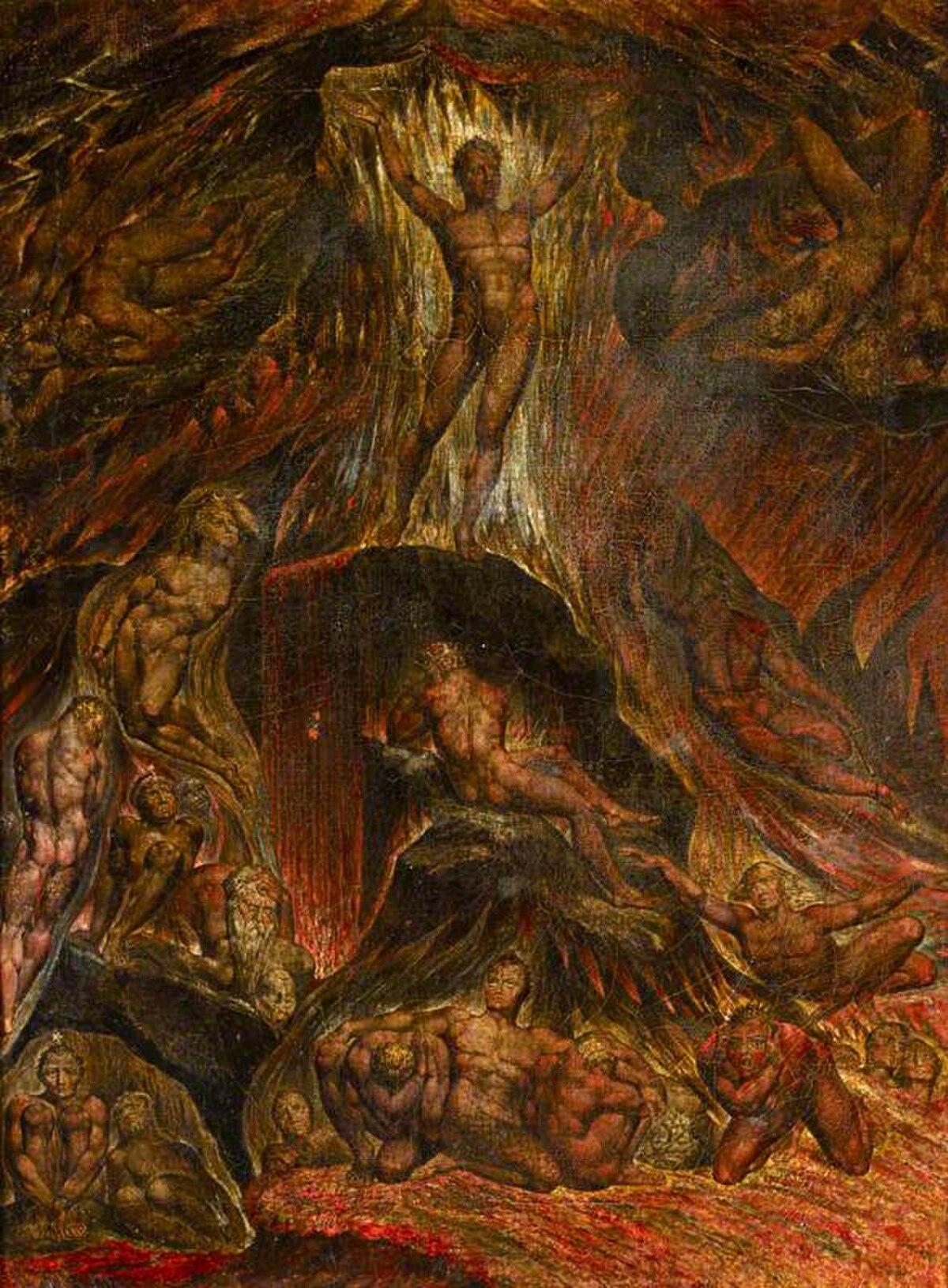
- Same movement
Satan Calling Up his Legions
William Blake
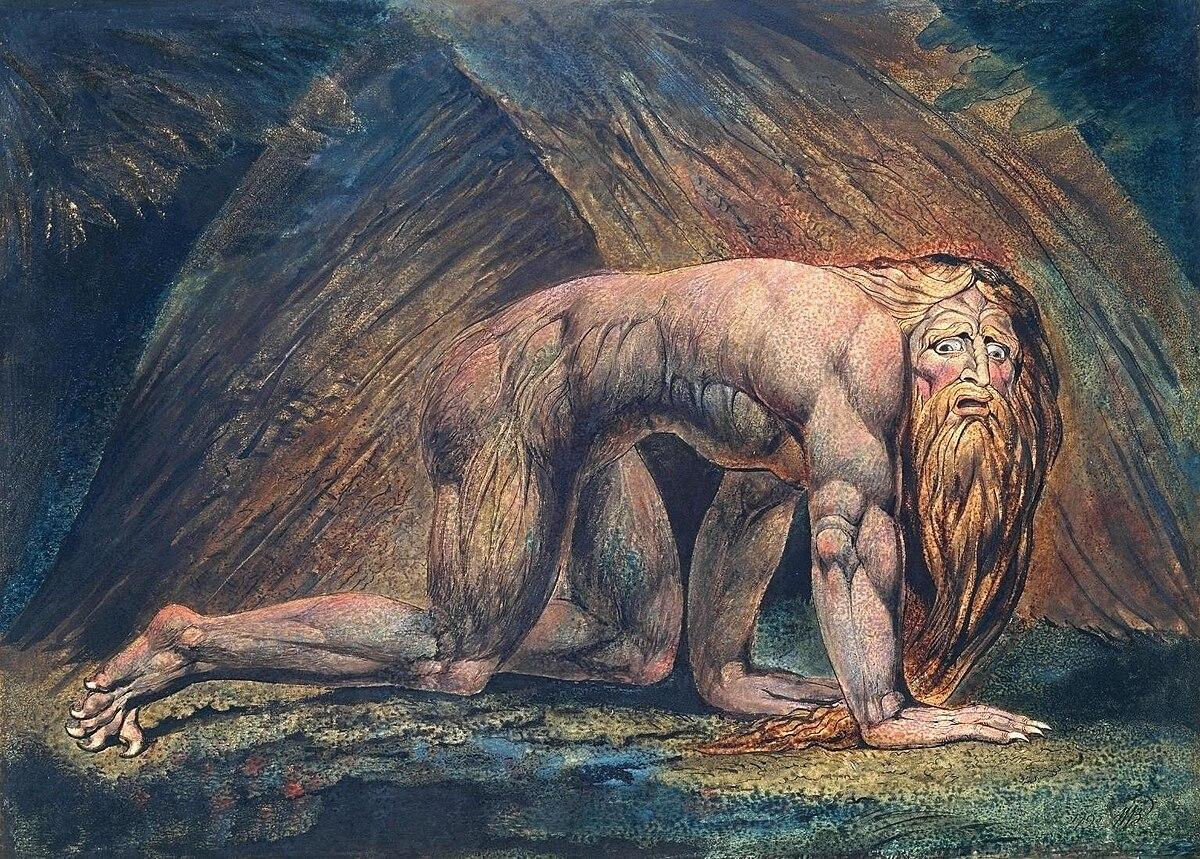
- Same movement
Nebuchadnezzar
William Blake
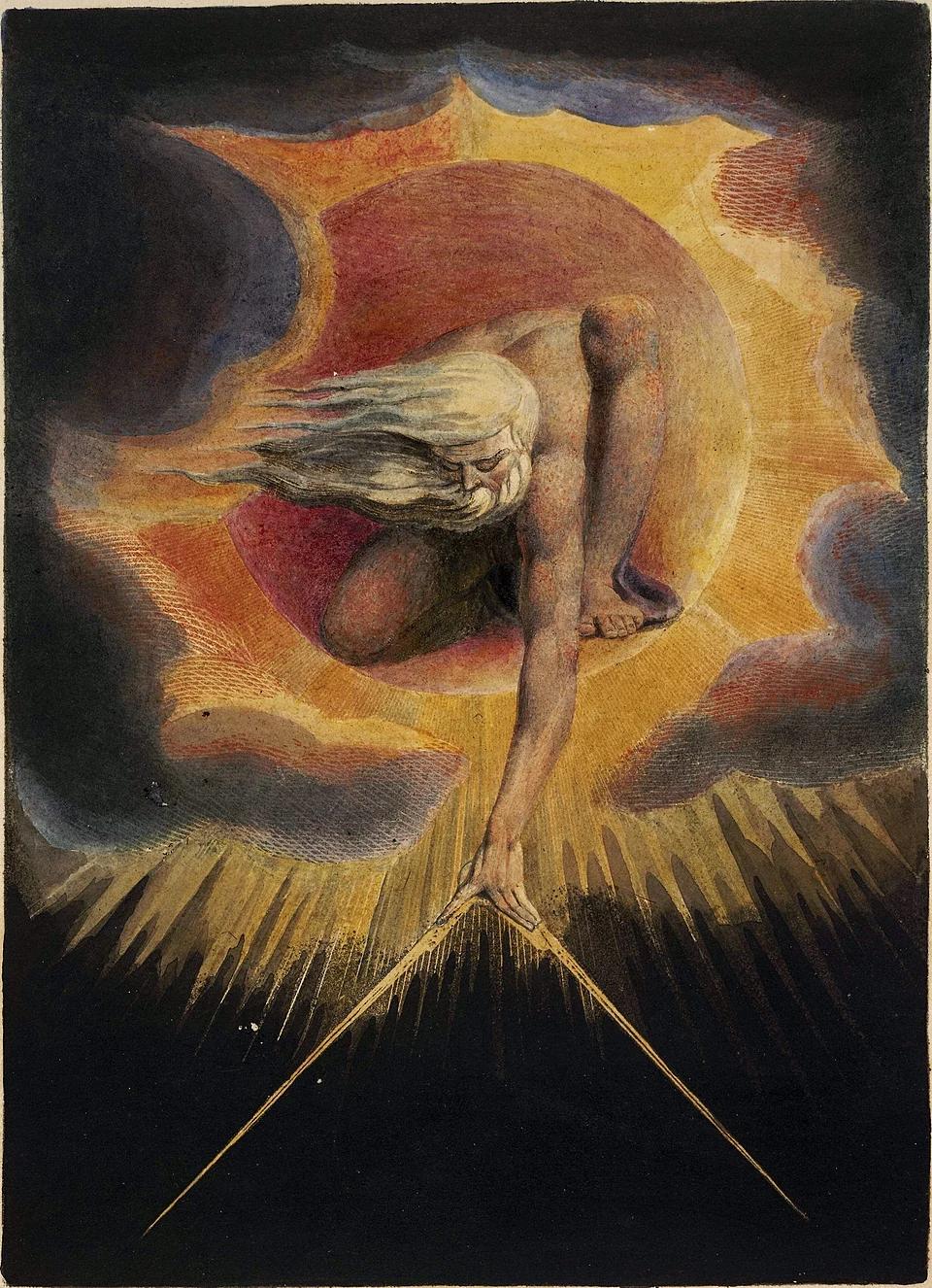
- Same movement
The Ancient of Days
William Blake, 1794
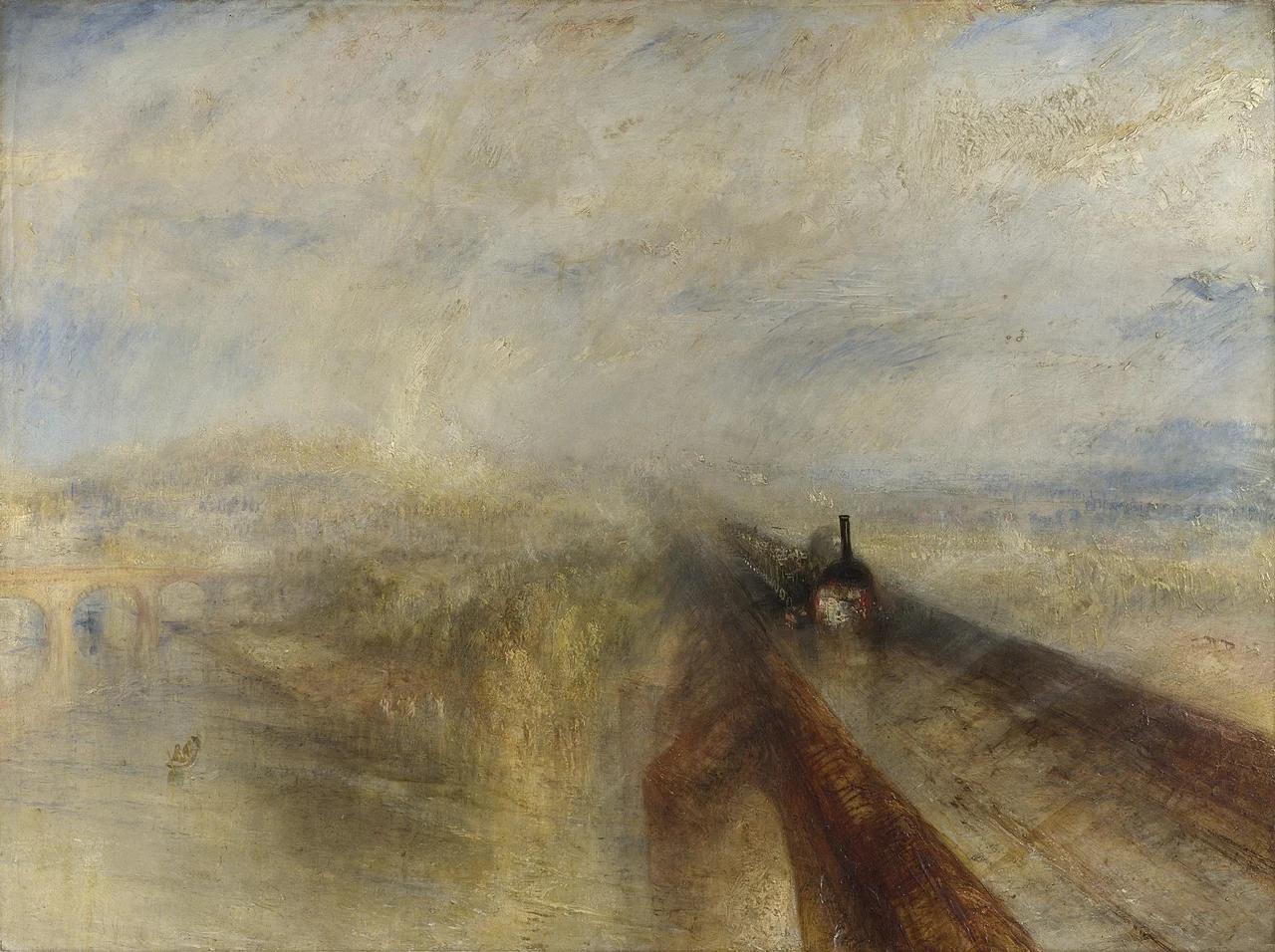
- Same movement
Rain, Steam and Speed
J.M.W. Turner, 1844
- Same movement
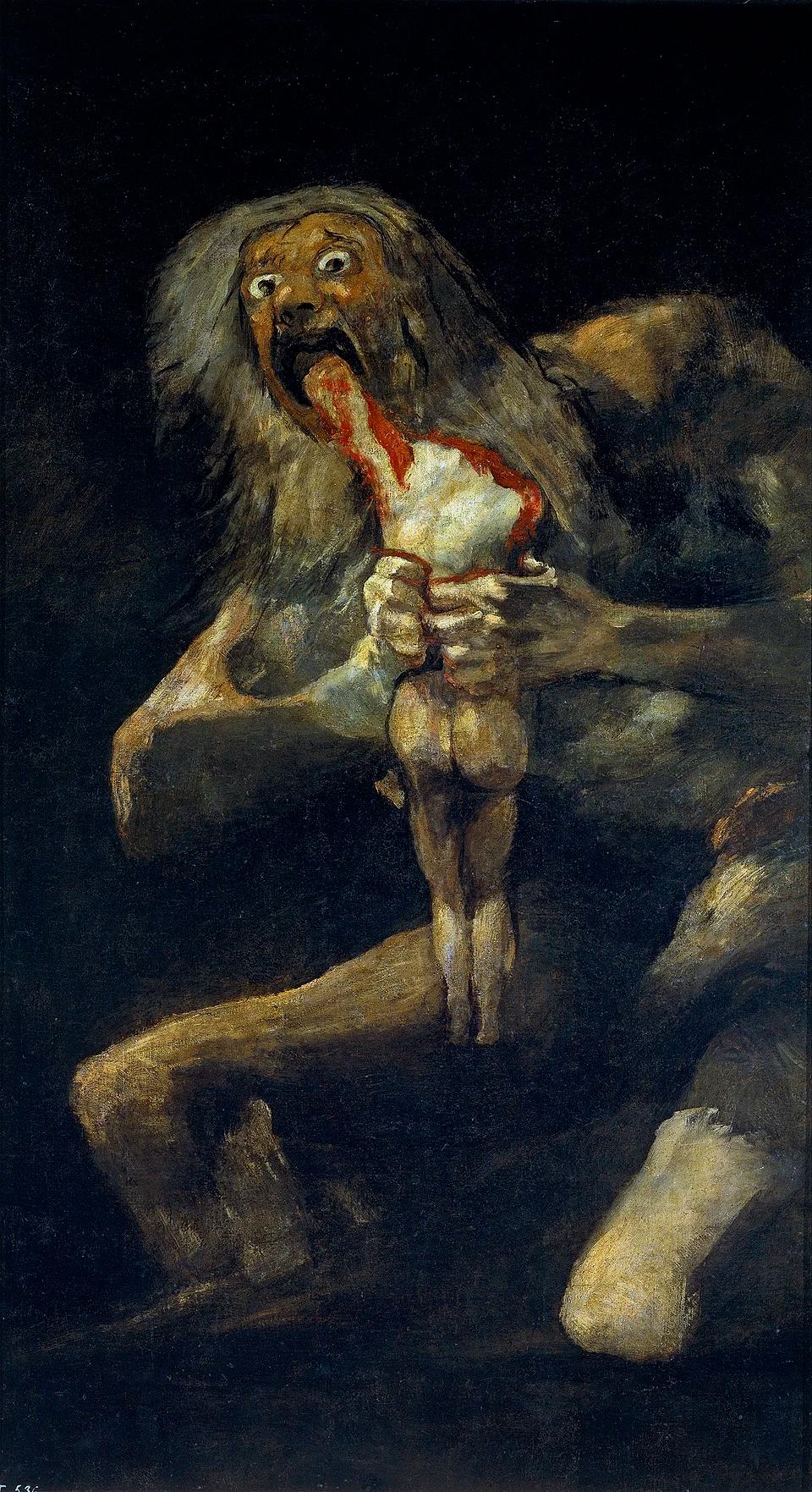
Saturn Devouring His Son
Francisco Goya, 1823
About Pandemonium
Martin illustrated Paradise Lost by John Milton. Pandemonium is Hell's capital where Satan and the fallen angels convene. Milton invented the word, combining Greek roots meaning "all demons."
The painting hangs at the Louvre Museum in Paris. Martin exhibited it at the Royal Academy in 1841 alongside a companion piece, "The Celestial City."
John Martin (1789-1854) was a British Romantic painter famous for dramatic, apocalyptic scenes from the Bible and literature. He specialized in sublime visions of destruction and chaos.
The oil on canvas measures 123.8 x 184.2 cm (48.7 x 72.5 inches). Martin designed the elaborate frame himself, decorated with serpents and dragons fitting the hellish theme.
Own Art Like This
Luxury wall art with the same mood and energy. Gallery-quality canvas, no museum crowds.
Browse Collection