Wikimedia Commons • Public Domain
Head of a horseman
Artwork Details
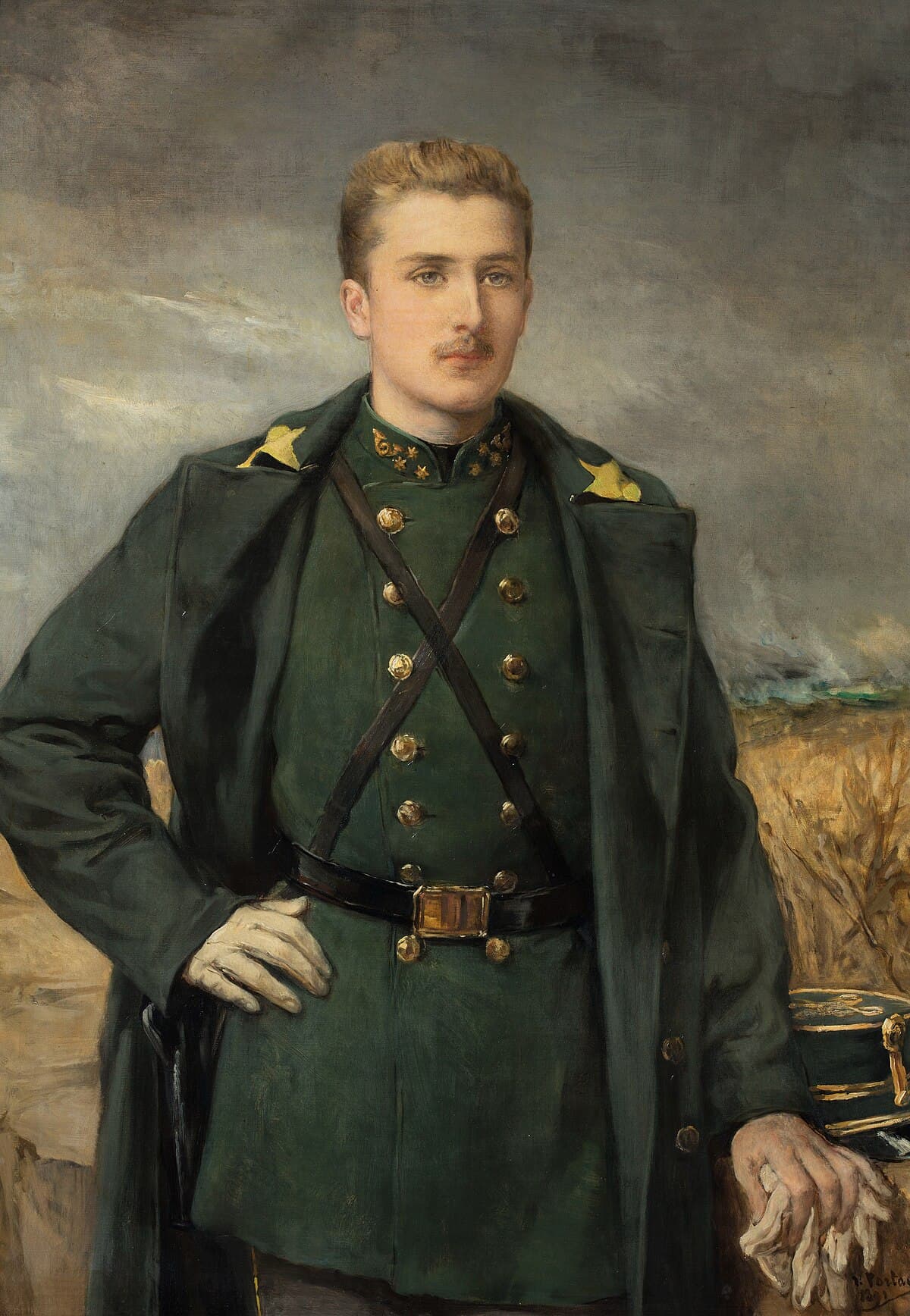
Théodore Géricault painted the military portrait around 1812, during the height of the Napoleonic era. A cavalry officer's face emerges from dark shadows, his features strongly modeled and his expression intense.
Géricault was drawn to horses and soldiers throughout his short career. He debuted at the 1812 Salon with The Charging Chasseur, a dramatic equestrian portrait that announced his talent for military subjects. This smaller study, measuring 36 x 44 cm, shares that interest in martial figures. The Romantic style shows in the emotional intensity and the contrast between light and shadow.
The work now hangs at the Musée Bonnat-Helleu in Bayonne, France. Géricault would go on to paint The Raft of the Medusa in 1818-1819, one of French Romanticism's defining images. He died in 1824 at just 32, leaving a body of work that bridged Neoclassicism and Romanticism. His fascination with military subjects, anatomy, and dramatic action influenced Delacroix and later artists drawn to horse art and dynamic movement.