Wikimedia Commons • Public Domain
Naked man reversed on the ground
Artwork Details
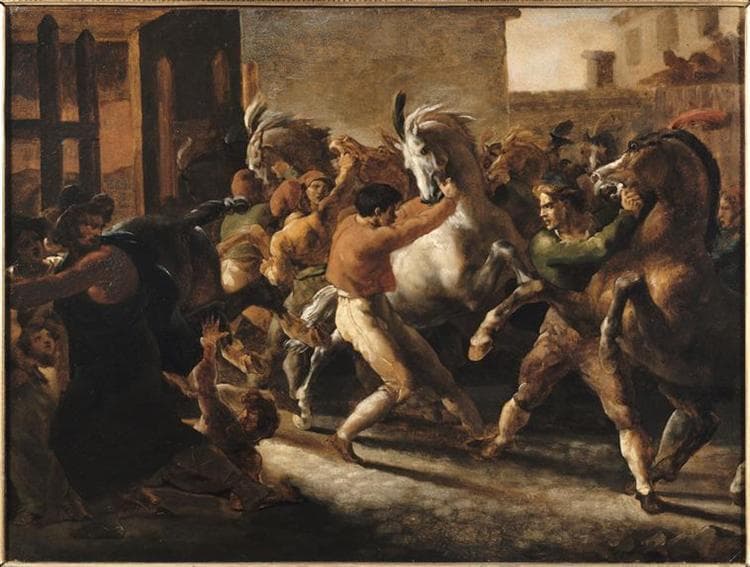
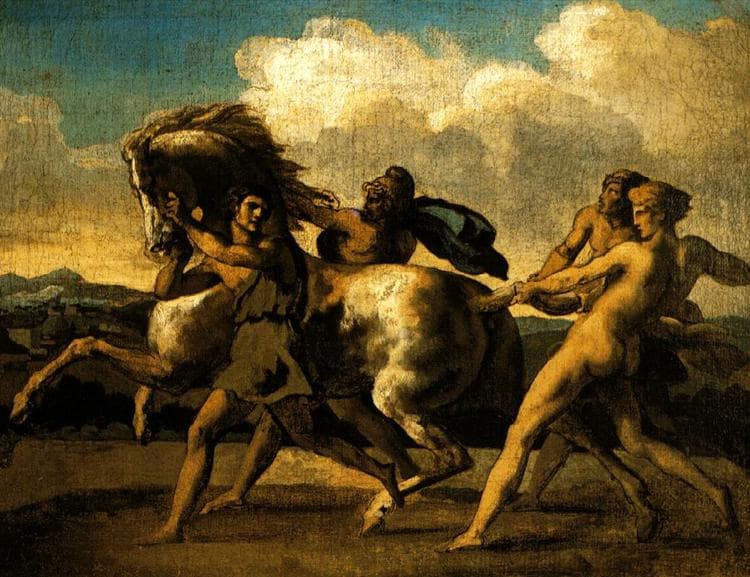
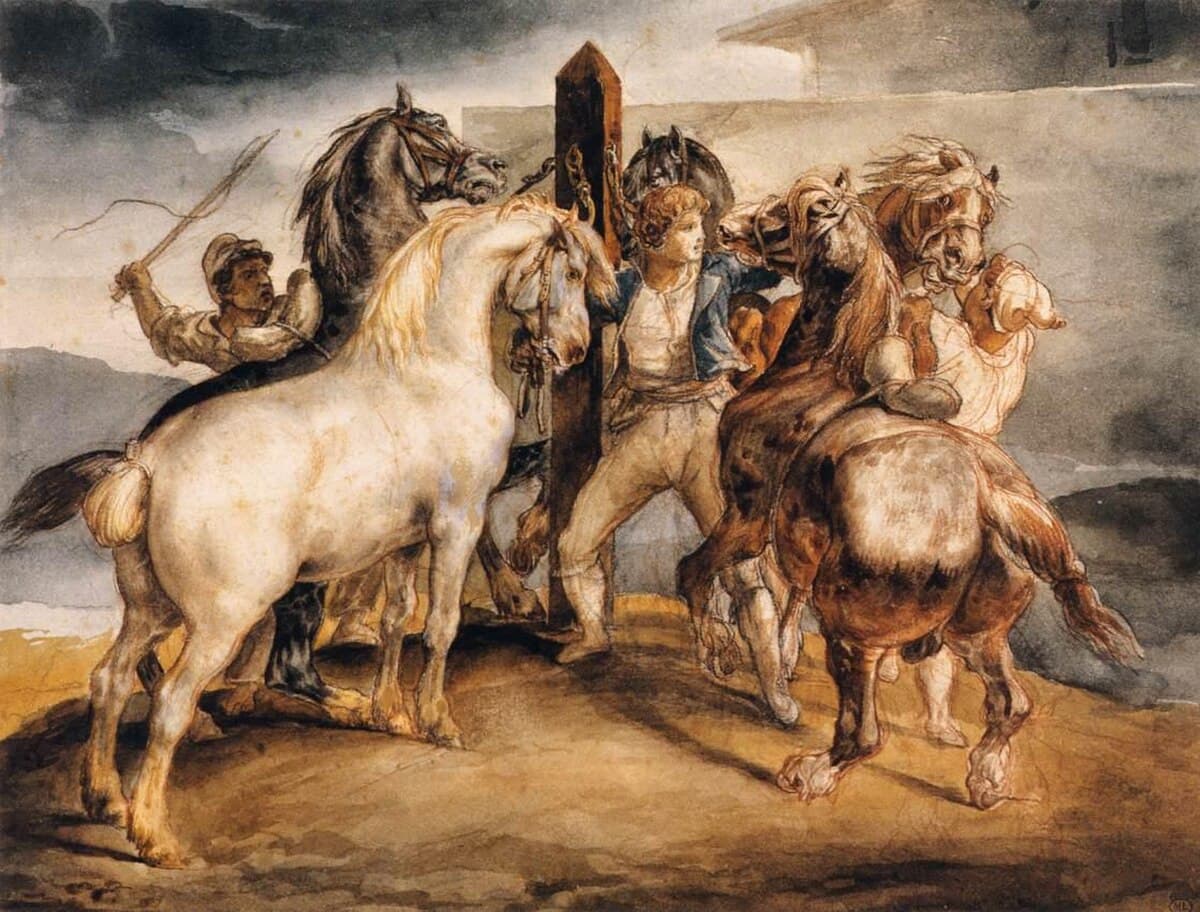
French painter Théodore Géricault created this anatomical studies of the male nude that revolutionized academic conventions. While nude studies were essential to an artist's training, Géricault abandoned the traditional frontal studio pose entirely. He placed figures in dramatic settings and experimented with radical ways of presenting the body that explored his deep understanding of anatomy.
Géricault trained under Pierre-Narcisse Guérin, a rigorous classicist who disapproved of his student's impulsive temperament while recognizing his talent. A trip to Italy in 1816-17 ignited Géricault's fascination with Michelangelo, visible in the dramatic poses of his figures. The expressive use of light and shadow in his nudes anticipated the development of Romanticism.
This painting resides at the Musée Magnin in Dijon, France. Géricault is best known for "The Raft of the Medusa," and despite his short life (he died at 32), he was one of the pioneers of the Romantic movement. His anatomical studies reveal the intense preparation behind his major works.