Public Domain
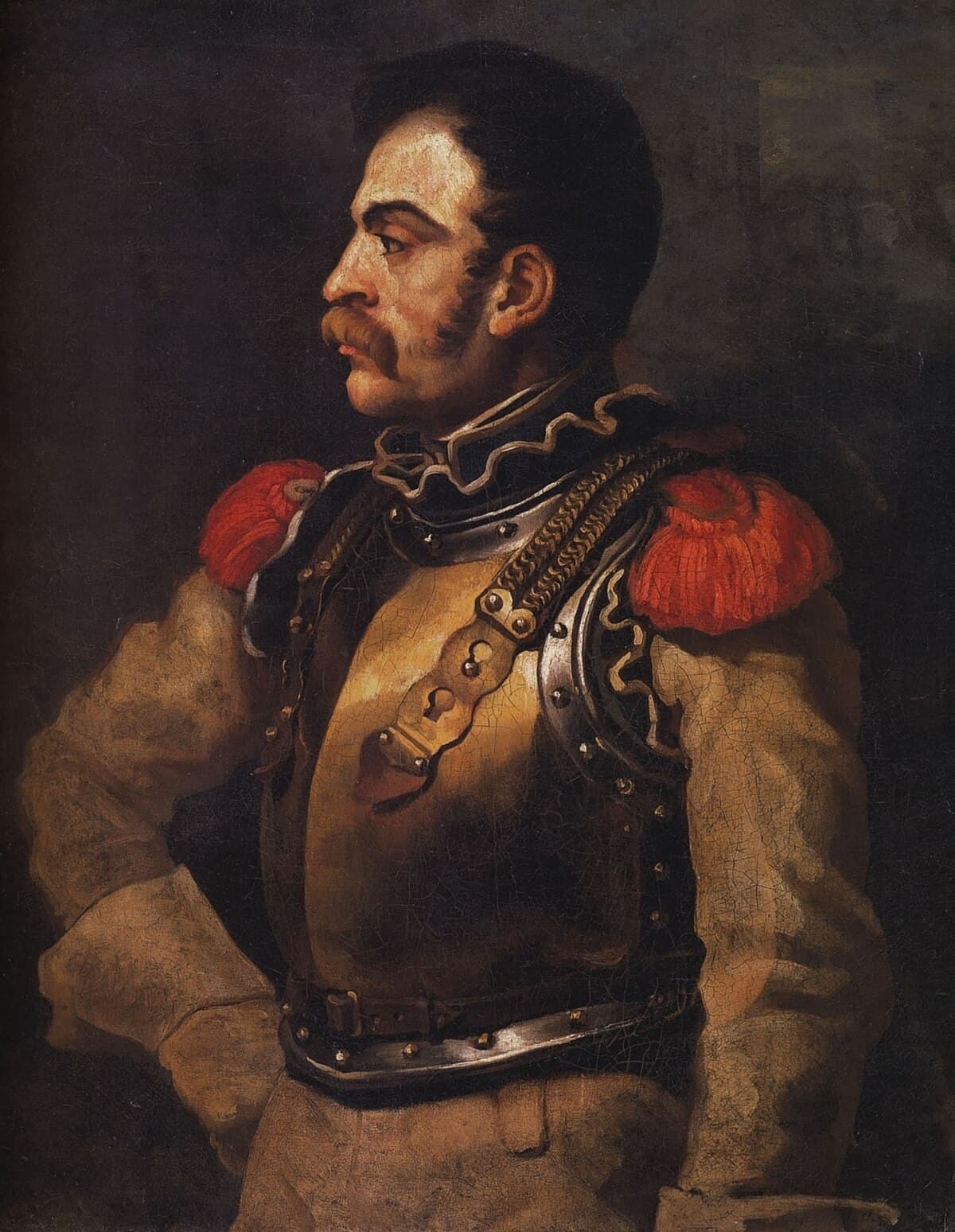
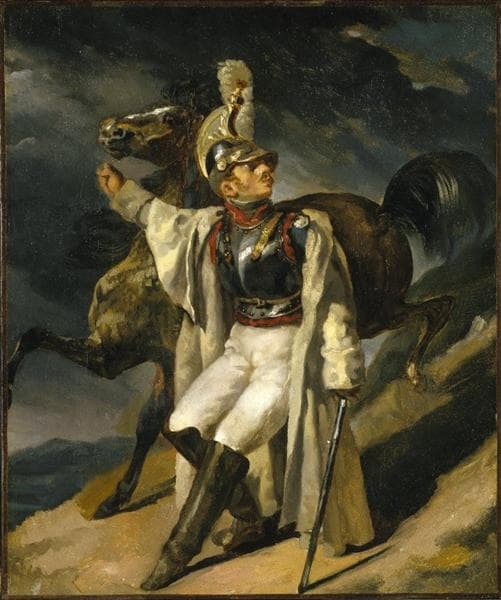
The Wounded Cuirassier
StyleRomanticism
Artwork Details
Cite or Embed This Work
APA · MLA · Chicago1-click academic citation and embeddable “On View” museum badge for articles, syllabi, and research.
French artist Théodore Géricault painted this monumental image of defeat in just three weeks for the Salon of 1814. A cuirassier (armored cavalry soldier) descends a slope, using his sword as a crutch while his nervous horse strains behind him. No visible wound appears; the injury seems internal, perhaps to his pride or spirit.
Géricault exhibited this work as France faced military collapse: Paris had fallen, Napoleon was exiled, and national morale lay shattered. Critics disliked its somber mood, expecting military glory rather than defeat. Disappointed, Géricault joined the army briefly before leaving for Rome. The painting established Romanticism's emotional intensity and now hangs at the Louvre.