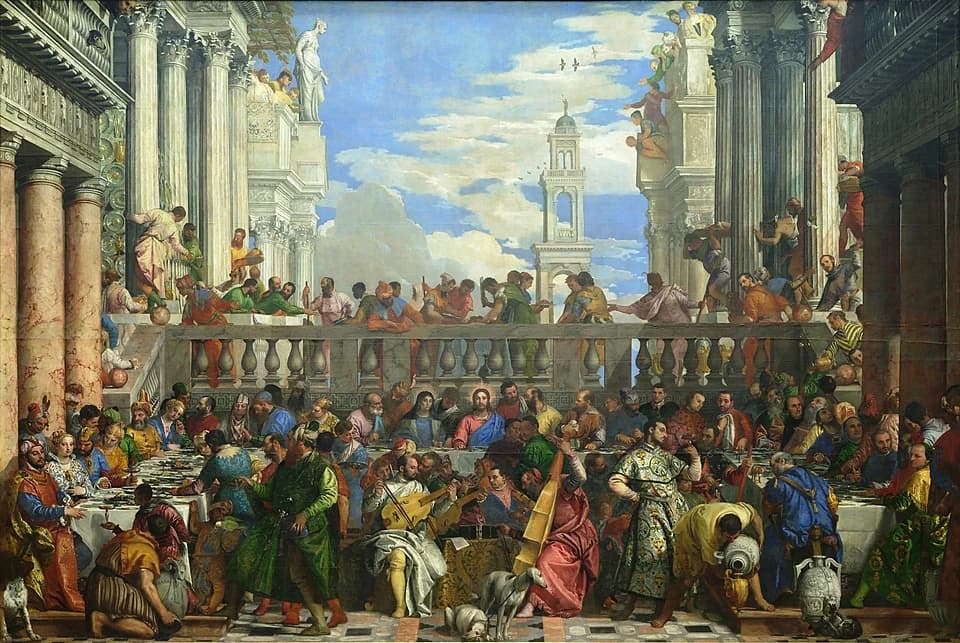
The Wedding at Cana
by Paolo Veronese, 1563
StyleRenaissance
Artwork Details
Details
- Year
- 1563
- Medium
- Oil on canvas
- Size
- 677 cm × 994 cm
Cite or Embed This Work
APA · MLA · Chicago1-click academic citation and embeddable “On View” museum badge for articles, syllabi, and research.
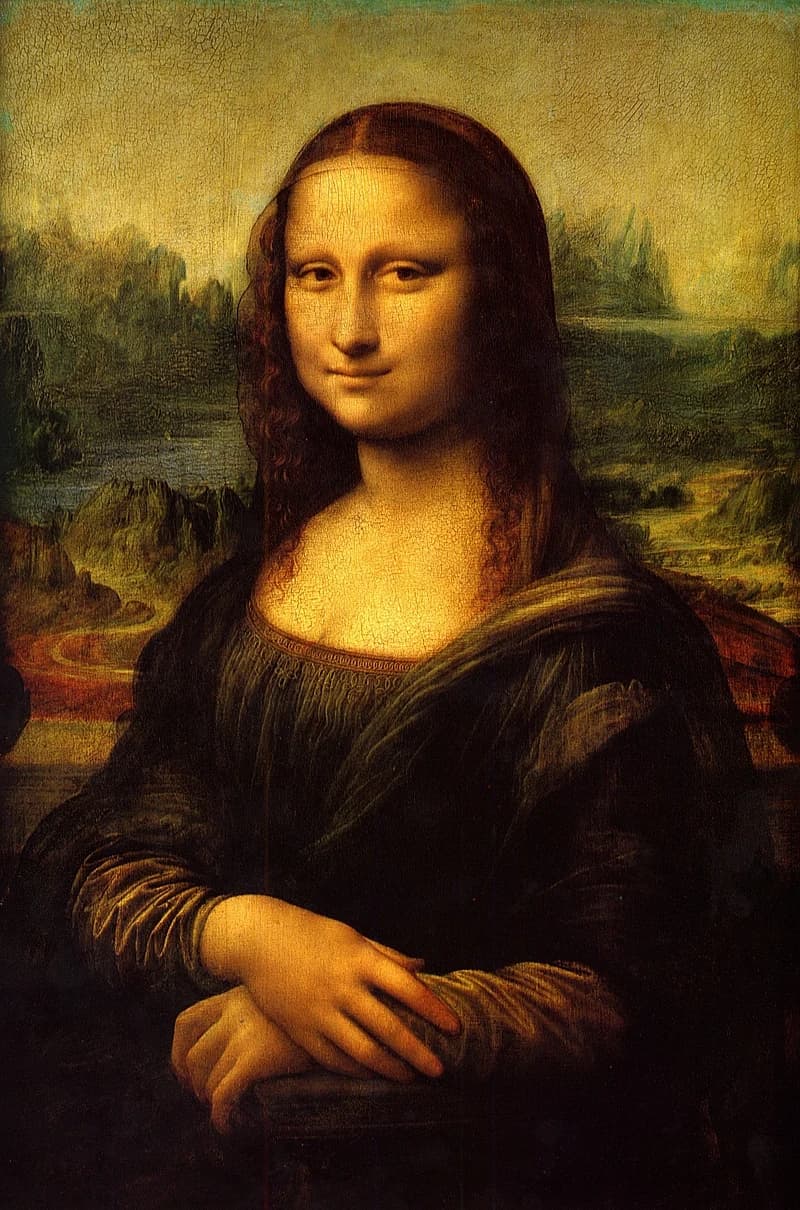
At nearly seven meters tall and ten meters wide, Paolo Veronese's The Wedding at Cana occupies an entire wall directly opposite the Mona Lisa in the Louvre. Jesus performs his first miracle at a wedding feast, transforming water into wine when the hosts run short. Veronese transformed this modest Gospel scene into a spectacle of Venetian magnificence: classical architecture, silk brocades, and over 130 figures arranged across a vast outdoor banquet.
Veronese included himself and his fellow Venetian masters among the musicians in the foreground. Titian, elderly and dressed in red, plays the bass viol. Tintoretto holds a violin. Jacopo Bassano plays the flute. Veronese himself, wearing white, plays the viola da gamba. Christ sits at the center of the composition, almost lost amid the festivity, while servants in the lower left pour the miraculous wine.
Veronese completed this enormous canvas in 1563 for the refectory of San Giorgio Maggiore monastery in Venice. It hung there for over two centuries until Napoleon's troops seized it in 1797, cutting it from its stretcher and rolling it up for transport to Paris. The Louvre has held it ever since, despite periodic Italian requests for its return. Brilliant blues, reds, and golds represent the height of Venetian Renaissance colorism.