Carl Spitzweg
German·1808–1885
Carl Spitzweg (1808–1885) painted eccentrics with affection. Born in Munich, the second of three sons in a wealthy merchant family, he trained as a pharmacist at his father's insistence. An illness during his studies gave him time to draw. When an inheritance made him financially independent in 1833, he abandoned pharmacy for painting. He never looked back.
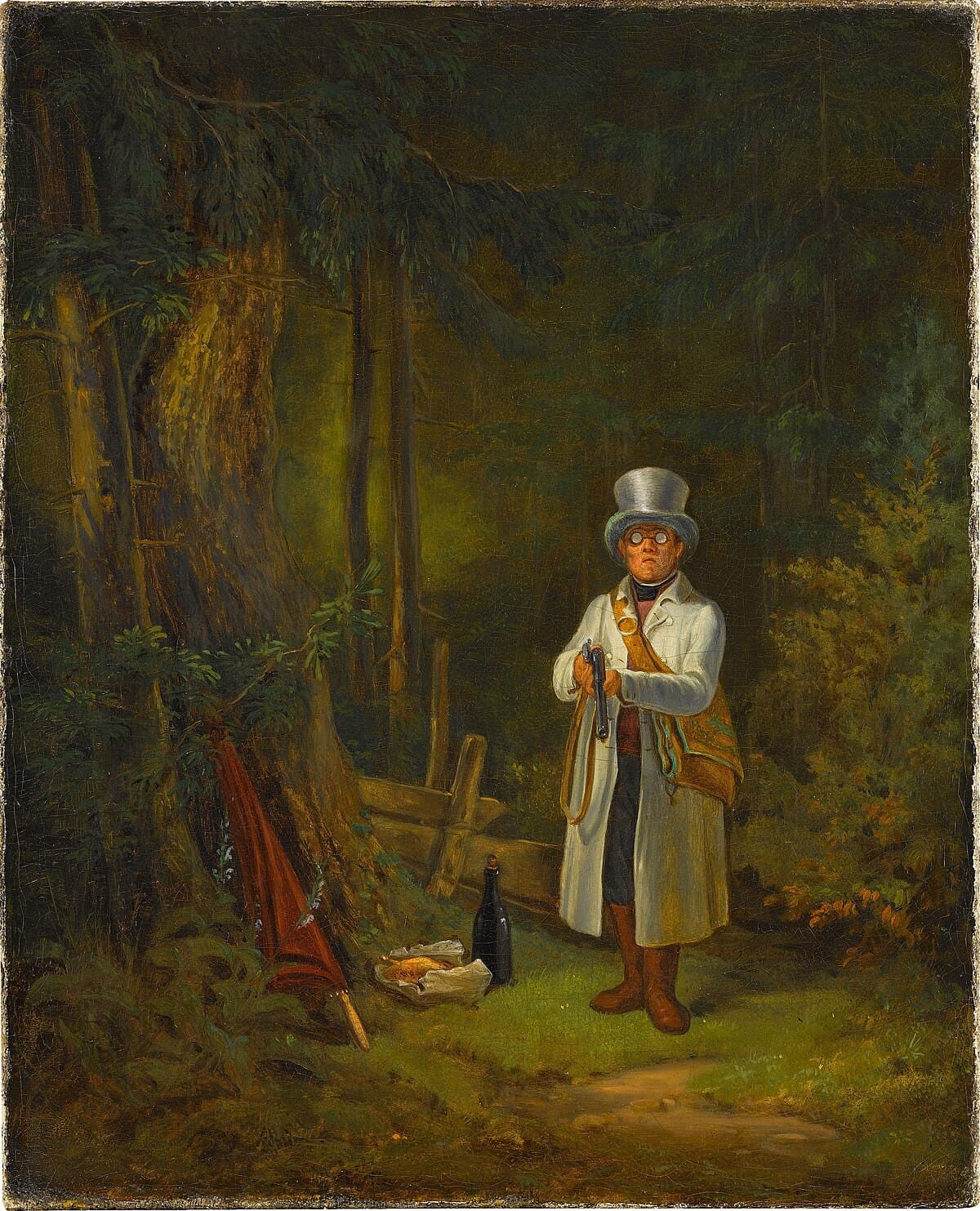
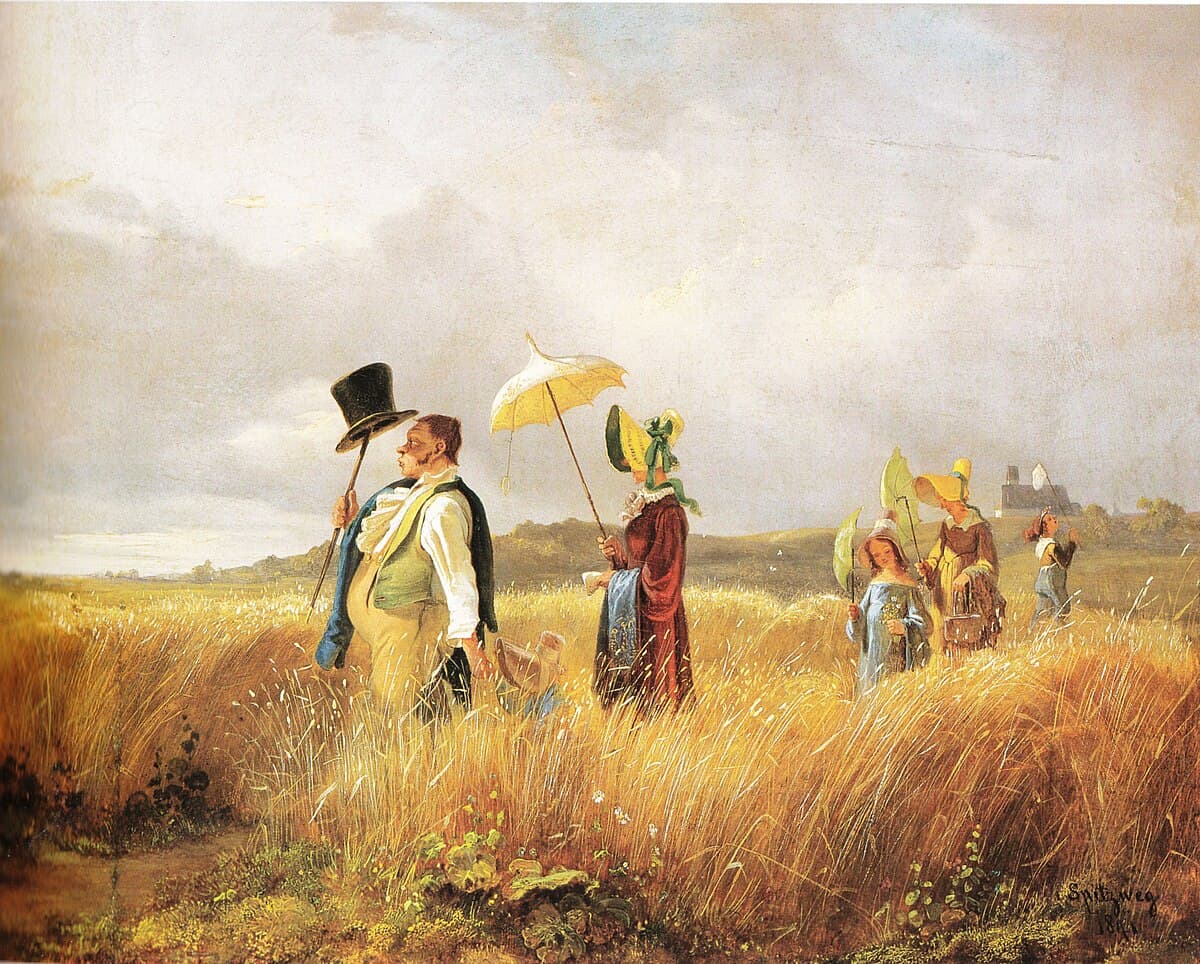
Spitzweg was self-taught. He copied Flemish masters and traveled to see collections in Prague, Venice, Paris, and London. What emerged was a gentle style of genre painting that captured the quirks of German middle-class life. His subjects were bookworms, hermits, amateur scientists, and struggling poets: solitary figures absorbed in their own small worlds. The Biedermeier period (roughly 1815–48) valued domestic contentment and private pleasures over political engagement. Spitzweg's paintings embodied this sensibility.
His most famous work, The Poor Poet (1839), shows a shabby writer in a garret, huddled under an umbrella against a leaking roof, burning manuscripts for warmth. It's both sympathetic and gently mocking. The Romantic ideal of the starving artist, made real and a little ridiculous. Spitzweg never married. He lived quietly in Munich, traveled frequently, and produced over 1,500 paintings and drawings. His work sold well during his lifetime, though critics sometimes dismissed it as sentimental. Today he's recognized as one of the most important German painters of the nineteenth century. The Poor Poet hangs at the Neue Pinakothek in Munich. Other works are at the Louvre and collections throughout Germany.
Notable Works by Carl Spitzweg
6 paintings catalogued with museum locations
Museums with Carl Spitzweg's Work
5 museums display Spitzweg's works. Click any museum to see visiting info and the specific works they hold.
Related Artists
Other Romanticism artists you might like
About Carl Spitzweg
Spitzweg is associated with the Biedermeier period and German Romanticism, though his gentle satire sets him apart from both. While Romantics pursued sublime nature and Biedermeier celebrated bourgeois domesticity, Spitzweg affectionately mocked eccentric loners and absent-minded intellectuals with warmth and humor.
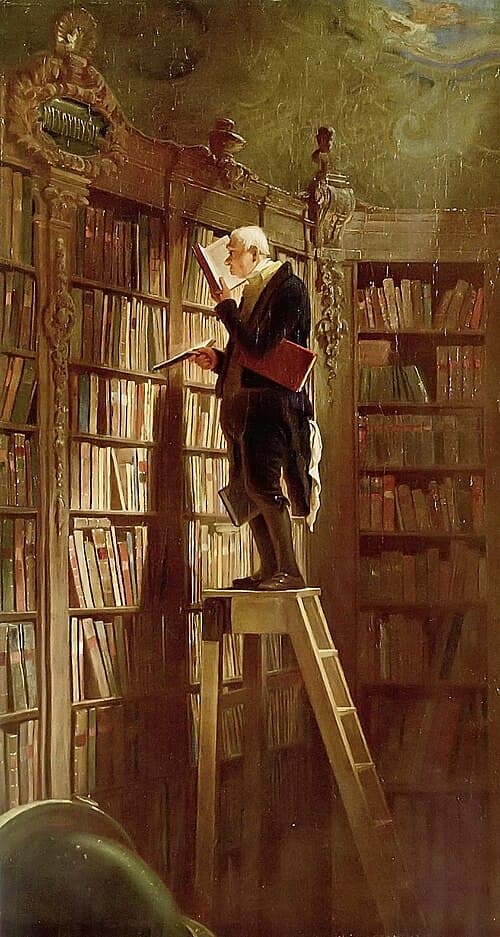
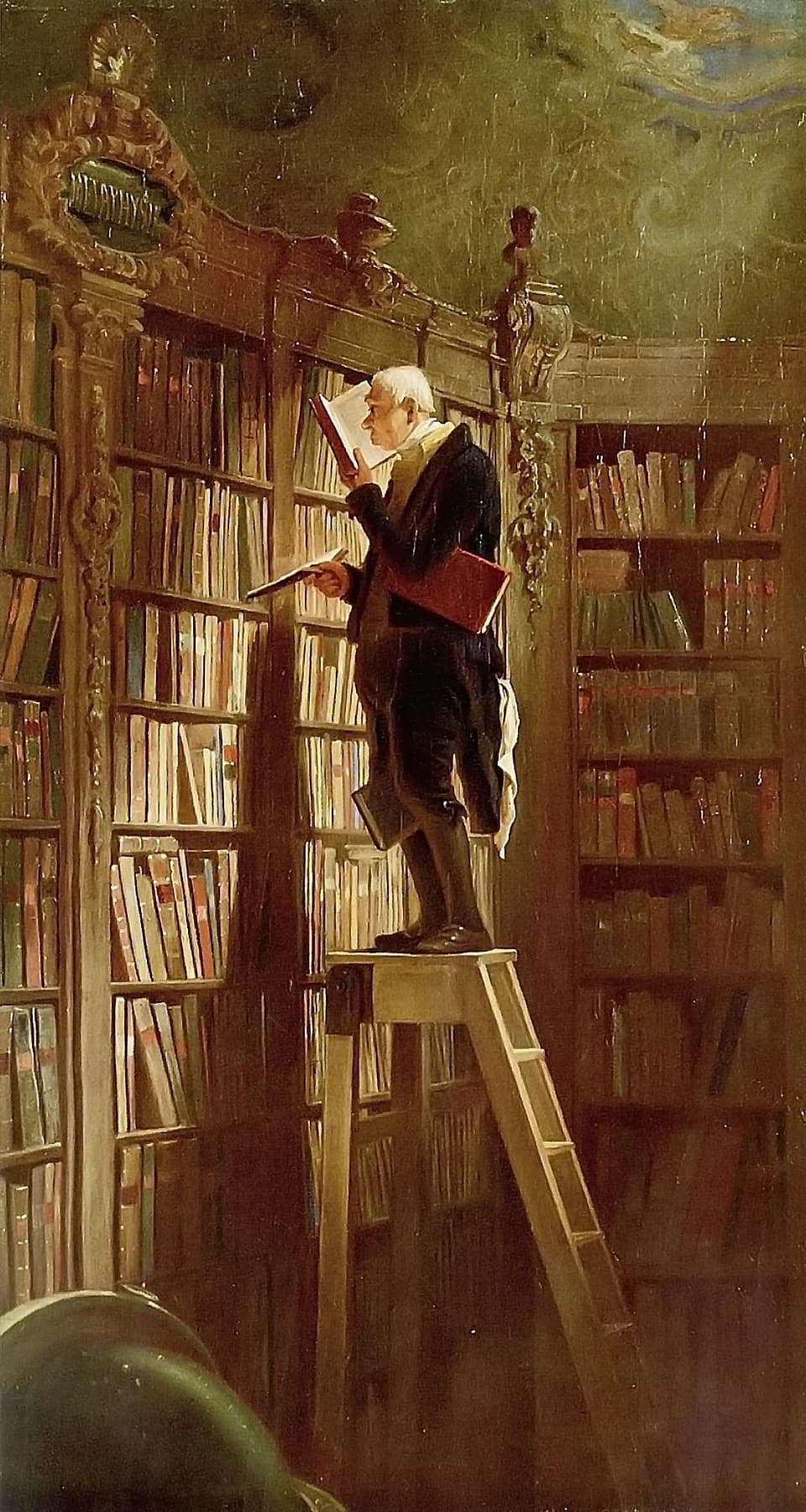
The Poor Poet and The Bookworm hang at the Neue Pinakothek in Munich, Germany's premier collection of 19th-century art. The Museum Georg Schäfer in Schweinfurt holds another major collection. His works also appear at the Louvre and throughout German regional museums.
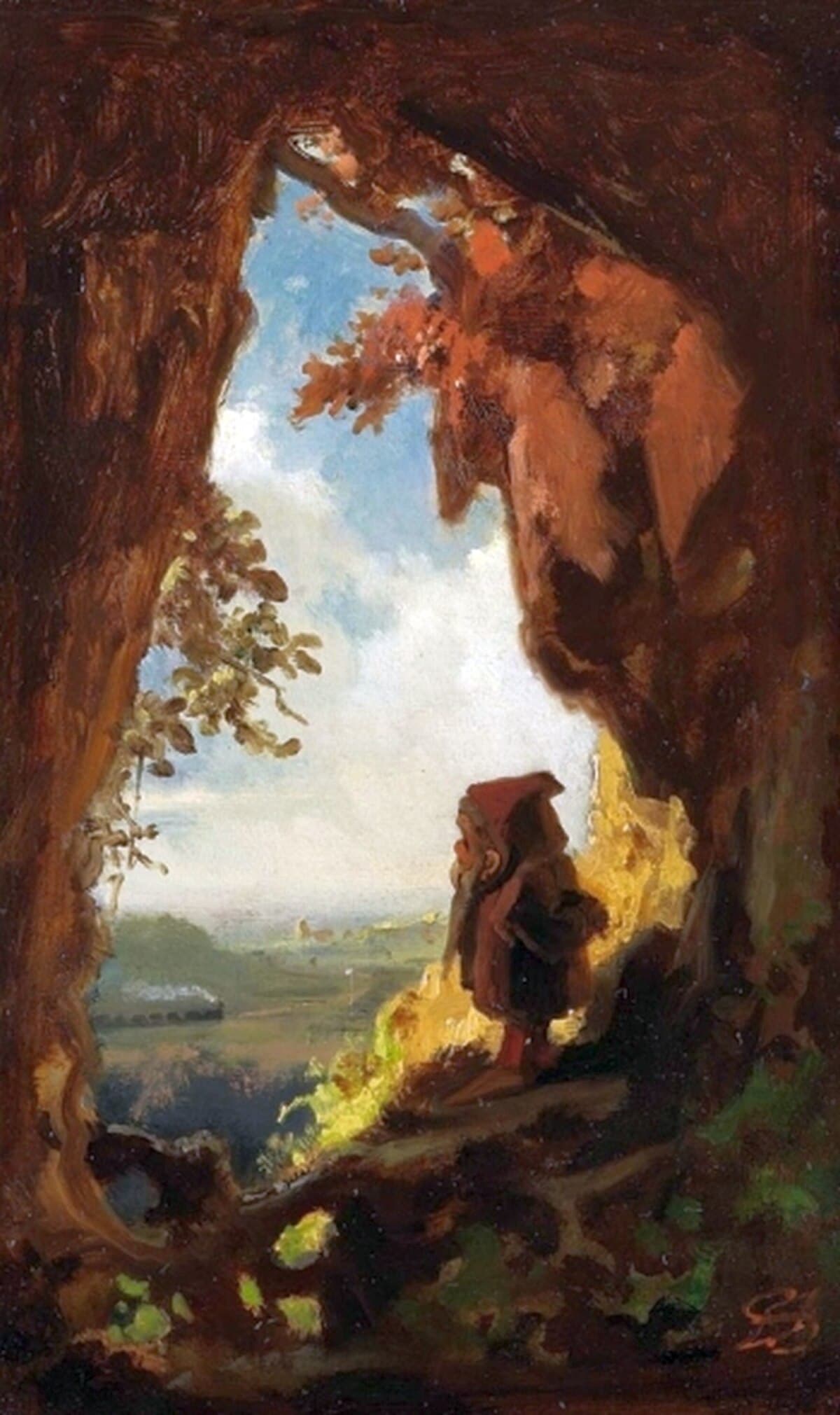
Spitzweg created affectionate portraits of society's eccentrics and loners: bookworms buried in volumes, hermits in mountain caves, amateur scientists, struggling poets, and lovestruck clerks. These solitary figures are absorbed in their own quirky worlds, oblivious to the viewer's amused gaze.
The Poor Poet (1839) shows a writer huddled in a cramped garret, sheltering under an open umbrella while burning manuscripts for warmth. A measuring meter on the wall hints at failed pretensions to classical verse. It's Spitzweg's most famous painting, both sympathetic and gently satirical of romantic artistic suffering.
No, Spitzweg trained as a pharmacist at the University of Munich, receiving his degree in 1832. He was entirely self-taught as a painter, learning by copying Flemish and Dutch masters and studying collections during extensive European travels. An inheritance freed him to paint full-time from the 1830s.
Spitzweg produced over 1,500 paintings and drawings during his lifetime, selling approximately 400. His financial independence, inherited from his father, meant he never needed to work on commission and could paint solely for his own pleasure, developing his distinctive humorous vision without commercial pressure.
Love Carl Spitzweg's Style?
Explore art inspired by Romanticism.
Browse Collection