Octopus Art: Intelligence and Mystery of the Deep
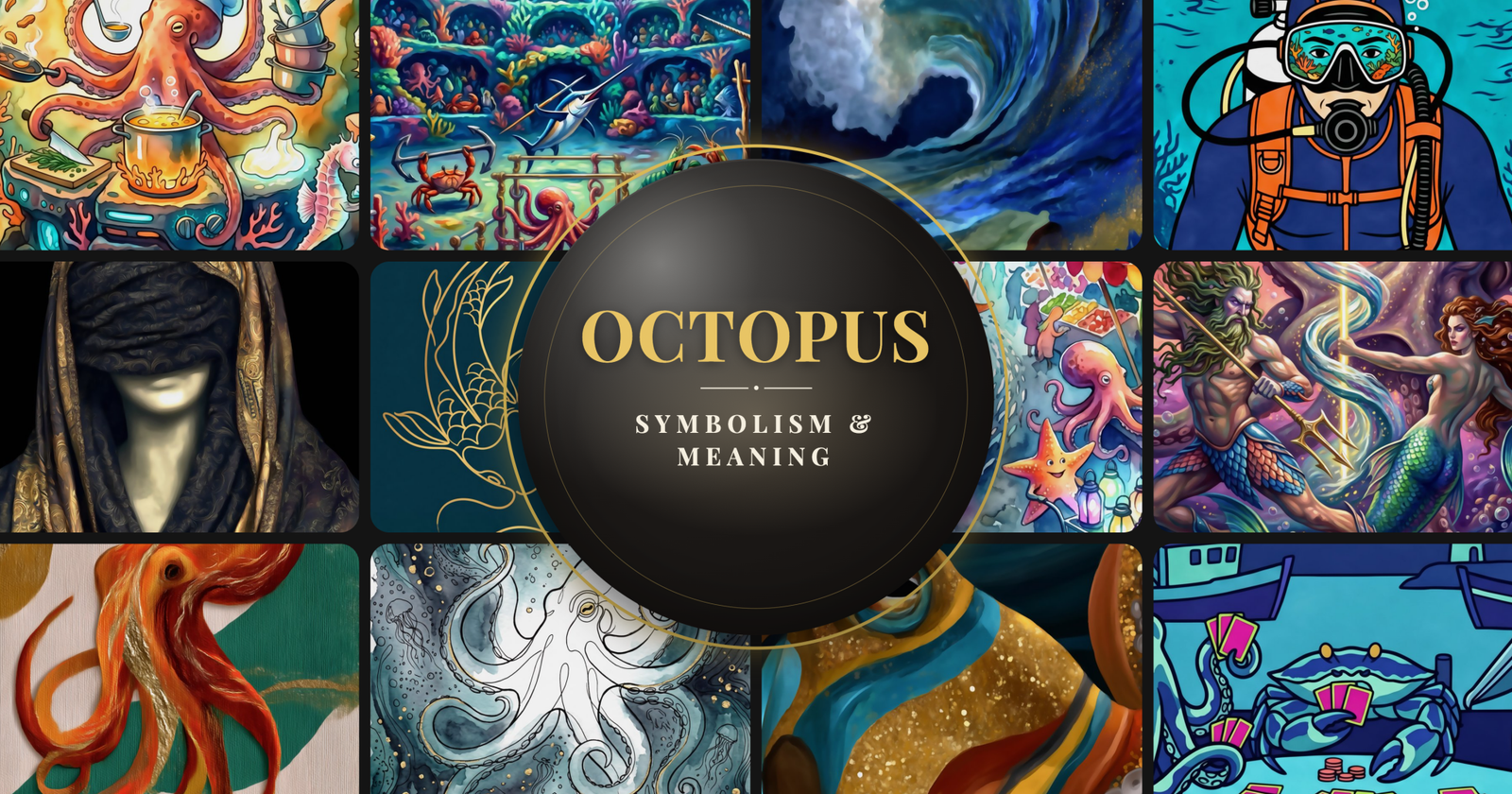

Octopus Art: The Smartest Animal You'll Ever Hang on Your Wall
An octopus has three hearts, blue blood, and a brain that extends into each of its eight arms. It can change color in milliseconds, squeeze through any gap larger than its beak, solve puzzles, and recognize individual human faces. If aliens exist, they probably look a lot like this.
That's why octopus art hits differently than most animal art. A horse on the wall is familiar. A lion is bold. An octopus is something else entirely. It's alien and elegant at the same time. It makes people stop and actually look, which is the whole point of hanging art in the first place.
Octopus Mythology and Symbolism
Humans have been telling octopus stories for as long as we've been sailing. In Hawaiian mythology, the octopus (he'e) is considered the last survivor of a previous creation. It's the only creature that survived the destruction of the old world and carried its intelligence into this one. Not a bad origin story.
Japanese folklore features Akkorokamui, a giant octopus spirit associated with healing and regeneration. The connection makes biological sense. Octopuses can regrow lost arms. Ancient cultures noticed this and built meaning around it: renewal, recovery, the ability to come back from damage.

The Science That Makes Them Fascinating
The more scientists study octopuses, the weirder things get. Each arm has its own cluster of neurons, essentially its own mini-brain. An octopus can taste with its suckers, and two-thirds of its neurons are in its arms rather than its central brain. It's a distributed intelligence system that no other animal on Earth uses.
Their camouflage is equally absurd. An octopus can match the color, pattern, and texture of any surface it touches, in under a second. Some species mimic the shape and movement of other animals, like flatfish, lionfish, and sea snakes. And here's the kicker: octopuses are colorblind. They achieve this perfect color matching without being able to see color the way we do. Scientists still aren't sure how.
This blend of intelligence and strangeness is exactly what gives octopus art its appeal. You're not just hanging a pretty picture. You're putting something genuinely mysterious on your wall.
Quick fact: Octopuses have been observed using coconut shells as portable shelters, stacking rocks to barricade their dens, and unscrewing jars from the inside to escape. Some aquariums report octopuses sneaking out of their tanks at night to eat fish in neighboring enclosures, then returning to their own tank before morning.
In Norse mythology, the Kraken, often depicted as a giant octopus, was large enough to pull ships beneath the waves. The image stuck. The kraken became the blueprint for every sea monster that followed.
Modern scientists think kraken stories came from real encounters with giant squid, which can grow past 40 feet. The ocean still holds more unknowns than most people realize.

Octopuses in Art History
The Minoans were among the first to put octopuses in art. Their pottery from around 1500 BCE features octopuses with flowing tentacles that wrap around the entire vessel. The design was so natural and dynamic that archaeologists believe the artists were working from direct observation. Crete's position in the Mediterranean meant octopuses were common, familiar, and clearly admired.
Japanese art has the most famous octopus image: Hokusai's The Dream of the Fisherman's Wife from 1814, a provocative woodblock print that mixed eroticism with marine life in a way that still shocks people two centuries later. Beyond that notorious work, octopuses appeared regularly in Japanese prints, often shown with startling anatomical accuracy.
In the Victorian era, the octopus became a metaphor for everything people feared about the modern world: corporations, monopolies, political machines. Political cartoonists drew Standard Oil, the Southern Pacific Railroad, and various empires as octopuses with tentacles reaching into every corner of society. The image was so effective it still gets used in editorial cartoons today.
What Octopus Symbolism Means Today
The modern meaning of the octopus has moved past sea monsters and political cartoons. Today it tends to represent intelligence, adaptability, and creative problem-solving. The idea that an animal can think with its arms, change its appearance at will, and escape from almost any container resonates with people who value flexibility and unconventional thinking.
The octopus also carries a sense of mystery and depth, literally and figuratively. It lives in places humans can barely reach. It operates on logic we don't fully understand. Hanging octopus art in a room says something about the person who chose it: they're drawn to the things that are harder to figure out.

Octopus Wall Art: Choosing the Right Style
Octopus wall art comes in more styles than you'd expect for one animal. The tentacles lend themselves to flowing, organic compositions. The eyes add intensity. And the body shape is different enough from typical animal art to stand out immediately on a wall.
Pink Dancing Octopus takes a playful, whimsical approach with bold pink tones and dynamic movement. It's the kind of piece that adds personality to a room without taking itself too seriously. Black Octopus goes the other direction: moody, high-contrast, and perfect for darker or more dramatic interiors.
Our octopus wall art collection includes pieces across the full range, from marine realism to surreal abstraction. The octopus is one of those rare subjects that works in coastal, modern, maximalist, and eclectic spaces equally well.
Placement tip:Octopus art pairs well with deep wall colors like navy, charcoal, and forest green. The tentacles create enough visual movement that the art doesn't disappear against dark backgrounds the way some pieces do. In lighter rooms, go with a bolder octopus to create contrast.
Placement tip:Octopus art pairs well with deep wall colors like navy, charcoal, and forest green. The tentacles create enough visual movement that the art doesn't disappear against dark backgrounds.
For smaller rooms, a single octopus piece works better than a cluster. The tentacles already fill visual space, so the art doesn't need help from surrounding decor.

FAQ
What does an octopus symbolize?
The octopus symbolizes intelligence, adaptability, mystery, and regeneration. In Hawaiian mythology, it represents the survivor of a previous world. In Japanese folklore, it's associated with healing. In modern culture, the octopus represents creative problem-solving and unconventional thinking.
How many brains does an octopus have?
An octopus has one central brain and eight arm clusters of neurons, which some scientists consider semi-independent brains. Two-thirds of an octopus's neurons are in its arms, allowing each arm to taste, touch, and react independently from the central brain.
What rooms work best for octopus art?
Octopus wall art works well in living rooms, home offices, bathrooms, and any space where you want a conversation piece. It pairs especially well with dark wall colors like navy and charcoal. The flowing tentacle shapes create visual movement that keeps the eye engaged.
Why are octopuses so popular in art and design?
Octopus art has surged in popularity because the animal is visually striking and symbolically rich. Their flowing tentacles create natural organic compositions. Their intelligence makes them relatable. And their alien appearance adds an element of mystery that most animal art can't match.
What is the Kraken?
The Kraken is a legendary sea monster from Norse mythology, typically depicted as a giant octopus or squid capable of pulling ships underwater. The legend may have originated from real encounters with giant squid, which can reach over 40 feet in length. The kraken has inspired centuries of art, literature, and film.
Written by Luxury Wall Art · Art experts passionate about helping you find pieces that speak to your space.