
Money Art: The Intersection of Wealth and Creativity
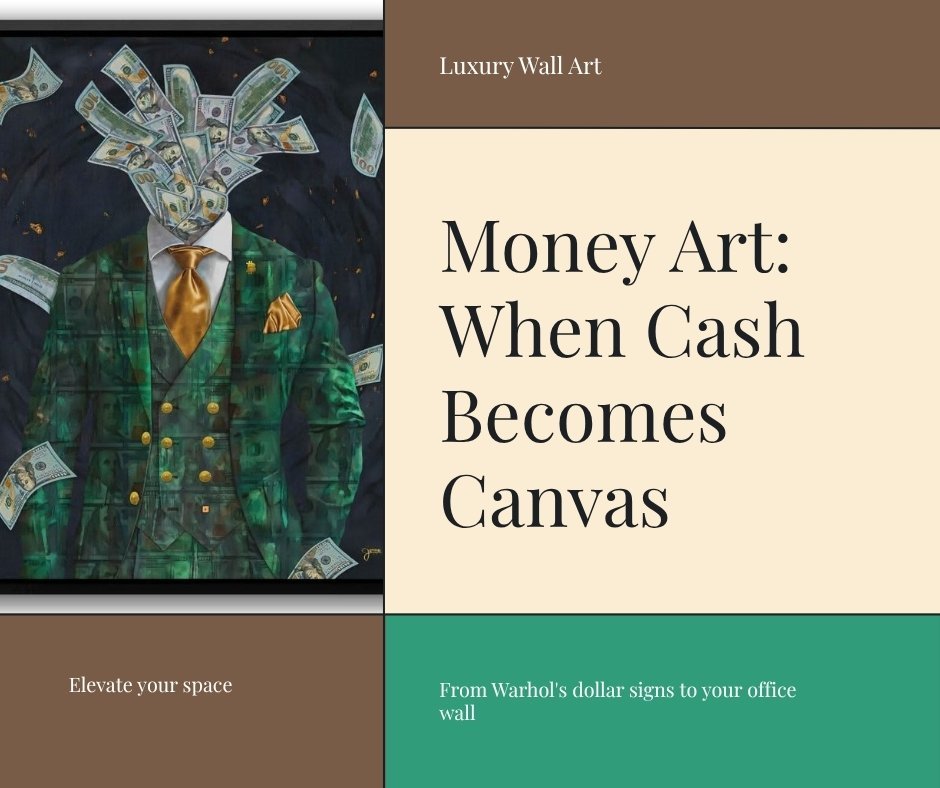

Money Art: When Cash Becomes Canvas
There's a banana taped to a wall that sold for $6.2 million. An invisible sculpture sold for $18,000. And Andy Warhol literally painted dollar signs and called it art. Money and art have always had a complicated relationship, but money art makes that relationship the actual subject.
It's honest in a way most art isn't. Every painting is, at some level, a commercial object. Money art just says it out loud. And there's something refreshing about that directness, especially when the work is good enough to back it up.
A Brief History of Money in Art
Money has appeared in art for centuries, usually as a moral lesson. Dutch Golden Age painters included coins in vanitas still lifes alongside skulls and extinguished candles. The message: wealth is temporary, death comes for everyone. Rembrandt's The Money Changer and Quentin Matsys's The Moneylender and His Wife both used currency to comment on greed.
The 20th century flipped the script. Marcel Duchamp signed a check, framed it, and exhibited it as art, blurring the line between financial instrument and creative object. Pop artists embraced commercial imagery. Warhol silk-screened dollar signs in bright colors, turning the symbol of commerce into pure decoration. He once said, "Making money is art and working is art and good business is the best art."
J.S.G. Boggs took it further. He hand-drew currency so accurately that he could use it to pay for meals, making the transaction itself the artwork. The Secret Service wasn't amused. His legal battles became part of the art's narrative.
Art market irony: Banksy's Love is in the Bin shredded itself moments after selling for $1.4 million at auction. It was a commentary on art's commodification. The shredded version later resold for $25.4 million. The market absorbed the critique and made it more valuable.
Why Money Art Resonates
Money art works on multiple levels. On the surface, it's visually bold. Currency is already design at its most refined: intricate line work, balanced composition, iconic symbols. Dollar bills, hundred-dollar bills, and coins are some of the most carefully designed objects in circulation. Artists who work with this imagery inherit that built-in visual quality.
Beneath the surface, money art speaks to ambition, success, and the relationship people have with wealth. For entrepreneurs, it's aspirational. For critics, it's commentary. For interior designers, it's a bold statement piece that immediately signals confidence and self-awareness.
The dual reading is the point. Money wall art can be displayed as celebration or as critique. A hundred-dollar bill painting in a home office might say "I'm motivated by success." The same piece in an art gallery might say "look at what we worship." Context determines meaning. The art stays the same.
The dual reading is the point. Money wall art can be displayed as celebration or as critique. A hundred-dollar bill painting in a home office might say "I'm motivated by success." The same piece in a gallery might say "look at what we worship." Context determines meaning.
For entrepreneurs and creatives, money art signals ambition without apology. It's the opposite of playing it safe on the walls, which is part of why it resonates with people who take risks for a living.

Styles of Money Art
Pop art money follows the Warhol tradition: bright colors, bold graphics, flat composition. Dollar signs in neon. Benjamin Franklin in pop colors. This style works in modern, high-energy spaces where the art needs to hold its own against big furniture and strong wall colors.
Street art money blends currency imagery with graffiti techniques: drips, stencils, layers, and collage elements. It has an urban edge that suits loft apartments, creative offices, and spaces with exposed brick or concrete. Artists like Alec Monopoly popularized this approach, turning the Monopoly Man into an icon of wealth culture.
Luxury money art takes a more refined approach. Gold-leaf accents, clean compositions, and muted backgrounds keep the subject sophisticated rather than loud. This style works in home offices, studies, and executive spaces where the art needs to communicate success without shouting.
Our money wall art collection includes pieces across these styles. Whether you want bold pop art energy or quiet luxury, there's a way to put money on your wall that fits your space and your personality.
Where to Hang Money Art
Home offices are the natural home for money art. It creates an environment that reinforces focus and ambition without being distracting. The imagery is motivational but doesn't require emotional processing the way figurative art does. It sits in your peripheral vision and keeps the energy right.
Living rooms work when the money art is treated as a conversation piece rather than the room's entire personality. One strong piece above a sofa or on a feature wall. Keep surrounding decor minimal so the art gets to breathe.
Man caves, game rooms, and bars are where money art can go big and bold. In these spaces, the subject fits the environment naturally. Pair with dark furniture, metallic accents, and ambient lighting for the full effect.
Styling tip:Money art looks best against dark or neutral walls. Black, charcoal, navy, and deep green let the gold and green of currency pop. White walls work too, but the effect is cleaner and less dramatic. Avoid busy wallpaper or patterned walls that compete with the art's detail.
Money art looks best against dark or neutral walls. Black, charcoal, navy, and deep green let the gold and green of currency pop. Avoid busy wallpaper or patterned walls that compete with the art's detail.
In home offices, position money art where you can see it from your desk. It keeps the energy right during long work sessions without demanding the kind of attention that figurative art requires.

FAQ
What is money art?
Money art uses currency, financial symbols, and wealth imagery as its subject matter. It ranges from pop art dollar signs and street art style portraits of Benjamin Franklin to refined luxury pieces with gold-leaf accents. The genre explores themes of ambition, commerce, value, and what society considers worth celebrating.
Who made money art famous?
Andy Warhol popularized money as a subject in fine art with his Dollar Sign paintings in the 1980s. More recently, street artists like Alec Monopoly and Mr. Brainwash have made money-themed art mainstream. The genre builds on Pop Art's tradition of elevating commercial imagery.
Where should I hang money art?
Money wall art works best in home offices, studies, living rooms, and entertainment spaces. Home offices are the most natural fit, where the imagery reinforces focus and ambition. Dark or neutral wall colors let the art pop. Pair with metallic accents for a cohesive look.
Is money art tacky?
Depends on the execution and context. High-quality money art with strong composition and thoughtful placement reads as confident and self-aware. The key is choosing pieces with genuine artistic merit rather than generic prints, and giving them room to breathe in the space rather than cluttering around them.
What colors go with money art?
Money art pairs well with dark walls (black, charcoal, navy, forest green) and metallic accents (gold, brass, chrome). The green and gold tones in most currency-themed art pop against dark backgrounds. Neutral furniture in leather, wood, and glass creates a luxurious setting.
Written by Luxury Wall Art · Art experts passionate about helping you find pieces that speak to your space.