
Contemporary Abstract Art: Understanding and Decorating with Abstraction
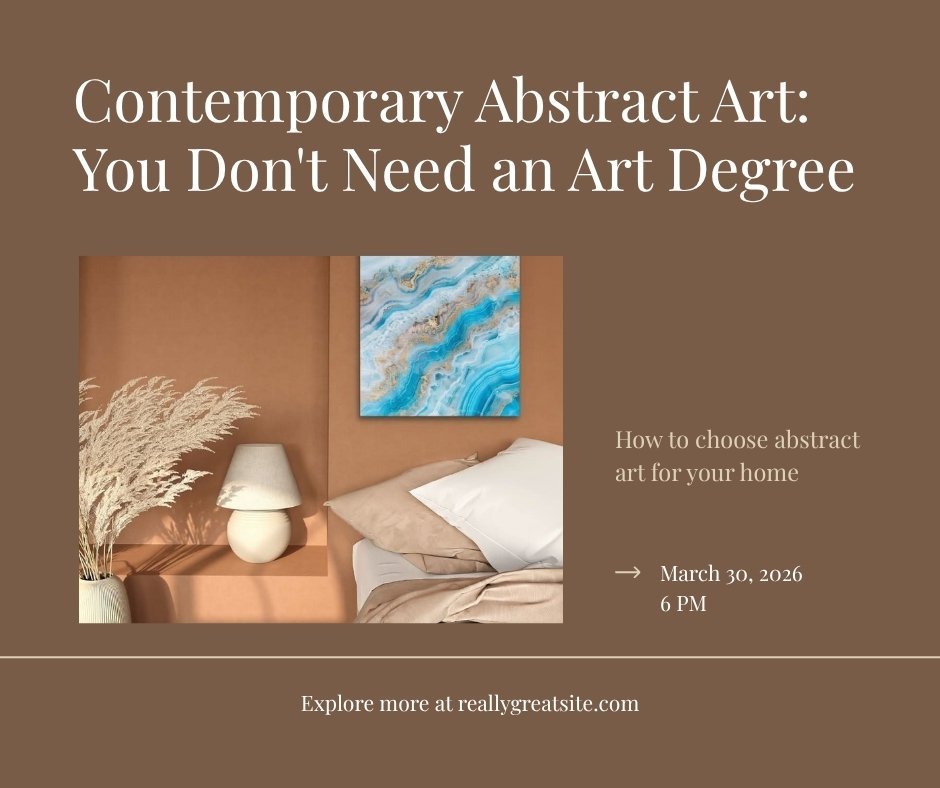

Contemporary Abstract Art: You Don't Need an Art Degree to Get It
"My kid could paint that." If you've heard that about abstract art, you've heard the most common misunderstanding in the art world. Contemporary abstract art isn't random. It isn't accidental. And it isn't trying to trick you. It's doing something very specific: communicating through color, shape, texture, and composition instead of through recognizable images.
Think of it like music. Nobody looks at a jazz solo and asks "but what is it a picture of?" You listen. You feel it. You respond to the rhythm, the tension, the resolution. Abstract art works the same way. It bypasses the part of your brain that identifies objects and speaks directly to the part that responds to visual harmony. Or visual dissonance. Both are valid.
How Abstraction Started: A 120-Year Sprint
For thousands of years, Western art aimed to represent reality. Then, in the early 1900s, several artists started questioning that premise at the same time. Wassily Kandinsky, often credited with the first purely abstract painting around 1911, compared his work to music. He saw colors as notes and compositions as symphonies.
Kazimir Malevich pushed further. His 1915 painting Black Square, literally a black square on a white background, declared that art didn't need to refer to anything outside itself. It was, in his words, "the zero point of painting." Everything after was addition.
Piet Mondrian stripped art down to primary colors and right angles. Jackson Pollock made the physical act of painting the subject. Mark Rothko created color fields that enveloped viewers in pure emotional atmosphere. Each generation found new ways to say: the painting doesn't represent something. The painting is something.
What Makes It "Contemporary"
Contemporary abstract art refers to work made from roughly the 1970s to today. It builds on everything that came before but isn't bound by any single movement's rules. Contemporary abstract artists might combine digital and traditional techniques. They might reference street art, fashion, or architecture. They pull from everywhere.
The biggest shift in contemporary abstraction is accessibility. Earlier abstract movements could be deliberately elitist. You needed to read the manifesto to get the painting. Contemporary abstract art tends to prioritize emotional impact over intellectual framework. It wants you to feel something first and analyze second. That's why it works so well in homes. You don't need footnotes. You need a gut reaction.
Current trends in contemporary abstract art include large-scale color field work, geometric abstraction with organic elements, textural mixed-media pieces, and minimalist compositions with just one or two colors. The range is enormous, which means there's an abstract piece for every taste, even people who think they don't like abstract art.
Market fact: Abstract art consistently dominates the contemporary art market. According to auction data, abstract works outsell representational works at major auction houses. The demand is driven by both collectors and interior designers, who value abstraction's ability to complement rather than compete with a room's existing design.
The biggest shift in contemporary abstraction is accessibility. Earlier abstract movements could be deliberately elitist. Contemporary abstract art prioritizes emotional impact over intellectual framework. It wants you to feel something first and analyze second.
That's why it works so well in homes. You don't need footnotes. You need a gut reaction. If the colors pull you in and the composition holds your eye, the piece is doing its job.

How to Read Abstract Art (Without Overthinking It)
Here's the simplest approach to looking at abstract art: stop trying to identify what it "is" and start noticing how it makes you feel. Do the colors feel warm or cool? Is the composition balanced or tense? Do your eyes move smoothly across the surface or jump between elements? Those responses are the content.
After that initial gut response, you can look deeper. Notice the artist's choices:
Color relationships create mood. Blues and greens calm. Reds and oranges energize. High contrast creates drama. Low contrast creates harmony.
Line quality communicates energy. Loose, gestural strokes feel spontaneous and alive. Clean, geometric lines feel controlled and deliberate.
Scale and proportion affect how the piece relates to you physically. A large abstract painting can envelop a room. A small one invites close inspection.
Texture adds a physical dimension. Thick impasto paint catches light and shadow. Smooth surfaces feel sleek and modern.
None of this requires art school. You already respond to these elements every day, in everything from clothing to room layout. Abstract art just isolates them and asks you to pay attention.
Choosing Abstract Art for Your Home
The key advantage of abstract wall art is flexibility. A landscape painting commits you to a specific mood and color scheme. An abstract piece adapts. It lives comfortably alongside minimalist, geometric, and modern collections. Its meaning shifts with the room, the light, and even your own state of mind on a given day.
When selecting abstract art for a room, start with the mood you want:
Calm and meditative: Look for soft color transitions, muted palettes, and horizontal compositions. These work in bedrooms and reading spaces.
Energetic and bold: High-contrast colors, dynamic brushwork, and large-scale pieces. Living rooms and offices benefit from this energy.
Sophisticated and minimal: Monochromatic or two-tone abstracts with clean geometry. These elevate formal dining rooms and hallways.
Our abstract wall art collection spans all these moods. Start with what you respond to emotionally, then check if the colors work with your space. If the art makes you feel something and the palette fits, it's the right piece.
If the art makes you feel something and the palette fits your space, it's the right piece. Start with what you respond to emotionally, then check if the colors work with your room.
One advantage of abstract art: it ages well. A landscape or portrait can feel dated after a few years. A strong abstract piece keeps working because its meaning shifts with your mood and the room's light.

FAQ
What is contemporary abstract art?
Contemporary abstract art is non-representational artwork created from roughly the 1970s to the present. It communicates through color, shape, texture, and composition rather than depicting recognizable subjects. It builds on earlier abstract movements but prioritizes emotional impact and accessibility.
How do you understand abstract art?
Start with how it makes you feel rather than trying to identify what it "is." Notice the colors (warm vs. cool), the composition (balanced vs. tense), and the energy (calm vs. dynamic). Abstract art communicates through visual elements the same way music communicates through sound.
What rooms work best for abstract art?
Abstract art works in every room because its meaning adapts to context. Calm, muted abstracts suit bedrooms. Bold pieces energize living rooms and offices. Bold, high-contrast pieces energize living rooms and offices. Minimal, monochromatic abstracts elevate formal dining rooms and hallways.
Who started abstract art?
Wassily Kandinsky is often credited with creating the first purely abstract painting around 1911. Other early pioneers include Kazimir Malevich, Piet Mondrian, and Hilma af Klint (whose abstract works actually predate Kandinsky's but weren't publicly shown until decades later).
Is abstract art a good investment?
Abstract art consistently dominates the contemporary art market. Major auction houses report that abstract works outsell representational works. For home buyers, abstract art holds its visual appeal over time because it doesn't go "out of style" the way trendy representational subjects can.
Written by Luxury Wall Art · Art experts passionate about helping you find pieces that speak to your space.