
Sea Turtle Art: Ocean Conservation Meets Beautiful Decor
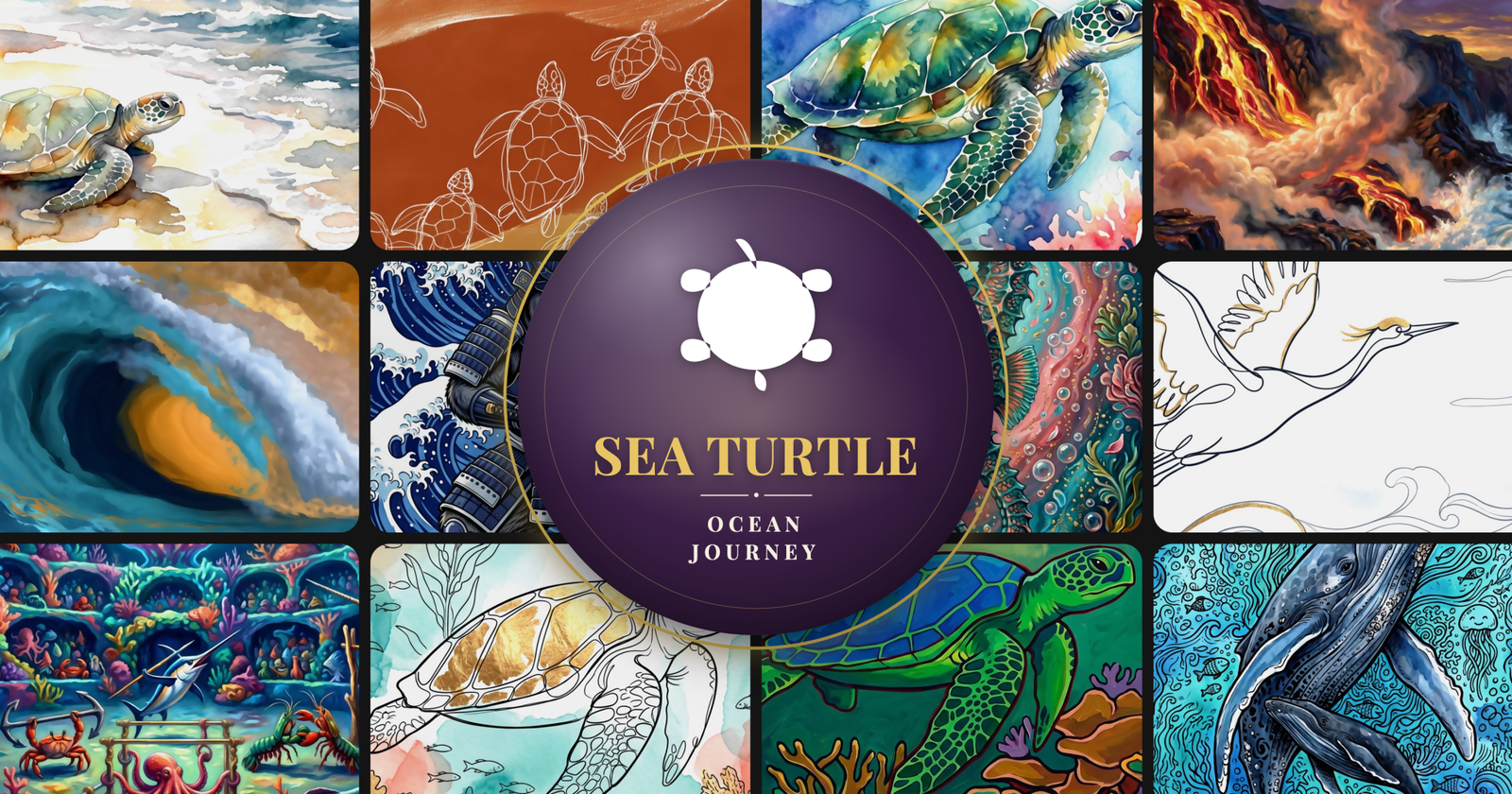

Sea Turtle Art: 100 Million Years of Grace, on Your Wall
Sea turtles were swimming in the ocean when dinosaurs walked the land. They survived the asteroid that wiped out the T. rex. They outlasted ice ages, continental shifts, and the rise and fall of every human civilization. And they did it all by being slow, patient, and almost impossibly good at navigating.
That's the real reason sea turtle art resonates with people. It's not just that turtles are beautiful (they are). It's that they represent something we don't see much of anymore: endurance without aggression. Survival through patience rather than force. In a world that rewards speed and loudness, the turtle got here first by doing neither.
Turtle Symbolism Around the World
Almost every culture that encountered turtles built meaning around them. In Hindu mythology, the god Vishnu took the form of a giant turtle named Kurma to support the weight of the world during the churning of the cosmic ocean. In many Native American creation stories, the continent itself rests on the back of a great turtle, which is why North America is sometimes called Turtle Island.
In Chinese culture, the turtle is one of the Four Sacred Animals alongside the dragon, phoenix, and qilin. It represents longevity, wisdom, and stability. The shell's dome was seen as representing heaven, while the flat underside represented earth. Carrying the whole cosmos on its back. No pressure.

Why Sea Turtles Need Our Attention
Six of the seven sea turtle species are classified as threatened or endangered. They face plastic pollution, habitat loss, accidental capture in fishing nets, and rising sand temperatures that skew the sex ratios of hatchlings. A species that survived 100 million years of natural catastrophes is now struggling against plastic straws and beach condos.
Conservation efforts have made a real difference. Protected nesting beaches, fishing gear modifications, and public awareness campaigns have stabilized some populations. Green sea turtle numbers in Florida have increased significantly since the 1970s. Kemp's ridley turtles, once down to a few hundred nesting females, are slowly recovering.
Art plays a quiet role in this. Sea turtle artwork keeps these animals visible in daily life. A turtle on someone's wall sparks conversation, builds emotional connection, and reinforces the idea that these creatures are worth protecting. It's not a substitute for policy, but awareness starts somewhere.
Navigation skills: Sea turtles can detect Earth's magnetic field and use it to navigate thousands of miles across open ocean. Females return to the exact beach where they hatched, sometimes 20+ years later, to lay their own eggs. Scientists still aren't entirely sure how they do it.
Sea Turtles in Art History
Turtles show up in art far earlier than most people realize. Aboriginal Australians painted turtles on cave walls over 20,000 years ago. Polynesian turtle tattoos carried deep spiritual meaning, representing safe passage through water, fertility, and connection to ancestors.
In Japanese art, the minogame (a mythical turtle with a trailing tail of seaweed) appeared in paintings and netsuke carvings as a symbol of 10,000 years of life. Chinese jade carvers created turtle figurines for scholars' desks, believed to bring wisdom and patience to intellectual work.
Modern sea turtle art tends toward two directions. There's the realistic approach, capturing the animal's graceful movement through blue water with photographic detail. And there's the decorative approach, using the turtle's natural patterns as a starting point for color and abstraction. Both work because the turtle's shell geometry provides a built-in design framework that artists can build on.
Choosing Sea Turtle Art for Your Space
Turtle artwork naturally fits coastal and beach-inspired interiors, but it's more versatile than that. The cool blues and greens in most sea turtle art create a calming effect that works in bedrooms, bathrooms, and any space designed for relaxation. The geometric patterns on turtle shells also connect to modern and mid-century design aesthetics.
For rooms with lots of natural light, pieces like Blue Sea Turtle and Turquoise Turtle catch and play with sunlight in a way that feels alive. For spaces that need more color energy, Colorful Turtle brings psychedelic intensity while keeping the subject recognizable. Albino Turtle offers a softer, more ethereal take for minimalist spaces.


The Shell as Design Inspiration
A sea turtle's shell is made of around 60 bones fused together, covered by plates called scutes. The pattern those scutes create is both organic and geometric. It follows mathematical principles similar to the patterns found in honeycombs and crystal structures. Nature arrived at an efficient, beautiful design millions of years before humans started studying geometry.
This is why turtle art translates so well to decorative contexts. The shell's natural tessellation gives artists a framework that's already visually balanced. Some artists lean into the geometry, creating abstract interpretations that highlight the pattern. Others use the shell as a canvas within a canvas, filling each scute with different colors, scenes, or textures.
Design tip:Sea turtle art pairs naturally with natural materials like driftwood, rattan, and linen. For more ocean-inspired pieces, our ocean blues and bathroom wall art collections are worth a look, rattan, and linen. The combination reinforces the coastal connection without making the room feel like a beach gift shop. Keep surrounding decor simple and let the turtle do the talking.

FAQ
What do sea turtles symbolize?
Sea turtles symbolize longevity, patience, wisdom, and endurance across many cultures. In Hawaiian culture, the honu represents good luck and ancestral guidance. In Hindu mythology, the turtle supports the world. In Native American traditions, North America is called Turtle Island, reflecting the turtle's role in creation stories.
Are sea turtles endangered?
Six of seven sea turtle species are classified as threatened or endangered. Major threats include plastic pollution, habitat loss, fishing bycatch, and climate change affecting nesting beaches. Conservation efforts including protected beaches and fishing gear modifications have helped stabilize some populations.
What rooms are best for sea turtle art?
Sea turtle art works best in spaces designed for relaxation: bedrooms, bathrooms, reading nooks, and sunrooms. The cool blues and greens create a calming atmosphere. Turtle art also suits coastal-themed living rooms and offices where you want a natural, grounding presence on the wall.
How long do sea turtles live?
Most sea turtle species can live 50 to 80 years or more. Some estimates suggest certain species may live over 100 years. As a group, sea turtles have existed for more than 100 million years, making them one of the oldest animal groups still alive today.
What does a turtle tattoo mean?
In Polynesian culture, turtle tattoos represent safe passage through water, fertility, and connection to ancestors. More broadly, turtle tattoos symbolize patience, longevity, protection, and a steady approach to life. The shell pattern often carries additional symbolic meaning depending on the specific cultural tradition.
Written by Luxury Wall Art · Art experts passionate about helping you find pieces that speak to your space.