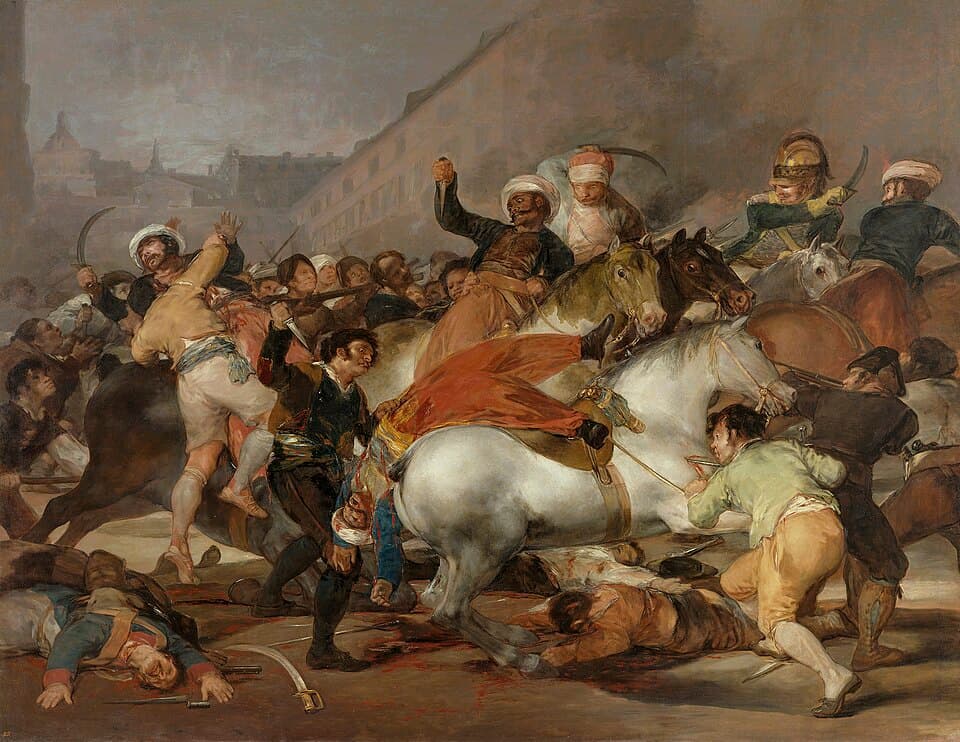
The Second of May 1808
by Francisco Goya, 1814
Artwork Details
Details
- Year
- 1814
- Medium
- Oil on canvas
- Size
- 268 cm × 347 cm (105.5 × 136.6 in)
Francisco Goya painted The Second of May 1808 in 1814, showing the Madrid uprising against French occupation. Spanish civilians attack Mameluke cavalry (Egyptian soldiers serving Napoleon) in the Puerta del Sol. The scene explodes with violence: stabbing, shooting, horses rearing, bodies falling.
Unlike traditional battle paintings with clear heroes, chaos dominates. Friend and enemy tangle together in desperate combat. Goya captures the fury of popular resistance and the brutality it triggered. The earth tones and blood-reds create a palette of violence.
This painting pairs with The Third of May, showing uprising and retribution. The Prado displays them in the same gallery. Together they form a meditation on the futility and necessity of resistance against tyranny.