Lion Symbolism: Strength and Power in Art History
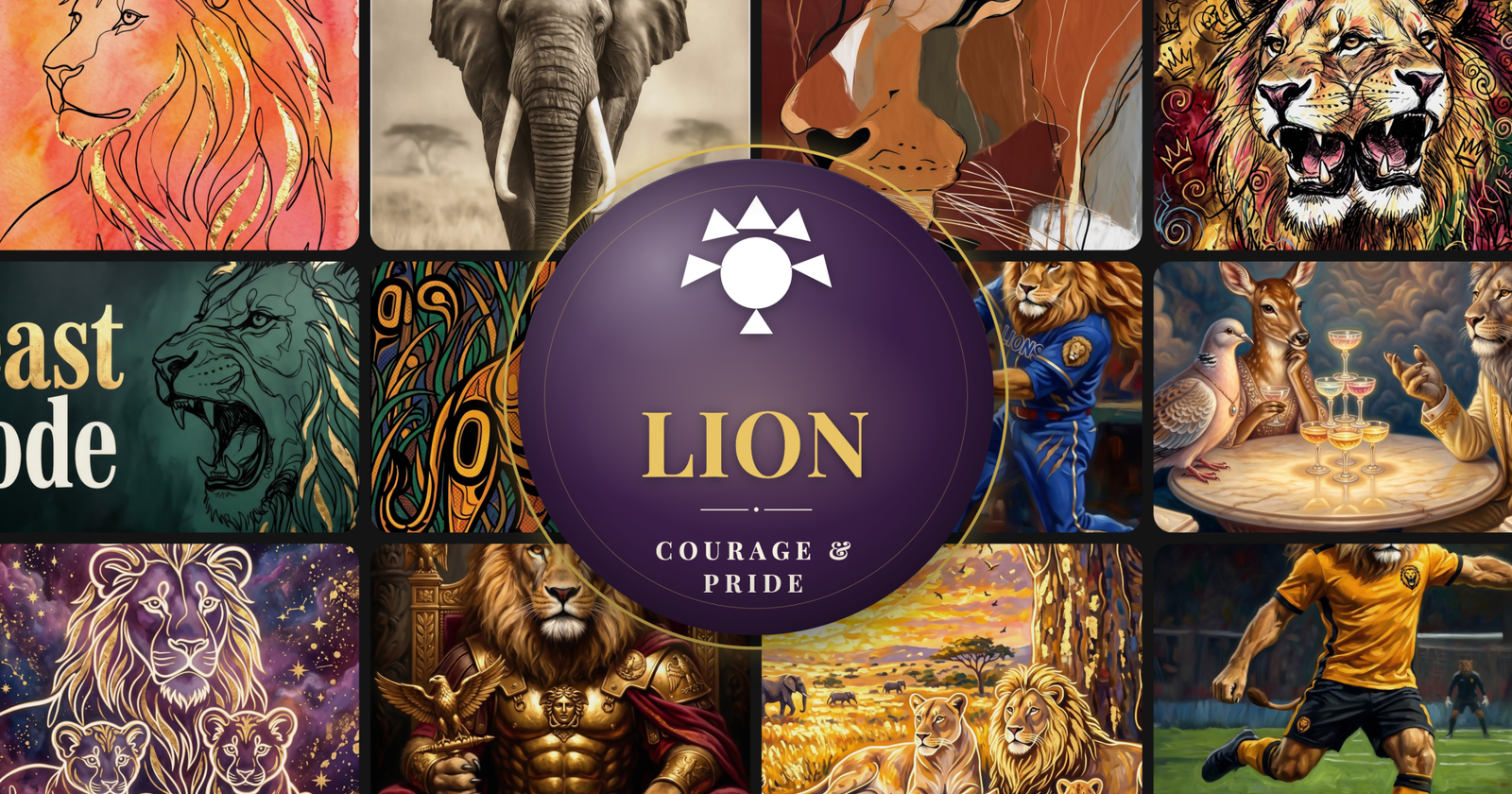

Lion Symbolism: Why We've Never Stopped Putting Lions on Everything
Lions don't live in Europe. They never lived in England, Scotland, or Scandinavia. And yet the lion appears on more European coats of arms than any other animal. That disconnect tells you something about lion symbolism: it's never really been about the actual animal. It's about what we project onto it.
For at least 30,000 years, humans have been carving, painting, and sculpting lions. The oldest known figurative sculpture in the world is the Lion-man of Hohlenstein-Stadel, a 12-inch ivory figure found in a German cave, carved roughly 40,000 years ago. Half human, half lion. We've been mixing ourselves with these animals in art since before agriculture, before pottery, before written language.
That's a long time to be obsessed with one creature.
Ancient Empires and Their Lions
Every major ancient civilization had a thing for lions. In Mesopotamia, the lion hunt was a royal ritual. Assyrian palace reliefs show kings single-handedly fighting lions, which was propaganda as much as art. The message: our ruler is so powerful he kills the most dangerous predator with his bare hands.
In Egypt, the sphinx combined a lion's body with a pharaoh's head. Sekhmet, the lion-headed goddess, represented both war and healing. She could destroy armies and cure plagues. That duality, fierce protector and devastating force, runs through lion symbolism in almost every culture.

The Lion in Heraldry: Power You Could Wear
Medieval heraldry turned lion symbolism into a system. A lion "rampant" (standing on hind legs) meant aggression and bravery. A lion "passant" (walking) meant watchful authority. "Guardant" (facing the viewer) signaled awareness. "Regardant" (looking back) meant wisdom gained from experience.
England's three lions passant guardant date back to Richard the Lionheart. Scotland's lion rampant became the royal standard. Norway, Sweden, Belgium, Luxembourg, the Netherlands. Lions everywhere, despite being native to none of these places. The symbol had completely separated from the animal.
This matters because it shows how lion art works on a gut level. You don't need to know heraldic rules to feel what a lion image communicates. Strength. Authority. Something worth respecting.
Quick count: Lions appear on the national arms of over 30 countries. They're on the logos of MGM, Peugeot, Premier League, and ING Bank. No other animal comes close to that kind of brand recognition.
Religious and Spiritual Lion Meaning
In Christianity, the lion is the symbol of Saint Mark and appears throughout the Bible. The phrase "Lion of Judah" refers to Jesus in Revelation, tying the animal to divine authority. Medieval churches carved lions into doorways and column capitals as guardians of sacred space.
In Buddhism, the lion represents the Buddha's royal ancestry and his fearless teaching. "Lion's roar" describes a proclamation of truth so clear it can't be challenged. Buddhist temples across Asia feature lion statues flanking entrances, similar to how Chinese foo dogs (which are actually lions) guard buildings and homes.
Hindu mythology gives us Narasimha, an avatar of Vishnu who appears as half-man, half-lion to defeat an otherwise invincible demon. The lion here isn't just strong. It's the form that divine justice takes when nothing else can get the job done. In Rastafarian tradition, the Lion of Judah connects directly to Ethiopian Emperor Haile Selassie, making the lion both a political and spiritual symbol of African sovereignty.
The Lioness: A Different Kind of Power
Male lions get the symbolic spotlight, but anyone who's watched a nature documentary knows who actually runs the pride. Lionesses do roughly 90% of the hunting. They coordinate attacks, protect cubs, and maintain the social structure that keeps the whole group alive.
Ancient Egyptians understood this. Sekhmet was female. So was Bastet, originally depicted as a fierce lioness before later art softened her into a domestic cat. The lioness represented maternal ferocity: gentle with her own, deadly to threats.

Lion Art in Your Home: What It Says About a Space
Hanging lion art in a room makes a statement whether you intend it to or not. These pieces tend to anchor spaces because the subject carries so much cultural weight. A lion portrait over a desk says something different than a landscape or an abstract. It says confidence. Maybe ambition. Definitely not playing it safe.
The style of the lion art matters too. A photorealistic lion in black and white brings intensity and a contemporary edge. Gold-toned lions like Resting Gold Lion pair naturally with pieces from our gold art and black and gold collections. Lions like Resting Gold Lion add warmth and a sense of quiet luxury. Playful interpretations like Lion Doodle keep the symbolism but lighten the mood, making lion art work even in casual living spaces.
Our lion wall art collection covers that full range. From the dignified Lion's Glory to the softer Lion King Cub, there's a version of this symbol for every kind of space and personality.


Lions in Modern Culture: Still the King
The lion hasn't lost a step culturally. Simba taught a generation about responsibility and courage. Aslan represented sacrifice and renewal. Sports teams, car companies, and luxury brands all reach for lion imagery when they want to project dominance and heritage.
What's interesting is how the symbolism has expanded. Lions in contemporary art aren't just about raw power anymore. They represent self-assurance, personal sovereignty, protection of family. The meaning has shifted from "I can conquer you" to "I know who I am." That's why lion art resonates so strongly in personal spaces: it reflects not just strength, but the kind of strength people aspire to.
Whether carved in ivory 40,000 years ago or printed on canvas today, the lion remains the one animal that consistently says something about the person who chose to display it. That's not a trend. That's human nature.
FAQ
What does a lion symbolize?
The lion primarily symbolizes strength, courage, royalty, and authority. Across different cultures, it also represents justice, protection, and divine power. In heraldry, specific lion poses carry additional meanings: rampant lions signal bravery, while passant lions suggest watchful authority.
What does a lioness symbolize?
The lioness symbolizes maternal strength, fierce protection, and coordinated power. In ancient Egypt, lioness goddesses like Sekhmet represented both war and healing. In modern culture, the lioness has become an icon of feminine power and leadership that is expressed through action rather than display.
Why are lions so common in heraldry?
Lions appear in heraldry because they communicate power and nobility without explanation. Medieval nobles adopted lion symbolism from ancient civilizations, and the tradition stuck. Over 30 countries currently feature lions on their national arms. The animal's cultural weight transcends geography, which is why European nations that never had wild lions still use them as national symbols.
What does the Lion of Judah represent?
The Lion of Judah is a biblical symbol from the Book of Revelation, representing Jesus Christ's royal lineage from the tribe of Judah. In Rastafarian tradition, the symbol connects to Ethiopian Emperor Haile Selassie and represents African sovereignty, strength, and spiritual authority.
Where should I hang lion art in my home?
Lion art works well in spaces where you want to project confidence: home offices, living rooms, and entryways. The style matters. Gold-toned lions add warmth to traditional or luxurious spaces. Black and white lion portraits suit modern and minimalist rooms. Playful lion art can lighten casual living areas while still carrying the symbolic weight of the subject.
Written by Luxury Wall Art · Art experts passionate about helping you find pieces that speak to your space.