Wikimedia Commons • Public Domain
The Massacre at Chios
Artwork Details
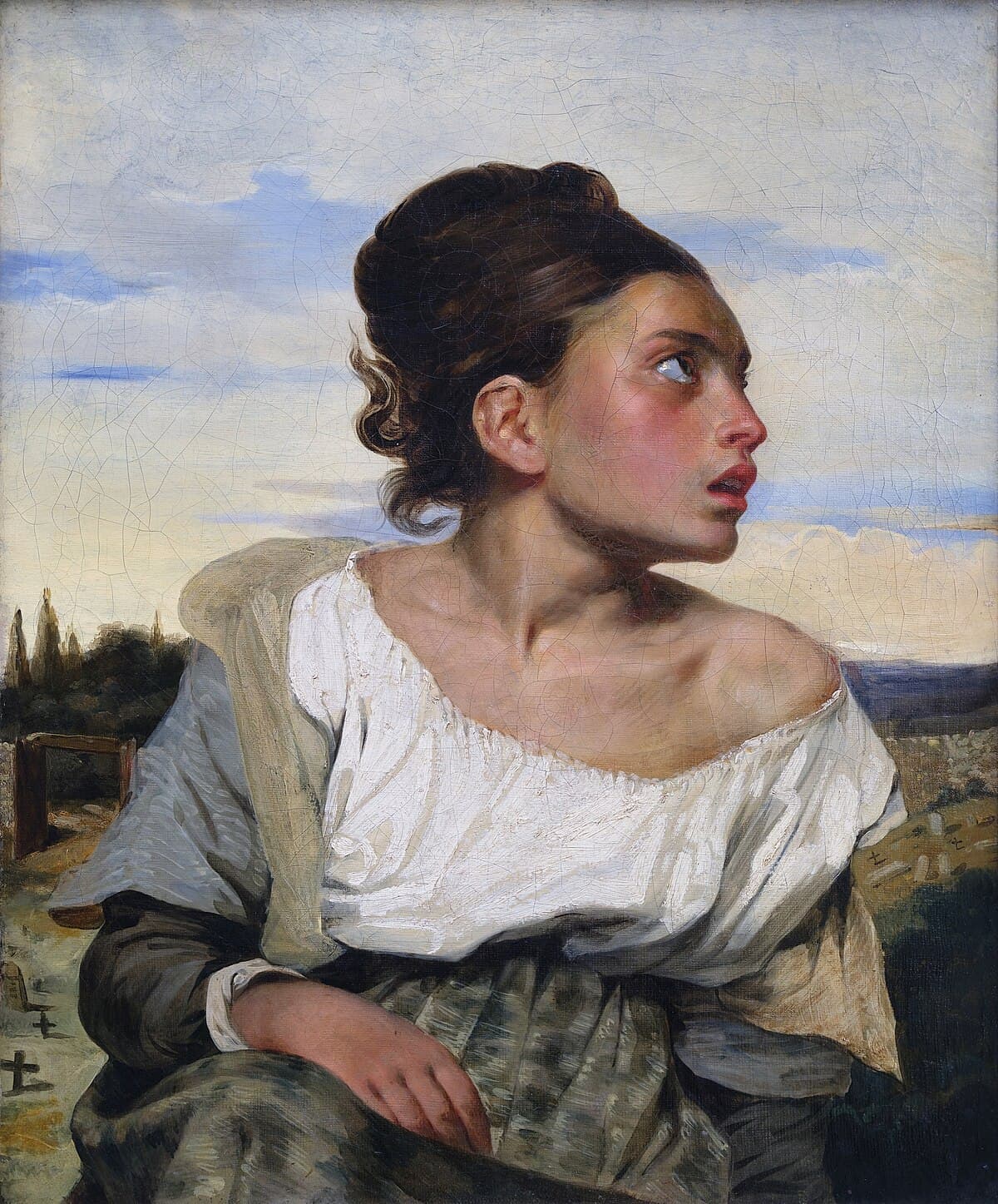
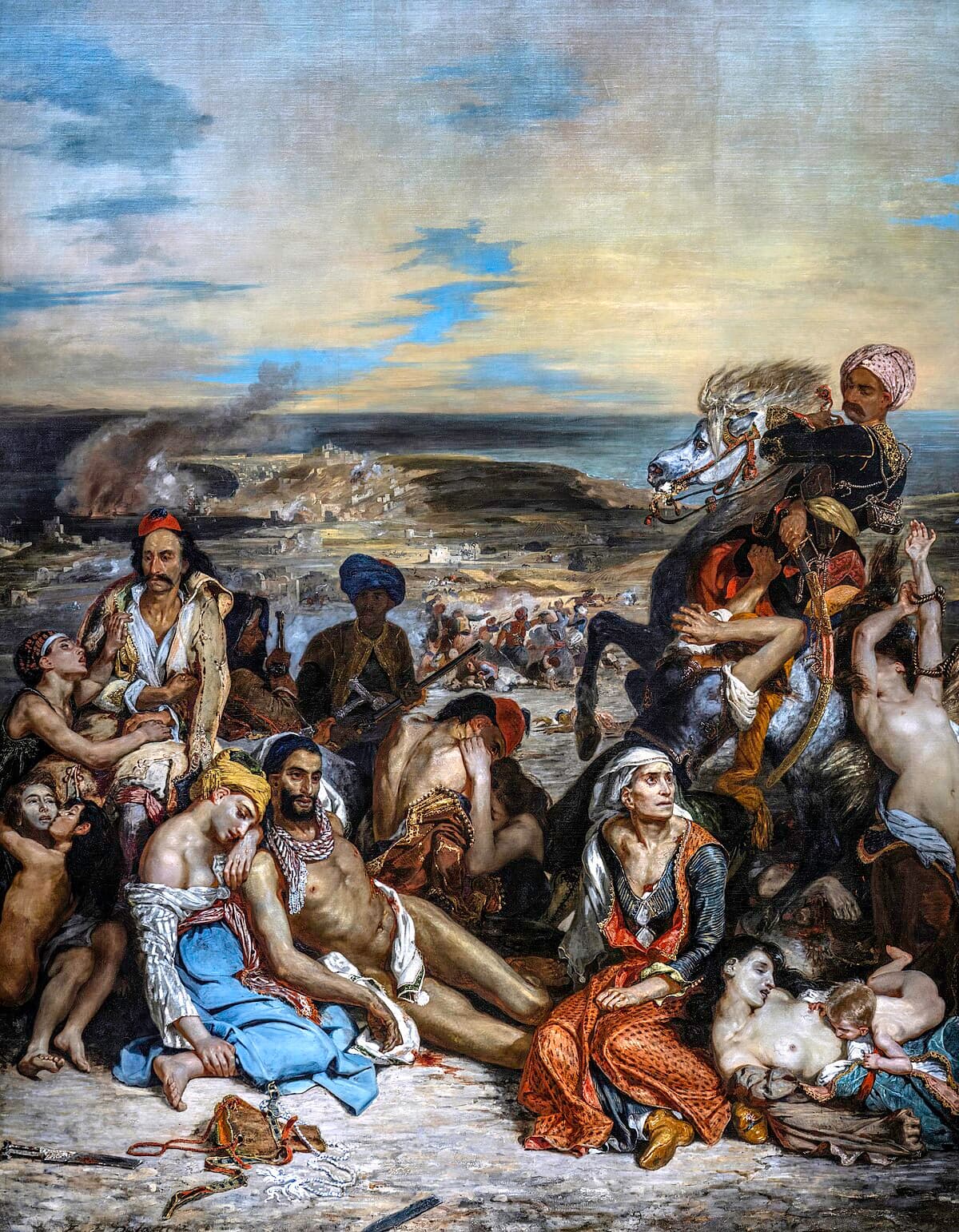
French artist Eugène Delacroix painted this harrowing scene in 1824, depicting the aftermath of Ottoman forces slaughtering Greek civilians during the Greek War of Independence. Exhausted captives await their fate while bodies litter the ground. Delacroix's emotional intensity and dramatic color made this painting a manifesto of Romantic art.
The work caused controversy at the 1824 Salon, with critics divided between admiring its power and condemning its supposed technical flaws. Delacroix based the scene on contemporary accounts of the 1822 massacre, when Turkish troops killed thousands on the island of Chios. Now at the Louvre Museum in Paris, this painting established Delacroix as the leader of French Romanticism.